Growing Low-Light Aquatic Plants Without CO2: How to Create Beautiful Layouts in Low-Tech Tanks
Learn how to select and care for aquatic plants that grow without CO2 supplementation and in low-light conditions. We introduce simple and beautiful aquascaping techniques using beginner-friendly species such as Anacharis, Willow Moss, and Anubias.
Key Takeaways
Learn how to select and care for aquatic plants that grow without CO2 supplementation and in low-light conditions. We introduce simple and beautiful aquascaping techniques using beginner-friendly species such as Anacharis, Willow Moss, and Anubias.
Related Species
Beautiful Aquatic Plant Tanks Are Possible Without CO2
Many people believe that "aquatic plant tanks require CO2 and are difficult to maintain." It's true that creating a carpet of foreground plants like Glossostigma requires CO2 supplementation. However, it is entirely possible to create a beautiful aquatic plant tank without CO2 and in low-light conditions.
A Low-Tech aquarium is a tank style built around hardy aquatic plants that thrive without CO2 supplementation and under low lighting. This approach is simple to manage and cost-effective, making it especially suitable for beginners and those with busy schedules. Without investing in expensive equipment, you can create a natural aquascape simply by carefully selecting and arranging your plants.
Standard Aquatic Plants That Grow Without CO2
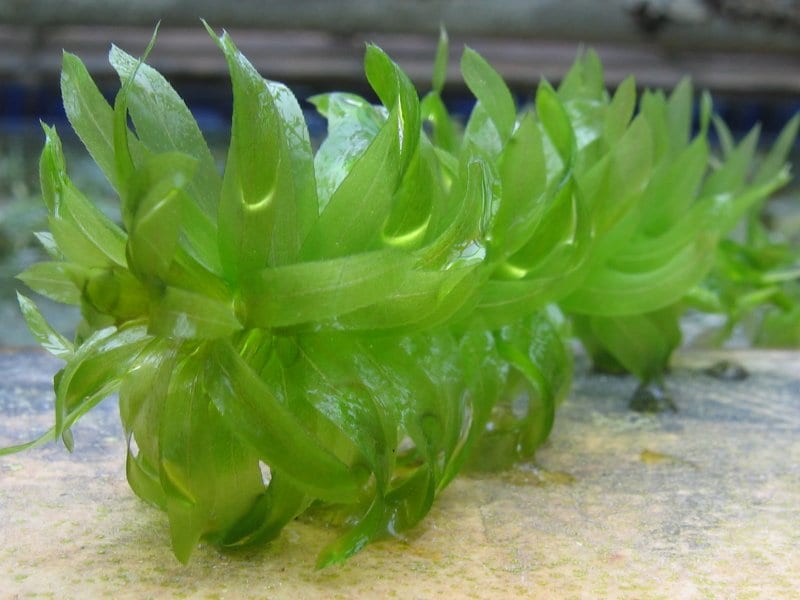
Anacharis (Waterweeds)
One of the easiest aquatic plants to grow. It thrives even with minimal light and without CO2 supplementation, growing prolifically. Its extremely rapid growth and strong nutrient-absorbing capacity make it effective for suppressing algae. It is highly compatible with goldfish and medaka, and can be easily propagated by simply cutting and replanting. Cut to around 20 cm in length and insert approximately 5 cm into the substrate to establish. When using as a background plant, spacing them 10–15 cm apart creates a natural density.
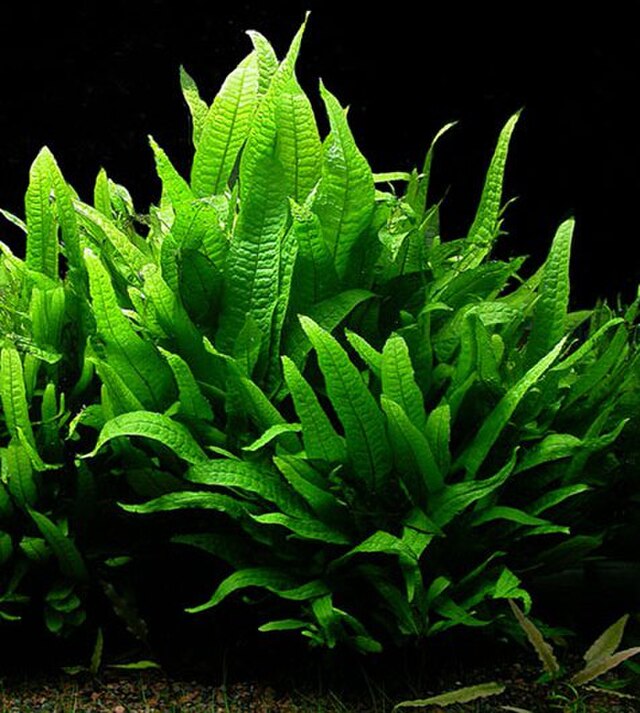
Microsorum (Java Fern)
The flagship representative of fern-type aquatic plants. It features tough, durable leaves and excellent adaptability to various water conditions. By attaching it to driftwood or rocks, you can create a natural aquascape. It thrives in dark environments, grows slowly, but once established remains stable for long periods. Secure it to driftwood using cotton thread or plant ties, and roots will attach within a few weeks. Microsorum Narrow Leaf has finer leaves that give a more stylish impression and can be grown using the same care methods. Once plantlets (runners) develop on the leaf surface, you can increase the plant count by cutting them off once they are sufficiently developed and attaching them to another piece of driftwood.
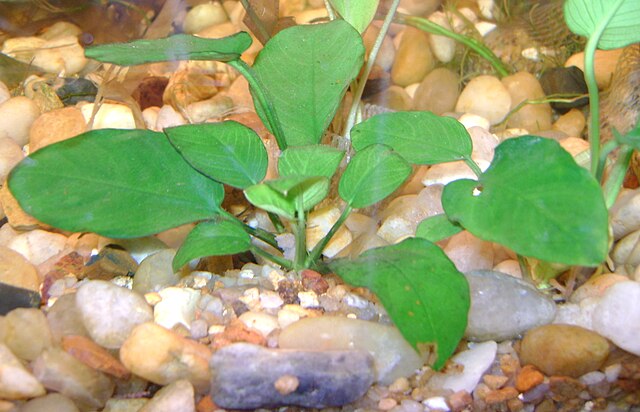
Anubias Nana
A hardy aroid from West Africa that thrives even in low-light environments. Its thick leaves resist algae and fish grazing, and like Microsorum, it is attached to driftwood or rocks for use. If the rhizome is buried in the substrate, it will rot, so it must always be used in the attached form. Anubias Nana Petite is smaller and better suited for finer layouts, and can be used as an accent in foreground to mid-ground areas. Growth is extremely slow, but strong light promotes algae growth, so the trick is to place it in the shade of driftwood or rocks.
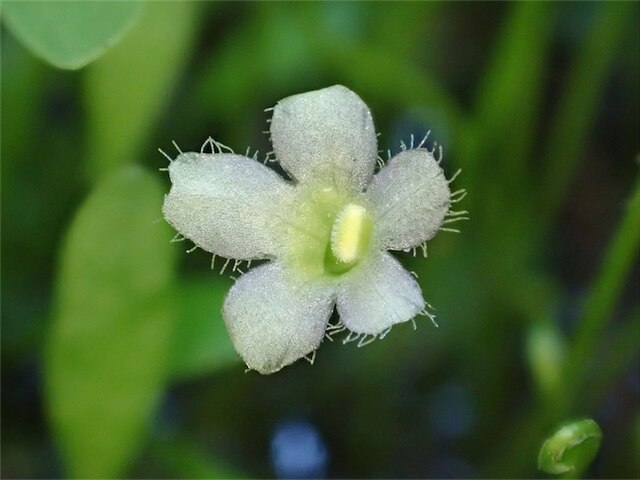
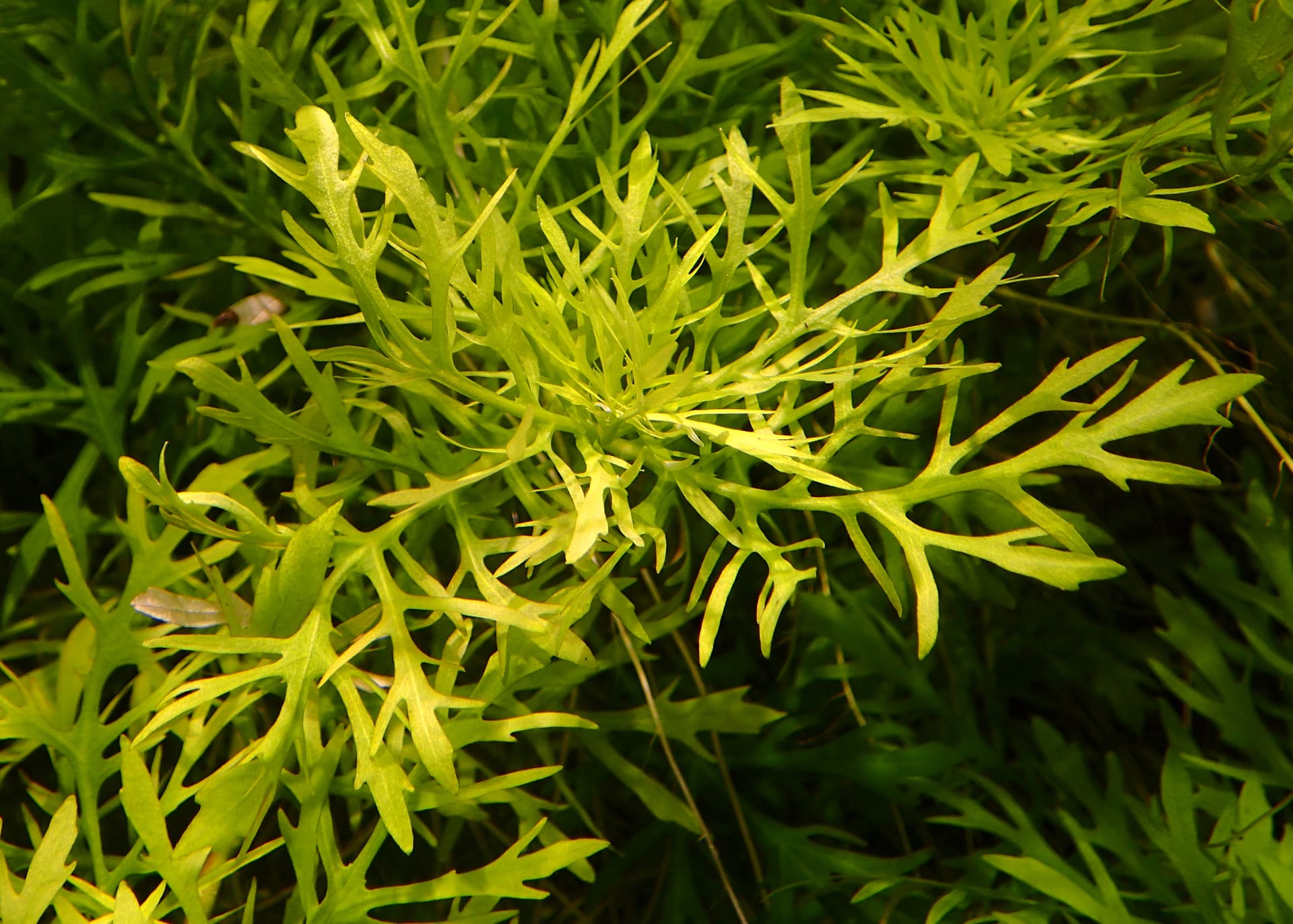
Water Wisteria
A mid-ground to background plant with beautifully feathery leaves. It is one of the better-looking aquatic plants that grows well without CO2. Fast-growing and easy to use as a background plant, it can be easily propagated by cutting the stem. The underwater leaves differ in form from the emersed leaves, displaying delicate feathery fronds underwater. Since it has a relatively high nutrient requirement, growth will be vigorous if solid-form fertilizers are applied near the roots.
The following is a comparison of the characteristics and propagation methods of these four species.
| Aquatic Plant | Characteristics | Propagation and Placement Method |
|---|---|---|
| Anacharis (Waterweeds) | Grows prolifically even in low light and without CO2. Extremely rapid growth and high nutrient absorption make it effective for algae suppression. Highly compatible with goldfish and medaka | Cut to around 20 cm and insert approximately 5 cm into the substrate. As a background plant, spacing 10–15 cm apart creates natural density |
| Microsorum (Java Fern) | Features tough, durable leaves and excellent water condition adaptability. Thrives in dark environments, grows slowly, but once established remains stable long-term. Narrow Leaf has finer leaves for a stylish look | Secure to driftwood using cotton thread or plant ties; roots attach within a few weeks. Once plantlets develop sufficiently, cut and attach to another driftwood to increase count |
| Anubias Nana | West African native thriving in low-light environments. Thick leaves resist algae and fish grazing. Petite is smaller, suited as an accent in foreground to mid-ground | Attach to driftwood or rocks (do not bury the rhizome or it will rot). Extremely slow-growing; place in shade since strong light promotes algae growth |
| Water Wisteria | Beautiful feathery leaves for mid- to background use, fast-growing with attractive appearance. Underwater and emersed leaves differ in form | Propagate by cutting stems. Relatively high nutrient requirement—apply solid-form fertilizers near the roots for vigorous growth |
Layout Design Principles
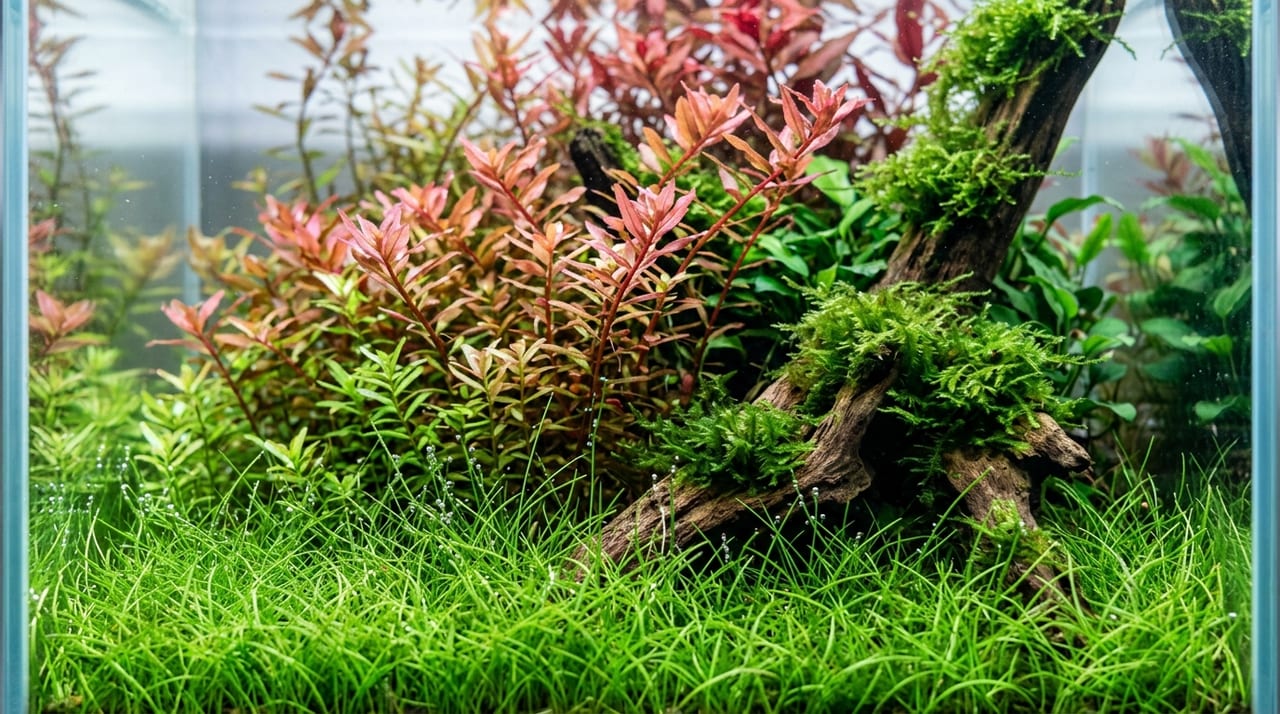
The foundation of layout is "placement with an awareness of perspective." Tall aquatic plants (Anacharis, Water Wisteria) go in the background, while Microsorum and small Anubias are placed in the mid-ground. For the foreground, leaving sand or small stones as-is creates an open feel, resulting in a natural impression fitting for a Low-Tech tank.
The standard technique is to position driftwood to one side of the tank and attach Anubias and Microsorum to it. By concentrating driftwood in about one-third of the tank and leaving the remaining space open, you create depth. Combining rocks (lava stone or porous stone) yields a more natural appearance. Starting with the choice of key driftwood or stones and then arranging plants around them will result in a cohesive layout.
Equipment Selection and Setup
Substrate Selection
In Low-Tech tanks, inert soils and gravel are easier to manage. Nutrient-rich soils sometimes have excessive nutrients initially, which can promote algae. Crushed coral sand tends toward alkalinity, but acid-treated varieties or well-seasoned ones can support most aquatic plants. If your layout is primarily composed of attaching plants (Microsorum and Anubias), gravel or sand alone is sufficient. When planting stem plants, mixing in a small amount of substrate fertilizer stabilizes growth.
Lighting Selection
For a 60 cm tank, aim for an LED light producing about 2,000–3,000 lumens, with approximately 8 hours of daily illumination being ideal. To prevent algae, begin with 6 hours in the first month and adjust gradually. Expensive aquatic-plant-specific lighting is not necessary; standard fish-keeping LED lights are perfectly adequate. Using a timer outlet to maintain consistent illumination times will significantly reduce algae growth.
Filtration and Water Quality Management
External filters are ideal, but undergravel and in-tank filters work adequately. The ideal water temperature is 22–26°C for most aquatic plants. Perform a 30% water change about once per week as a guideline. Less frequent management is required compared to CO2-supplemented tanks, and in some cases, maintenance is possible with changes every two weeks, depending on plant condition.
A summary of reference values is as follows.
| Item | Guideline |
|---|---|
| Lighting | LED light around 2,000–3,000 lumens for a 60 cm tank; approximately 8 hours daily illumination (adjust from 6 hours during the first month while monitoring conditions) |
| Water Temperature | 22–26°C |
| Water Changes | Approximately 30% weekly as a guideline (depending on plant condition, maintenance may be possible with changes every two weeks) |
Algae Control and Long-Term Management Tips
The most common challenge in Low-Tech tanks is algae growth. Algae typically results from one of three causes: "excessive light, nutrient overload, or insufficient water changes."
- Use algae-eating fauna: Amano shrimp (5–10 per 60 cm tank) are highly effective at controlling algae and can address thread algae and spot algae. Otocinclus are effective against brown diatoms on glass and algae on leaf surfaces. Neither eats aquatic plants, making them ideal for Low-Tech tanks.
- Use fertilizers sparingly: In Low-Tech conditions without CO2 and with low light, plant nutrient uptake is slow, so excess fertilizer becomes algae food. Begin with liquid fertilizers at half the recommended dose and adjust by monitoring plant color and growth rate. Nitrogen and phosphorus are often supplied via fish waste, while potassium deficiency is common; adding a small amount of potassium-based fertilizer is effective.
- Trimming Timing: Anacharis and Water Wisteria grow quickly; cut and divide when they reach the water surface. For Microsorum and Anubias, remove yellowing old leaves at the base with scissors—this encourages new shoots to emerge.
Purchase Medaka and Shrimp Together on GrowerDirect
Aquatic plants that thrive in Low-Tech tanks pair beautifully with medaka and small shrimp. On GrowerDirect, you can purchase medaka and aquatic shrimp that complement your aquatic plants directly from growers. If you have questions like "I'm using aquatic plants suited to CO2-free tanks—which shrimp are compatible?", you can get specific advice from growers who are actively keeping them.
Because GrowerDirect is a direct-from-grower marketplace, the origin and rearing conditions are clear, allowing you to bring home healthy individuals with confidence. Watching medaka and aquatic shrimp swim through the natural aquascape of your Low-Tech plant tank is truly soothing. Start with easy-to-grow aquatic plants, and gradually enjoy building your layout one step at a time.