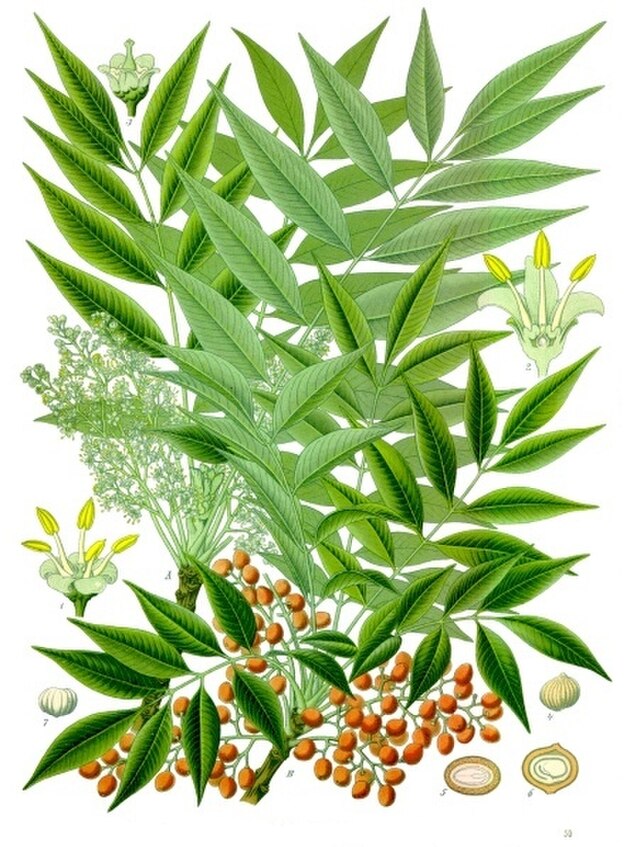
Source: Wikimedia Commons
Japanese Wax Tree
BeginnerToxicodendron succedaneum
Deciduous bonsai with brilliant scarlet autumn color, among the finest in bonsai. Unique pinnate leaf silhouette. Cool summer greenery. Fast growing and easy to shape.
About
Toxicodendron succedaneum, the wax tree, Japanese Hazenoki tree, sơn in Vietnamese or charão in Portuguese, is a flowering plant species in the genus Toxicodendron found in Asia, although it has been planted elsewhere, most notably Australia and New Zealand. It is a large shrub or tree, up to 8 m tall, somewhat similar to a sumac tree. Because of its beautiful autumn foliage, it has been planted outside Asia as an ornamental plant, often by gardeners who were apparently unaware of the dangers of allergic reactions. It is now officially classified as a noxious weed in Australia and New Zealand. It is one of the city tree symbols of Kurume, Fukuoka, Japan.
Source: Wikipedia (CC BY-SA 4.0)
Lifespan of the Japanese Wax Tree
The Japanese Wax Tree lives 100+ years.
Size of the Japanese Wax Tree
The Japanese Wax Tree grows to 15-50cm (bonsai size).
Basic Info
Origin
China and Southeast Asia (introduced to Japan in the Nara period)
Lifespan
100+ years
Size
15-50cm (bonsai size)
Temperature
-5〜35℃
Growing Tips
Placement
Outdoor sun. Autumn temperature swings needed for color
Watering
Loves water. Twice daily in summer
Styling
Vigorous grower. Frequent pruning refines branching
Notes
Sap can cause rash. Sensitive individuals should wear gloves
Japanese Wax Tree FAQ
QWhat is the growing difficulty level for Japanese Wax Tree?
Beginner. A variety suitable for beginners. No special equipment or experience is required—you can grow it without problems by setting up a basic cultivation environment.
QWhat is the lifespan of Japanese Wax Tree?
The average lifespan of Japanese Wax Tree is 100+ years. With proper cultivation environment and nutrient management, you can keep it healthy for a long time.
QHow large does Japanese Wax Tree get?
The mature size of Japanese Wax Tree is 15-50cm (bonsai size). This may vary slightly depending on cultivation environment and individual differences.
QWhat is the typical price for Japanese Wax Tree?
The price of Japanese Wax Tree varies significantly by variety, characteristics, size, and lineage. Please check GrowerDirect's price guide for the latest market information.
Last updated: June 24, 2026
References & Sources
Edited & verified by: GrowerDirect Editorial Team
The classifications, regulations, and growing data on this page are created and verified based on the primary information database below.
Primary sources
Taxonomy & Authority
Regulations & Conservation Status
Sources: CITES Checklist of CITES Species
Regulations may change. Always verify the latest information with the relevant authorities.
Related Species
Find listings for this species
Related Articles
10 Recommended Bonsai Species for Beginners | A Beginner's Guide: Choosing by Ease of Care and Appeal
A guide for beginners looking to start bonsai, introducing 10 carefully selected, easy-to-grow and attractive species. We explain in detail the characteristics, difficulty level of care, seasonal highlights, and price range for each species, helping you choose the right first tree for you.
Guide to Growing Fruit-Bearing Bonsai | Enjoying the Fruit of Hime Apple, Rouyakaki, and Pyracantha
A comprehensive guide to growing fruit-bearing bonsai. Introduces how to select representative tree species such as hime apple, rouyakaki, and pyracantha, pruning and fertilization techniques for fruit bearing, pollination tips, and points for appreciation.
Complete Guide to Growing Pachira | Characteristics of Braided Specimens, Watering, Repotting, and Propagation
This guide explains in detail the characteristics of Pachira's native habitat (also called Money Tree), including placement, watering, overwintering, repotting, propagation by cuttings, and common problems.
Miniature Rose Pruning Timing and Shape Training | Seasonal Cutting Methods and Shrub/Climbing Rose Management
A comprehensive guide to pruning timing, cutting methods, and shape-specific (shrub/climbing) management techniques to ensure your miniature roses bloom beautifully every season.
🩺 Common diseases
Can't find the plant you're looking for?
Post your wishes for free and growers with matching plants will contact you with introductions.