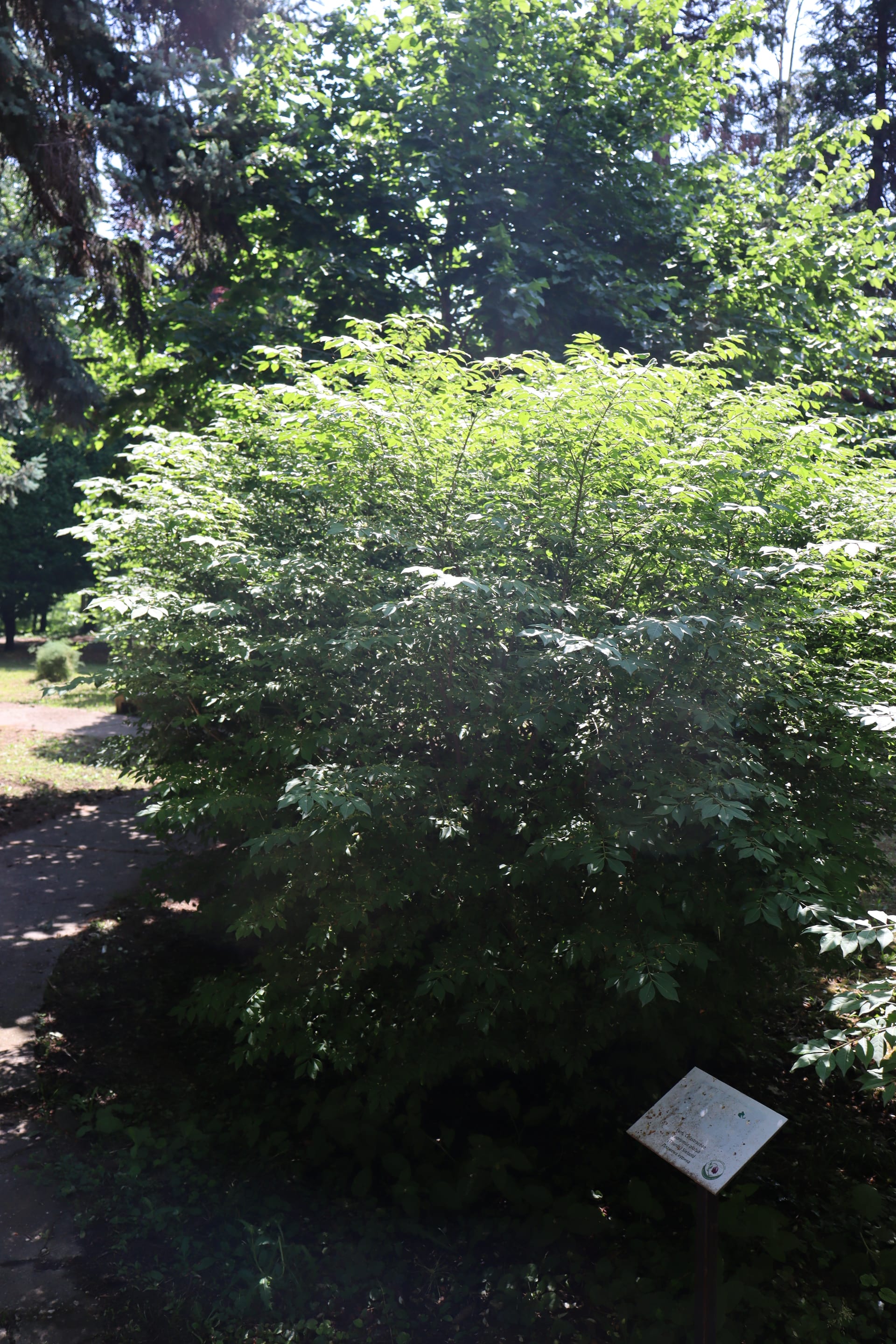
Source: Wikimedia Commons
Winged spindle
BeginnerEuonymus alatus
A deciduous shrub counted among the world's three great autumn-colour trees, turning brilliant red. Corky wings along the stems are distinctive, and red-coated seeds appear in autumn. A single plant sets fruit.
About
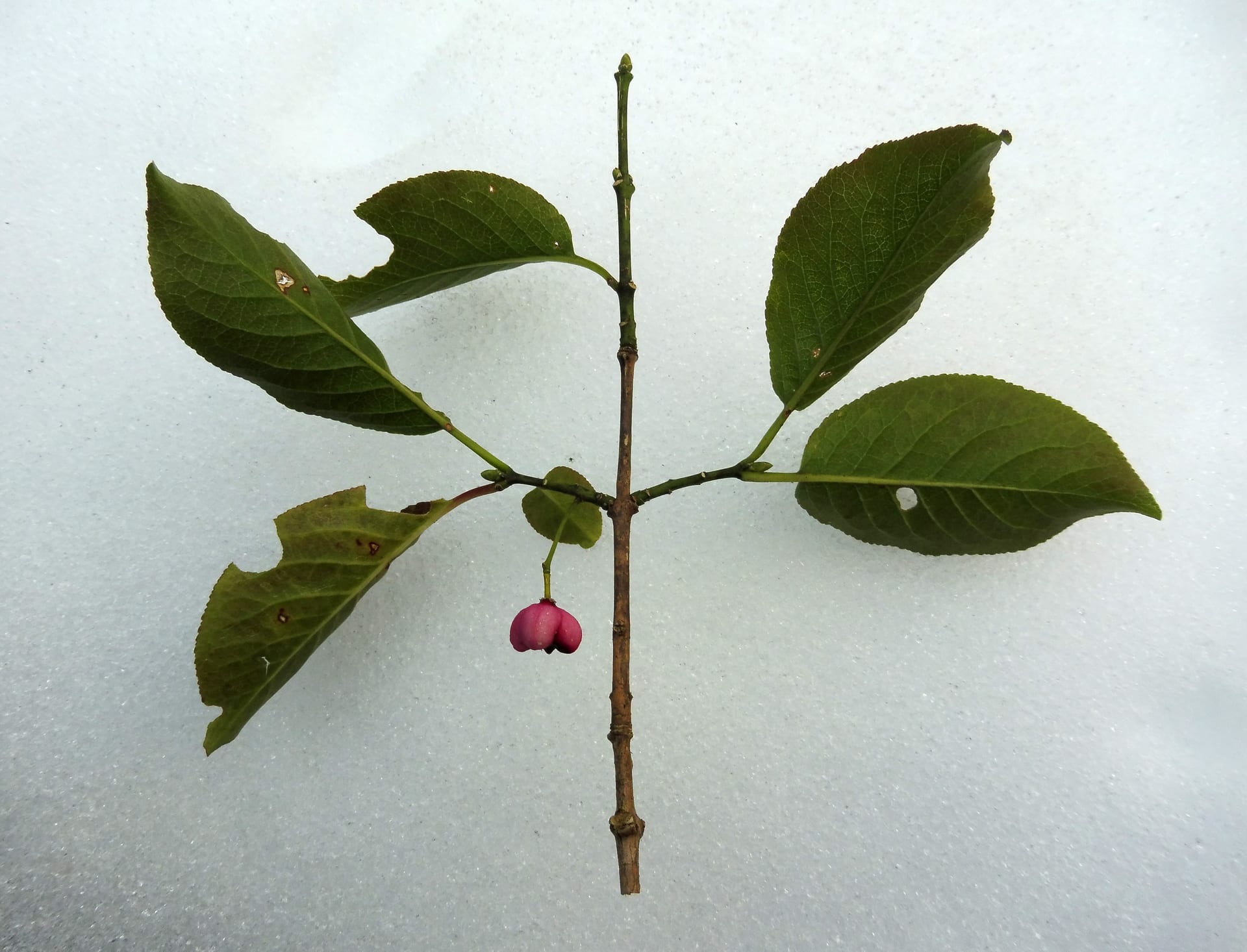
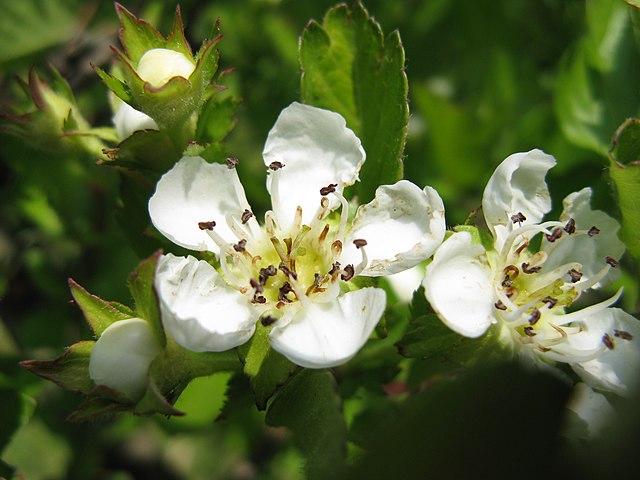
Nishikigi (Euonymus alatus) is a deciduous shrub of the spindle family growing wild from Hokkaido to Kyushu in hills and woods, even near houses, and elsewhere in north-east Asia. Counted with sourwood and tupelo among the world's three great autumn-colour trees, it is named for foliage as vivid as brocade (nishiki). Its hallmark is the corky wings projecting in four directions along the stems, though some individuals form them more readily than others. Leaves are 2–7 cm; pale green flowers 6–7 mm across appear in early summer, and in October–November fruits about 8 mm long split to show seeds in an orange aril. The seeds are toxic. It carries both sexes on one plant, so a single pot can fruit—unlike its relative mayumi. A wingless variety called komayumi is told apart by the lack of wings. Pest-resistant and tough, it tolerates shade, though colour is duller there. Bonsai shops stock it steadily as small deciduous bonsai, and the dwarf cultivar 'Compactus' is sold for gardens.
Size of the Winged spindle
The Winged spindle grows to 1–3 m tall.
Basic Info
Origin
Japan (Hokkaido to Kyushu) and north-east Asia
Lifespan
Little data on lifespan
Size
1–3 m tall
Temperature
-5〜35℃
Watering & Fertilizer
Fertilizer (June–September, except midsummer)
Growing Tips
Light & placement
Keep in sun, with shade cloth in summer. Tolerates shade, but autumn colour is duller there
Watering
Water thoroughly when the surface dries, but do not keep it soggy
Temperature & overwintering
Protect it in a cold frame or similar over winter
Soil & repotting
Repot every March. Roots form a dense mat—cut back even tight roots boldly and spread them
Fertilizer
Solid fertilizer June–September except midsummer. Too much residual fertilizer can spoil autumn colour
Pruning & styling
In June cut back long shoots to encourage short twigs, repeating yearly. Growth is unruly but it takes clipping well
Pests & cautions
Pest-resistant, but catch aphids and scale early. Seeds are toxic. It is native—buy nursery-grown plants, not wild-dug ones
Winged spindle FAQ
QWhat is the growing difficulty level for Winged spindle?
Beginner. A variety suitable for beginners. No special equipment or experience is required—you can grow it without problems by setting up a basic cultivation environment.
QHow large does Winged spindle get?
The mature size of Winged spindle is 1–3 m tall. This may vary slightly depending on cultivation environment and individual differences.
QHow should I water and fertilize Winged spindle?
Winged spindle: watering & fertilizer — Fertilizer (June–September, except midsummer). Aim for appropriate frequency and amount.
QWhat is the typical price for Winged spindle?
The price of Winged spindle varies significantly by variety, characteristics, size, and lineage. Please check GrowerDirect's price guide for the latest market information.
Last updated: September 23, 2026
References & Sources
Edited & verified by: GrowerDirect Editorial Team
The classifications, regulations, and growing data on this page are created and verified based on the primary information database below.
Taxonomy & Authority
Regulations & Conservation Status
Not listed by CITES and not regulated for domestic sale. It is native to Japan—choose nursery-grown plants rather than wild-collected ones.
Sources: Species+ (CITES listing search)
Regulations may change. Always verify the latest information with the relevant authorities.
Related Species
Find listings for this species
Related Articles
Bonsai Aged Wood Techniques | Creating Branch Aging Expression and Tree Age Aesthetics
Explains techniques for creating bonsai that appear aged from young stock. Introduces practical methods for expressing tree age aesthetics, from bark texture and branch structure to root development expression and changes over time.
How to Prevent Fertilizer Burn in Bonsai | Determining the Right Fertilizer Amount and Concentration
Why does fertilizer burn occur in bonsai? This explains the mechanism of osmotic pressure, how to identify early symptoms such as browning of leaf tips, why it occurs easily in midsummer and right after repotting, and emergency measures and preventive strategies.
A Guide to Giving Bonsai as Gifts | Appropriate Species and Etiquette for Longevity Celebrations and Business Opening Celebrations
This guide explains how to choose bonsai species and proper etiquette when giving bonsai as gifts for celebrations. It introduces recommended species for different occasions such as longevity celebrations and business opening celebrations, as well as how to choose species while considering management requirements.
Bringing Out the Artistry of Bonsai: Fundamental Techniques in Pruning and Shaping Trees
Master the fundamentals of pruning and shape forming to unveil bonsai artistry. Learn the principles of heavy and light pruning, wiring techniques, how to select bonsai styles and determine the front view, seasonal care schedules, and solutions to common mistakes—all explained step by step.
🩺 Common diseases
Can't find the plant you're looking for?
Post your wishes for free and growers with matching plants will contact you with introductions.