Source: Wikimedia Commons
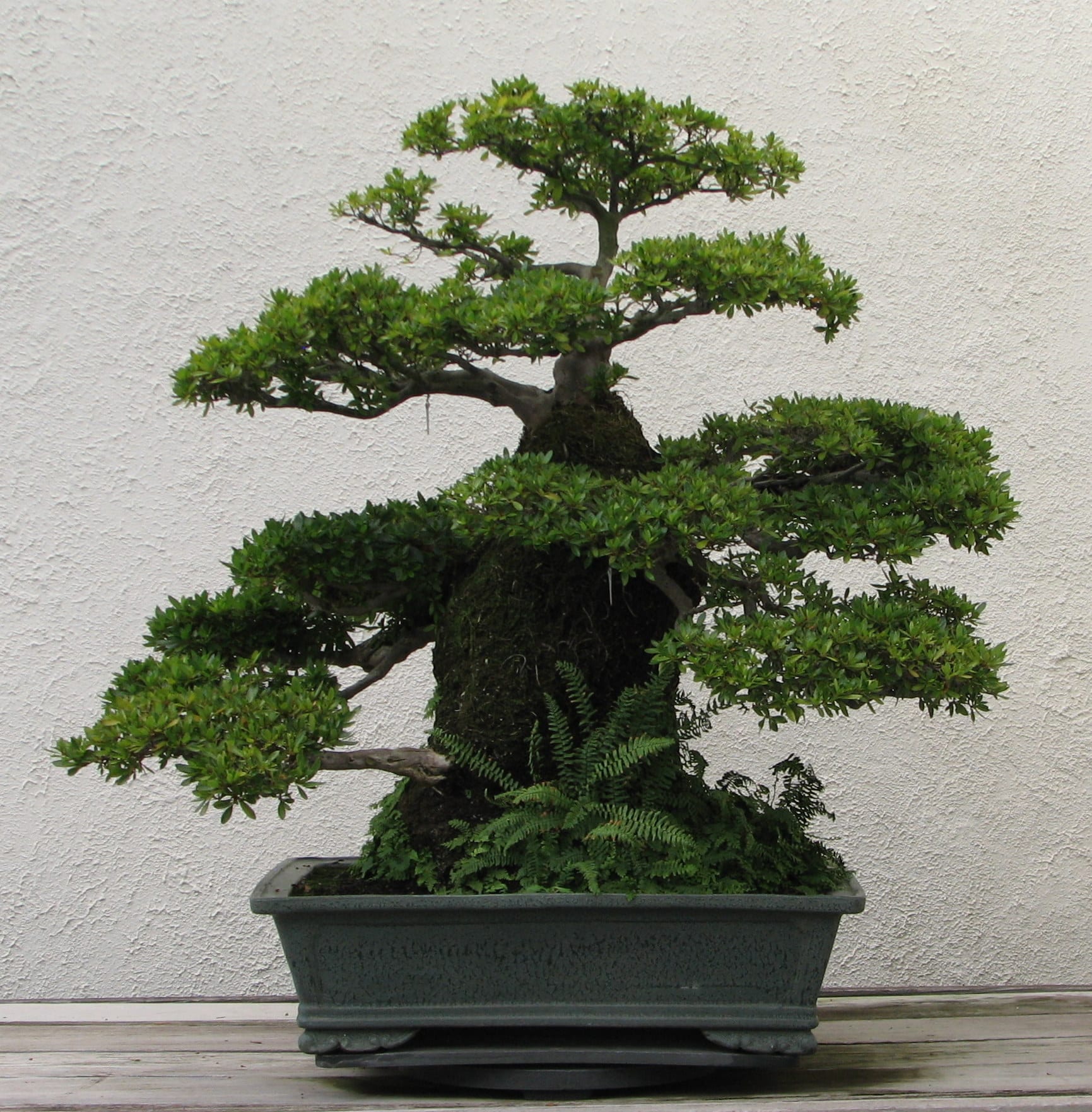
Satsuki azalea 'Osakazuki'
BeginnerRhododendron indicum 'Osakazuki'
Read 'Osakazuki', the classic satsuki—so widely planted that 'satsuki' often simply means this cultivar. Free-flowering with medium, deep pink-purple blooms, vigorous and tolerant of shearing, it is an old cultivar with handsome reddish bark.
About
Osakazuki (written 大盃, here slugged 'Osakazuki') is a satsuki azalea cultivar that a Japanese tree guide calls the most widely distributed, so common that 'satsuki' often simply means this plant. It is also sold as 'Mie satsuki'. An old cultivar, it has been a parent of modern varieties and has produced sports such as 'Kazan' and 'Chinzan'. Cultivar descriptions give its flowers as single pink-purple (some say deep pink), in the korin form and of medium size, with normal to small leaves and rather thick petals. It is vigorous, with attractive reddish bark, and many old specimens are in cultivation. Free-flowering and tolerant of shearing, it is also a standard hedge and garden shrub. 'Kozan', another old cultivar, has small pale flowers, so size and colour separate the two. As bonsai it takes advantage of the satsuki's quick trunk thickening and fine branching and is trained in every style from informal upright to cascade. From young plants to large bonsai, it is the easiest satsuki to find.
Size of the Satsuki azalea 'Osakazuki'
The Satsuki azalea 'Osakazuki' grows to About 0.5–1 m as a garden shrub (bonsai: shohin to large).
Basic Info
Origin
Japan (an old satsuki cultivar)
Lifespan
Long-lived; many old specimens are in cultivation
Size
About 0.5–1 m as a garden shrub (bonsai: shohin to large)
Temperature
-5〜35℃
Watering & Fertilizer
Fertilizer (April, June after flowering, Sept–Oct)
Growing Tips
Light & placement
Likes light, but summer sun scorches leaves and roots. Give young plants full sun; keep finished trees in part shade, always with good airflow
Watering
Likes water but its fine roots rot if waterlogged: 1–2 times daily in spring, 2–3 in summer, every 2–3 days in winter. Avoid watering in the midday heat
Temperature & overwintering
Reasonably hardy but dislikes cold winter wind; keep the pot from freezing under eaves or similar
Soil & repotting
Coarse, acidic kanuma-based mix. Repot right after flowering (June) or in autumn (late Sep–early Oct); protect autumn-repotted plants carefully in winter
Fertilizer
Solid fertilizer about April as new leaves harden, after flowering in June, and monthly in Sep–Oct. Underfeeding causes dieback
Pruning & styling
Very tolerant of cutting and buds back anywhere. On flowering trees prune in June after bloom (by early July west of Kanto); do hard reduction for trunk-building in April–May before flowering
Pests & cautions
Especially pest-prone: lace bugs, spider mites, aphids and thrips are common, so regular control is needed in the growing season
Satsuki azalea 'Osakazuki' FAQ
QWhat is the growing difficulty level for Satsuki azalea 'Osakazuki'?
Beginner. A variety suitable for beginners. No special equipment or experience is required—you can grow it without problems by setting up a basic cultivation environment.
QHow large does Satsuki azalea 'Osakazuki' get?
The mature size of Satsuki azalea 'Osakazuki' is About 0.5–1 m as a garden shrub (bonsai: shohin to large). This may vary slightly depending on cultivation environment and individual differences.
QHow should I water and fertilize Satsuki azalea 'Osakazuki'?
Satsuki azalea 'Osakazuki': watering & fertilizer — Fertilizer (April, June after flowering, Sept–Oct). Aim for appropriate frequency and amount.
QWhat is the typical price for Satsuki azalea 'Osakazuki'?
The price of Satsuki azalea 'Osakazuki' varies significantly by variety, characteristics, size, and lineage. Please check GrowerDirect's price guide for the latest market information.
Last updated: September 23, 2026
References & Sources
Edited & verified by: GrowerDirect Editorial Team
The classifications, regulations, and growing data on this page are created and verified based on the primary information database below.
Primary sources
Taxonomy & Authority
Regulations & Conservation Status
Not listed by CITES and not regulated for domestic sale. Not a registered variety under the Plant Variety Protection Act (no Rhododendron entry for this name in the MAFF database, checked Sept 2026).
Sources: Species+ (CITES listing search) / MAFF Plant Variety Registration Database
Regulations may change. Always verify the latest information with the relevant authorities.
Related Species
Find listings for this species
Related Articles
How to Grow Satsuki Bonsai | Pruning and Fertilizing Tips for Blooming Flowers
We explain Satsuki's charm, variety selection, post-bloom pruning, repotting with Kanuma soil, and the conditions for flower bud formation.
Bonsai Aged Wood Techniques | Creating Branch Aging Expression and Tree Age Aesthetics
Explains techniques for creating bonsai that appear aged from young stock. Introduces practical methods for expressing tree age aesthetics, from bark texture and branch structure to root development expression and changes over time.
How to Prevent Fertilizer Burn in Bonsai | Determining the Right Fertilizer Amount and Concentration
Why does fertilizer burn occur in bonsai? This explains the mechanism of osmotic pressure, how to identify early symptoms such as browning of leaf tips, why it occurs easily in midsummer and right after repotting, and emergency measures and preventive strategies.
A Guide to Giving Bonsai as Gifts | Appropriate Species and Etiquette for Longevity Celebrations and Business Opening Celebrations
This guide explains how to choose bonsai species and proper etiquette when giving bonsai as gifts for celebrations. It introduces recommended species for different occasions such as longevity celebrations and business opening celebrations, as well as how to choose species while considering management requirements.
🩺 Common diseases
Can't find the plant you're looking for?
Post your wishes for free and growers with matching plants will contact you with introductions.