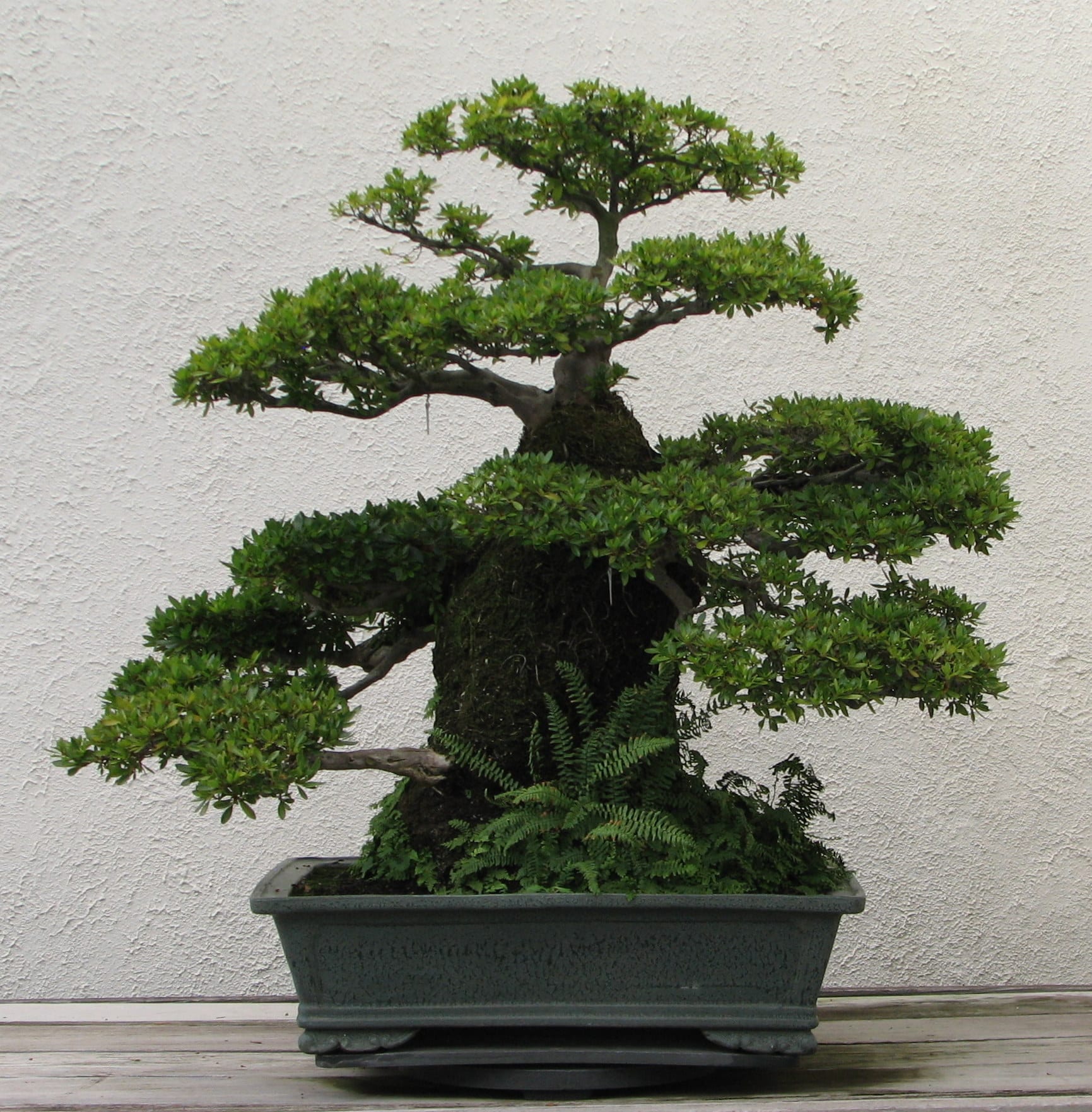
 © Ragesoss / CC BY-SA 3.0
Satsuki azalea 'Osakazuki'
Osakazuki is one of the most iconic Satsuki azalea varieties, so widely grown that many people picture this very cultivar when they think of 'Satsuki.' Its medium-sized, deep pinkish-purple flowers bloom abundantly, covering the plant in vivid color. The variety is sturdy and tolerates pruning well, making it easy to shape and a great choice for beginners. It is also known for its attractive reddish bark, and many old specimens are in cultivation, making it a rewarding variety to grow over the long term.
View Satsuki azalea 'Osakazuki' encyclopedia →0% commission on your first sales!Register by September 30, 2026 and your first 2 plants are commission-free!
Grower Wanted!
List your plants on GrowerDirect and sell directly to customers nationwide!
6 Transparency Commitments from GrowerDirect
Growers clearly display the following information for all Bonsai listings. Guaranteed transparency for tree variety, origin, light requirements, and difficulty level.
- Tree Variety
- Real Photos
- Color & Appearance
- Growing Region
- Light Requirements
- Difficulty Level
Browse all 144 varieties
Light Requirements
Difficulty Level
Verified growers wanted for Bonsai
Growers are signing up now ahead of launch. Subscribe to be notified when new listings go live.
Getting alerts is free with a member account. When new listings match your saved search, we'll notify you by email and in-app.
Browse other categories
Verified growers (preview)
Satsuki azalea 'Osakazuki' key facts
- Growing Difficulty
- Beginner-friendly
- Lifespan
- Long-lived; many old specimens are in cultivation
- Size
- About 0.5–1 m as a garden shrub (bonsai: shohin to large)
- Watering
- Fertilizer (April, June after flowering, Sept–Oct)
- Light & placement
- Likes light, but summer sun scorches leaves and roots. Give young plants full sun; keep finished trees in part shade, always with good airflow
- Watering
- Likes water but its fine roots rot if waterlogged: 1–2 times daily in spring, 2–3 in summer, every 2–3 days in winter. Avoid watering in the midday heat
- Temperature & overwintering
- Reasonably hardy but dislikes cold winter wind; keep the pot from freezing under eaves or similar
- Soil & repotting
- Coarse, acidic kanuma-based mix. Repot right after flowering (June) or in autumn (late Sep–early Oct); protect autumn-repotted plants carefully in winter
- Fertilizer
- Solid fertilizer about April as new leaves harden, after flowering in June, and monthly in Sep–Oct. Underfeeding causes dieback
- Pruning & styling
- Very tolerant of cutting and buds back anywhere. On flowering trees prune in June after bloom (by early July west of Kanto); do hard reduction for trunk-building in April–May before flowering
- Pests & cautions
- Especially pest-prone: lace bugs, spider mites, aphids and thrips are common, so regular control is needed in the growing season
About Satsuki azalea 'Osakazuki'
Osakazuki is a classic Satsuki azalea with abundant deep pink-purple blooms. Sturdy, prune-tolerant, and beginner-friendly, it's known for reddish bark and long-lived old specimens.
7 things to know before growing Satsuki azalea 'Osakazuki'
1Light & Airflow
Osakazuki thrives in bright, sunny spots outdoors and flowers best with plenty of light. In midsummer, filtering the light with partial shade or a shade cloth helps prevent leaf scorch, and good air circulation helps keep pests and disease at bay.
2Watering Basics
Water thoroughly, letting it run from the drainage holes, once the soil surface has dried out. Satsuki azaleas have fine roots that are sensitive to drying out, so pay extra attention during the flowering season and in midsummer; in winter, the soil dries more slowly, so water less often.
3Choosing Soil
Unlike many other trees, Satsuki azaleas do best in a soil mix formulated specifically for them. Look for a slightly acidic blend that balances drainage and moisture retention, which keeps the roots healthy. A commercial Satsuki-specific potting mix is a reliable, low-risk choice.
4When to Repot
The best time to repot is after flowering, around the start of the rainy season. Repotting into fresh soil, without disturbing the root ball too drastically, helps prevent root-bound growth and keeps the plant healthy; doing this roughly every few years is a good rule of thumb.
5Pruning & Shaping
Osakazuki tolerates pruning well, making it a great choice for shaping. Deadheading and light trimming right after flowering won't interfere with next year's flower buds, and the variety also handles harder pruning reasonably well if timed carefully.
6Seasonal Care
Osakazuki blooms from spring into early summer, then enters a period of new growth. Keep an eye on strong summer sun and dryness, as well as winter frost and cold winds. Adjusting its placement with the seasons helps keep the plant healthy over the long term.
7Choosing a Plant
Because Osakazuki is often grown as a long-lived old tree, individual specimens can develop distinctive trunks and branch shapes. Look for a plant with deep leaf color and healthy foliage all the way to the branch tips, which tends to indicate stable future growth, comparing trunk shape and bark tone is part of the fun of choosing one.
Frequently asked questions about Satsuki azalea 'Osakazuki'
- Q.Is Osakazuki suitable for someone growing Satsuki azaleas for the first time?
- A.Yes, Osakazuki is considered a sturdy, easy-to-grow variety that's well suited to beginners. It also tolerates pruning well, so you can shape it as you go without much worry.
- Q.How large does it grow?
- A.As bonsai, it can be grown at almost any size, from small pieces to large specimens, depending on how it is trained. Its trunk thickens readily and it branches finely, so it suits many styles, from informal upright to cascade.
- Q.What are the flowers like?
- A.It produces medium-sized, deep pinkish-purple flowers with abundant blooms. The way it covers itself in color is part of why it's so widely grown as a representative Satsuki variety.
- Q.What is special about its bark?
- A.Osakazuki is known for its attractive reddish bark, and many old specimens are in cultivation. Enjoying the character of the trunk as the tree is grown over the years is part of its appeal.
- Q.How often does it need repotting or pruning?
- A.Repotting is generally recommended every few years, after flowering around the start of the rainy season. Pruning is mainly light trimming after flowering, and since Osakazuki tolerates pruning well, it's easy to keep its shape in check.
Handy Growing Tools for Satsuki azalea 'Osakazuki'
Learn more about Satsuki azalea 'Osakazuki' in the encyclopedia
View Satsuki azalea 'Osakazuki' encyclopedia entry →
Care difficulty, size, origin and light needs — all basics covered.
More in this category
Can't find the plant you're looking for?
Post your wishes for free and growers with matching plants will contact you with introductions.