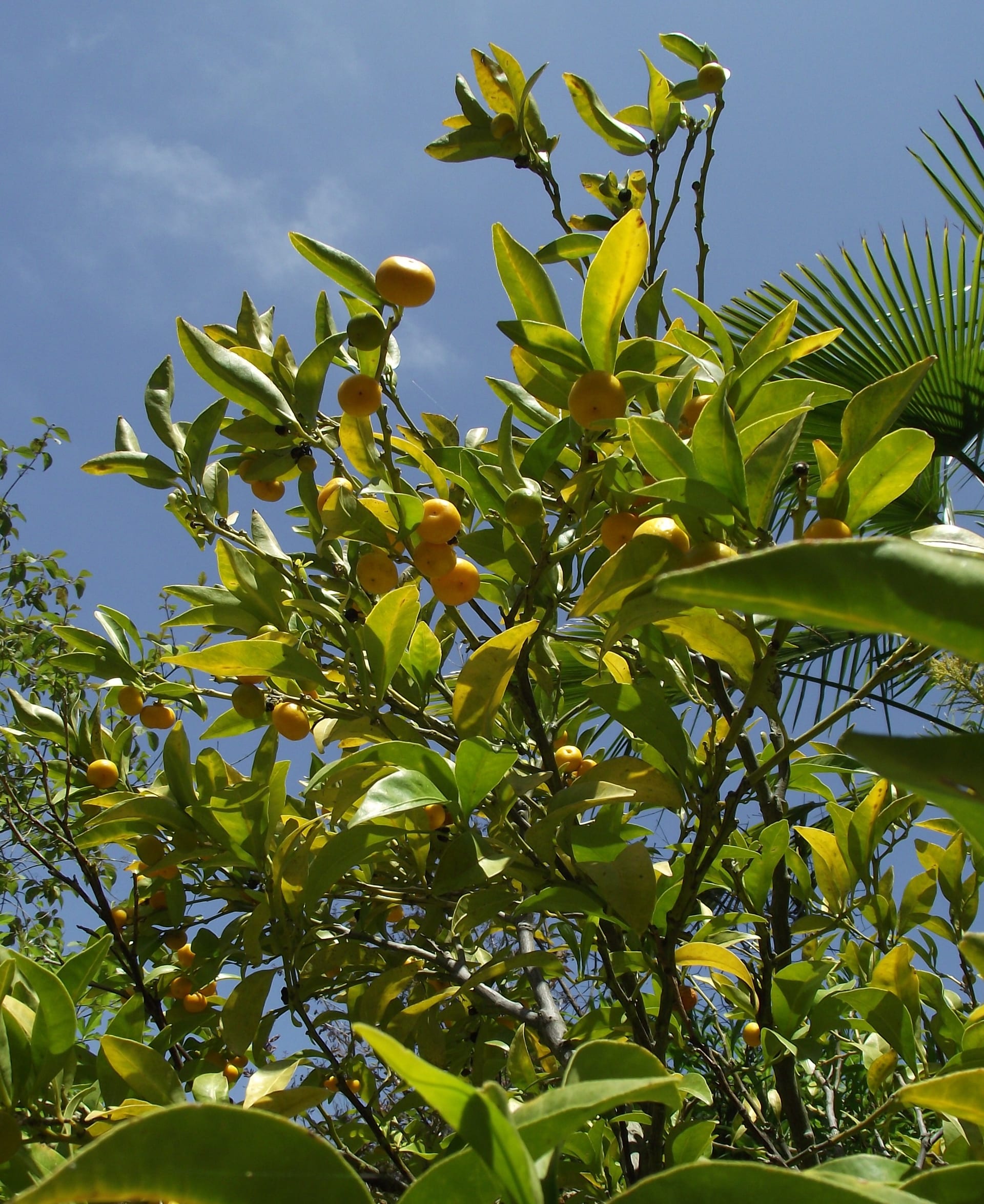
 © Stickpen / CC0
Tachibana orange
Tachibana (Citrus tachibana) is a wild citrus native to Japan, an evergreen tree that produces fragrant white flowers in early summer and flat yellow fruit about 2.5 to 3 cm across in winter. It is famously associated with the "Ukon no Tachibana" tree at the Kyoto Imperial Palace, giving it a distinctly Japanese cultural charm as a bonsai subject. Left to grow naturally it can reach 2 to 6 meters, but trained in a pot it can be kept compact, letting you enjoy glossy evergreen foliage year-round along with the seasonal rhythm of flowers and fruit. It is considered a variety suited to growers with some prior experience, and rewards attentive care with an increasingly refined form over time.
View Tachibana orange encyclopedia →0% commission on your first sales!Register by September 30, 2026 and your first 2 plants are commission-free!
Grower Wanted!
List your plants on GrowerDirect and sell directly to customers nationwide!
6 Transparency Commitments from GrowerDirect
Growers clearly display the following information for all Bonsai listings. Guaranteed transparency for tree variety, origin, light requirements, and difficulty level.
- Tree Variety
- Real Photos
- Color & Appearance
- Growing Region
- Light Requirements
- Difficulty Level
Browse all 144 varieties
Light Requirements
Difficulty Level
Verified growers wanted for Bonsai
Growers are signing up now ahead of launch. Subscribe to be notified when new listings go live.
Getting alerts is free with a member account. When new listings match your saved search, we'll notify you by email and in-app.
Browse other categories
Verified growers (preview)
Tachibana orange key facts
- Growing Difficulty
- Intermediate
- Lifespan
- Little data on lifespan
- Size
- 2–6 m tall
- Watering
- Fertilizer (in the growing season; little bonsai-specific data)
- Light & placement
- An evergreen of warm coastal forests. Grow in a warm, sunny spot and protect from winter cold
- Watering
- In pots, water thoroughly when the surface dries; little bonsai-specific guidance exists
- Temperature & overwintering
- A warm-climate tree with poor cold tolerance (native northern limit: Numazu, Shizuoka). Protect from frost and cold wind in winter; it thrives in heat and humidity
- Soil & repotting
- Prefers soft, very free-draining soil
- Pruning & styling
- Branches spread and thicken readily, so prune regularly to keep it small. Mind the sharp thorns
- Pests & cautions
- Few pests; fruits reliably with little care. Most plants sold as tachibana are koorai-tachibana. Wild plants are Near Threatened—buy cultivated stock only
About Tachibana orange
Tachibana bonsai: a wild Japanese citrus with fragrant white summer flowers and flat yellow winter fruit, known from the Kyoto Imperial Palace's "Ukon no Tachibana." An evergreen for growers with some experience, trainable to a compact pot size despite reaching 2-6m in the wild.
7 things to know before growing Tachibana orange
1Sun and airflow matter
As an evergreen that thrives in sunlight, Tachibana bonsai are best kept outdoors year-round in a spot with good light and air circulation. Shield it from harsh summer afternoon sun and direct winter frost or cold wind—positioning it under eaves can help moderate these extremes.
2Water before it dries out
Potted trees dry out quickly, so water thoroughly once the surface soil feels dry. Water stress during flowering and fruiting is especially likely to cause flower or fruit drop, so check soil moisture regularly during these periods.
3Use well-draining soil
Like other citrus, Tachibana dislikes waterlogged roots, so choose a mix based on akadama that balances drainage with moisture retention. A commercial bonsai soil or citrus-specific mix makes ongoing care easier.
4Repot every few years
When roots become pot-bound, growth and flowering can suffer, so repot into a slightly larger container roughly every few years. The best timing is just before the tree breaks dormancy, and roots should be trimmed carefully rather than aggressively.
5Prune after flowering
To enjoy flowers and fruit reliably each year, timing matters when pruning. Trimming overgrown branches after flowering has finished and before summer generally helps limit the impact on the following season's blooms and fruit set.
6Protect it from hard frost
Although Tachibana is evergreen, sustained hard frost or below-freezing conditions can damage its leaves and branches. In colder regions, moving it to a bright spot indoors or adding simple frost protection during winter is worth considering.
7Check form and foliage when choosing
When selecting a tree, look for glossy leaves without much yellowing or spotting, and a naturally balanced branch structure. A specimen already showing fruit or buds makes it easier to picture how it will look in flower or fruit that year.
Frequently asked questions about Tachibana orange
- Q.Is Tachibana suitable for beginners?
- A.Tachibana is generally considered a variety for growers with some experience, since citrus care involves specific knowledge around watering, soil, and pruning timing. If you're completely new to bonsai, it helps to learn the basics of citrus care before bringing one home.
- Q.How is Tachibana different from regular mikan oranges?
- A.Tachibana is a wild citrus native to Japan, distinct from the mikan varieties widely grown for eating. It's known for its flat yellow fruit, about 2.5 to 3 cm across, that ripens in winter.
- Q.How large does it grow?
- A.Grown naturally, Tachibana can reach 2 to 6 meters in height, but as a bonsai trained in a pot it can be kept much more compact. Its size is largely shaped by training and pruning choices over time.
- Q.When can I enjoy the flowers and fruit?
- A.It produces fragrant white flowers in early summer, followed by flat yellow fruit about 2.5 to 3 cm across in winter. This gives the tree a distinct seasonal character throughout the year.
- Q.What should I watch for in winter care?
- A.Although Tachibana is evergreen, sustained hard frost or below-freezing temperatures can damage its leaves and branches. In colder regions, moving it to a bright indoor spot or adding simple frost protection over winter can help.
Handy Growing Tools for Tachibana orange
Learn more about Tachibana orange in the encyclopedia
View Tachibana orange encyclopedia entry →
Care difficulty, size, origin and light needs — all basics covered.
More in this category
Can't find the plant you're looking for?
Post your wishes for free and growers with matching plants will contact you with introductions.