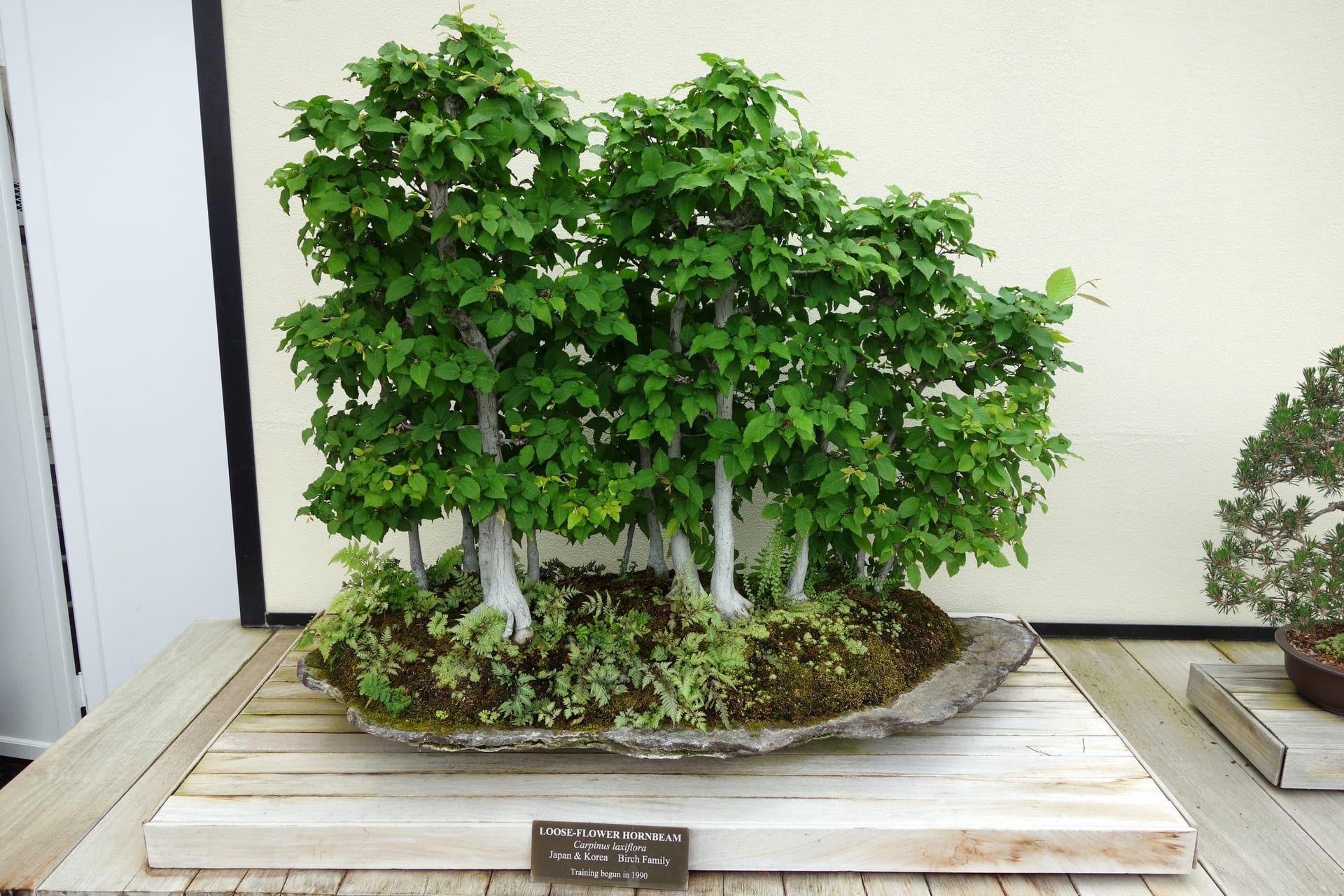
 © Daderot / CC0
Loose-flower hornbeam
The Loose-flower hornbeam, known in bonsai circles by its Japanese nicknames "Akame-soro" or "Aka-soro," is a deciduous tree in the birch family valued for the reddish tint of its spring buds, young leaves, and autumn foliage. Among hornbeams, it stands out for its especially small leaves and fine branching, lending a delicate, twiggy character prized in deciduous bonsai. Even after the leaves fall, its bare winter silhouette has quiet appeal, so there is something to enjoy in every season. It is generally considered a good choice for beginners, making it an approachable species for anyone starting out in bonsai.
View Loose-flower hornbeam encyclopedia →0% commission on your first sales!Register by September 30, 2026 and your first 2 plants are commission-free!
Grower Wanted!
List your plants on GrowerDirect and sell directly to customers nationwide!
6 Transparency Commitments from GrowerDirect
Growers clearly display the following information for all Bonsai listings. Guaranteed transparency for tree variety, origin, light requirements, and difficulty level.
- Tree Variety
- Real Photos
- Color & Appearance
- Growing Region
- Light Requirements
- Difficulty Level
Browse all 144 varieties
Light Requirements
Difficulty Level
Verified growers wanted for Bonsai
Growers are signing up now ahead of launch. Subscribe to be notified when new listings go live.
Getting alerts is free with a member account. When new listings match your saved search, we'll notify you by email and in-app.
Browse other categories
Verified growers (preview)
Loose-flower hornbeam key facts
- Growing Difficulty
- Beginner-friendly
- Lifespan
- Little data on lifespan
- Size
- 10–15 m in the wild (bonsai size depends on styling)
- Watering
- Fertilizer (April–October, except the rainy season and midsummer)
- Light & placement
- Outdoors in sun and good airflow; give part shade in summer to prevent leaf scorch
- Watering
- Water thoroughly when the surface dries; watch closely from budbreak through summer
- Temperature & overwintering
- Hardy; give it a proper cold winter but shelter from freezing wind and frost. After leaf fall it does not need light
- Soil & repotting
- Akadama alone or mixed with kanuma. Repot every 2 years when young, 3 when mature, in early spring or autumn
- Fertilizer
- Solid fertilizer monthly April–October, skipping the rainy season and midsummer
- Pruning & styling
- Once leaves open, pinch back to 2–3 leaves. Cut vigorous shoots May–September and shape overall in Feb–March
- Pests & cautions
- Watch for aphids, scale, leaf rollers and powdery mildew in the rainy season. It is native—choose nursery-grown plants, not wild-dug ones
About Loose-flower hornbeam
The Loose-flower hornbeam is a deciduous bonsai tree whose new shoots and autumn leaves turn red, prized for its small leaves and fine branching — an approachable choice for beginners.
7 things to know before growing Loose-flower hornbeam
1Choose a Sunny Spot
Akashide thrives in a spot with plenty of sun and good air circulation. Strong afternoon sun in midsummer can scorch the leaves, so moving potted trees into partial shade during the hottest hours helps. In winter, keep it somewhere sheltered from frost and cold wind.
2Watering: Let It Dry, Then Soak
Water thoroughly once the surface of the soil has dried out. Because Akashide has fine branches and small leaves, it doesn't tolerate drought well, so extra care is needed in summer. At the same time, a pot that stays constantly wet can lead to root rot, so aim for a clear dry-then-wet rhythm.
3Soil: Prioritize Drainage
A bonsai soil mix that balances drainage with moisture retention works best, typically combining components like akadama and kiryu sand. Keeping the roots healthy in well-draining soil helps maintain the fine branching and small leaves this species is known for.
4Repot During Dormancy
As a deciduous tree, Akashide is best repotted during its dormant season after the leaves have dropped. Its roots tend to fill the pot fairly readily, so trimming and refreshing them roughly every few years, depending on the tree's condition, helps keep growth healthy.
5Pinch and Prune to Keep Its Shape
Akashide puts out vigorous new growth in spring, so pinching back shoots and pruning as needed helps preserve its fine, delicate branching. Because the bare winter silhouette is also part of its appeal, shaping the branch structure with that dormant-season view in mind lets you enjoy the tree year-round.
6Look at Branch Tips and Leaf Size
Since Akashide is prized among hornbeams for its especially small leaves and fine branches, choosing a tree that clearly shows these traits helps you get the most out of its character. It's also worth checking that leaves are healthy all the way out to the branch tips.
7Keep Airflow Good to Prevent Pests
Because Akashide's branches can grow dense, poor air circulation makes it more prone to pests and disease. Thinning out crowded twigs and leaves, and checking the tree regularly so you catch changes early, goes a long way toward keeping it healthy.
Frequently asked questions about Loose-flower hornbeam
- Q.Is it suitable for bonsai beginners?
- A.Yes, Akashide is generally considered a beginner-friendly species. As long as you keep up with basic watering and give it enough sun, it's manageable even for those new to bonsai.
- Q.When can I enjoy its autumn color?
- A.Along with reddish new shoots in spring, Akashide's autumn foliage also takes on a red tint. The exact timing varies with climate and the individual tree's condition, so it's best to watch each year's progress rather than expect a fixed date.
- Q.What does the nickname "Akame-soro" mean?
- A.It's an alternate name used in the bonsai world for Akashide, referring to its characteristically reddish buds. "Aka-soro" is another name used for the same tree.
- Q.How does it differ from other hornbeam species used in bonsai?
- A.Among hornbeams grown as bonsai, Akashide is noted for having the smallest leaves and the finest branches. That delicacy is part of why it lends itself so well to creating the fine branch structure typical of deciduous bonsai.
- Q.How large does it grow?
- A.In the wild, Akashide can reach a natural height of around 10 to 15 meters, but as a bonsai its size is determined by how it's trained. Regular pruning and pinching keep it at a compact size suited to bonsai.
Handy Growing Tools for Loose-flower hornbeam
Learn more about Loose-flower hornbeam in the encyclopedia
View Loose-flower hornbeam encyclopedia entry →
Care difficulty, size, origin and light needs — all basics covered.
More in this category
Can't find the plant you're looking for?
Post your wishes for free and growers with matching plants will contact you with introductions.