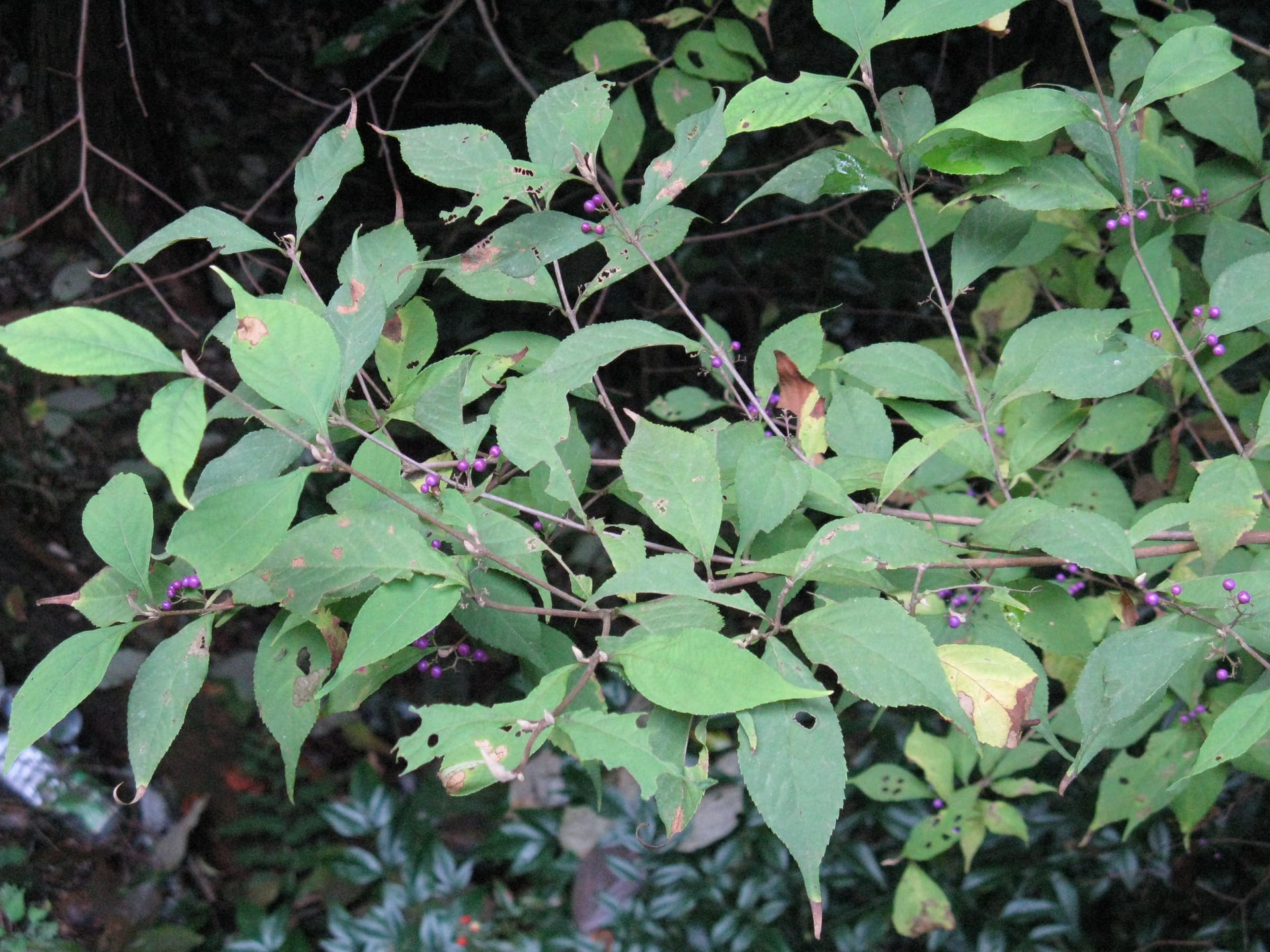
 © KENPEI / CC BY-SA 3.0
Japanese beautyberry
Japanese beautyberry (Murasaki Shikibu) is a deciduous shrub native to woodlands across Japan, prized for the clusters of tiny purple berries, each about 3mm across, that cover its branches in autumn. Because the berries stay on the branches even after the leaves drop, bonsai growers get to enjoy their striking color through the bare winter months. Left untrained, the shrub can reach 2 to 5 meters, but growing it as bonsai in a pot keeps it compact and manageable. It is considered beginner-friendly, rewarding growers who stay consistent with placement and watering. One thing to note: plants sold as Murasaki Shikibu are often actually the closely related Callicarpa dichotoma, which tends to bear even denser clusters of berries, so it is worth checking the label before you buy.
View Japanese beautyberry encyclopedia →0% commission on your first sales!Register by September 30, 2026 and your first 2 plants are commission-free!
Grower Wanted!
List your plants on GrowerDirect and sell directly to customers nationwide!
6 Transparency Commitments from GrowerDirect
Growers clearly display the following information for all Bonsai listings. Guaranteed transparency for tree variety, origin, light requirements, and difficulty level.
- Tree Variety
- Real Photos
- Color & Appearance
- Growing Region
- Light Requirements
- Difficulty Level
Browse all 144 varieties
Light Requirements
Difficulty Level
Verified growers wanted for Bonsai
Growers are signing up now ahead of launch. Subscribe to be notified when new listings go live.
Getting alerts is free with a member account. When new listings match your saved search, we'll notify you by email and in-app.
Browse other categories
Verified growers (preview)
Japanese beautyberry key facts
- Growing Difficulty
- Beginner-friendly
- Lifespan
- Little data on lifespan
- Size
- 2–5 m tall (to about 3 m in gardens)
- Watering
- Fertilizer (small amounts late April–June, a little more Sept–Oct)
- Light & placement
- Bright, airy spot; also grows in part shade. Thin leaves scorch in summer, so shade it from the end of the rainy season
- Watering
- Drinks heavily: twice daily in spring/autumn, 2–3 times in summer, once daily in winter. Drying to leaf drop can kill branches. Keep water off flowers
- Temperature & overwintering
- Heat- and cold-tolerant; keep the pot from freezing in a cold frame over winter
- Soil & repotting
- Pot-binds quickly: repot every 1–2 years in late Feb–March before budbreak, trimming a third to half of the roots
- Fertilizer
- Feed modestly to avoid leggy growth: small amounts late April–June and a bit more in Sept–Oct, using a phosphorus-rich flowering/fruiting feed
- Pruning & styling
- Easy from cuttings or layers; stems grow straight, so add movement while young. Thin dense foliage to keep air moving
- Pests & cautions
- Watch for aphids, spider mites, leaf rollers and powdery mildew. Many plants sold under this name are C. dichotoma. It is native—buy nursery-grown plants, not wild-dug ones
About Japanese beautyberry
A beginner's guide to Japanese beautyberry bonsai: sunlight, watering, soil, repotting timing, the late-autumn berry display, and how to tell it apart from the related Callicarpa dichotoma.
7 things to know before growing Japanese beautyberry
1Sunlight and Airflow
Japanese beautyberry prefers a sunny spot, but intense midsummer sun can scorch its leaves. Keep it outdoors with good air circulation, and move it to partial shade during the hottest weeks to protect the leaves and berries.
2Water Thoroughly When Dry
Water thoroughly once the soil surface has dried out. The plant dries out faster in summer while the berries are developing, so don't let it go too long between waterings, but avoid leaving standing water in the saucer, which can cause root rot.
3Soil: Prioritize Drainage
Use a well-draining bonsai soil mix that still retains some moisture, such as akadama with a bit of leaf mold. Avoiding both waterlogging and excessive dryness helps the plant set berries reliably.
4Repot During Dormancy
Repot during the dormant season after the leaves have fallen. Since roots fill the pot fairly quickly, repotting every one to two years while removing old soil helps prevent root-bound growth and keeps the plant healthy.
5Shape Branches While Young
Japanese beautyberry branches tend to grow straight, so if you want movement in the design, shape them while they are still young. Once the foliage fills in, thin out some leaves to keep air moving, which also helps prevent stuffiness, pests, and disease.
6Berries Persist After Leaf Drop
The berries stay on the bare branches after the leaves drop, making late autumn through winter the prime season to enjoy it as a fruiting bonsai. Birds may eat the berries, so consider where you place the pot if you want the display to last.
7Watch for Callicarpa dichotoma
Plants labeled Murasaki Shikibu at nurseries are often actually Callicarpa dichotoma, a closely related species that tends to bear even denser clusters of berries. Both are attractive for bonsai, so it's worth checking the label or asking the seller so you know what you're getting.
Frequently asked questions about Japanese beautyberry
- Q.Can beginners grow Japanese beautyberry as bonsai?
- A.Yes, it's generally considered a beginner-friendly species. As long as you get the basics of sunlight and watering right, it doesn't require advanced techniques to manage.
- Q.How large does it grow?
- A.Planted in the ground, it can reach a height of about 2 to 5 meters, though in garden settings it often stays around 3 meters. Grown as bonsai in a pot, pruning and repotting keep it much smaller.
- Q.What color and size are the berries?
- A.In autumn, the branches fill with small purple berries about 3mm in diameter. They remain on the branches even after the leaves fall, so you can enjoy them through late autumn and into winter.
- Q.What's the difference between Murasaki Shikibu and Callicarpa dichotoma?
- A.They're closely related species with similarly colored purple berries, and plants sold as Murasaki Shikibu often turn out to be Callicarpa dichotoma. That species tends to bear denser clusters of berries, so it's worth checking the label or asking the seller.
- Q.How long does it typically live?
- A.There isn't much documented data on the lifespan of Japanese beautyberry. Keeping up with basic care, such as regular watering and periodic repotting, is the main way to help it thrive over the long term.
Handy Growing Tools for Japanese beautyberry
Learn more about Japanese beautyberry in the encyclopedia
View Japanese beautyberry encyclopedia entry →
Care difficulty, size, origin and light needs — all basics covered.
More in this category
Can't find the plant you're looking for?
Post your wishes for free and growers with matching plants will contact you with introductions.