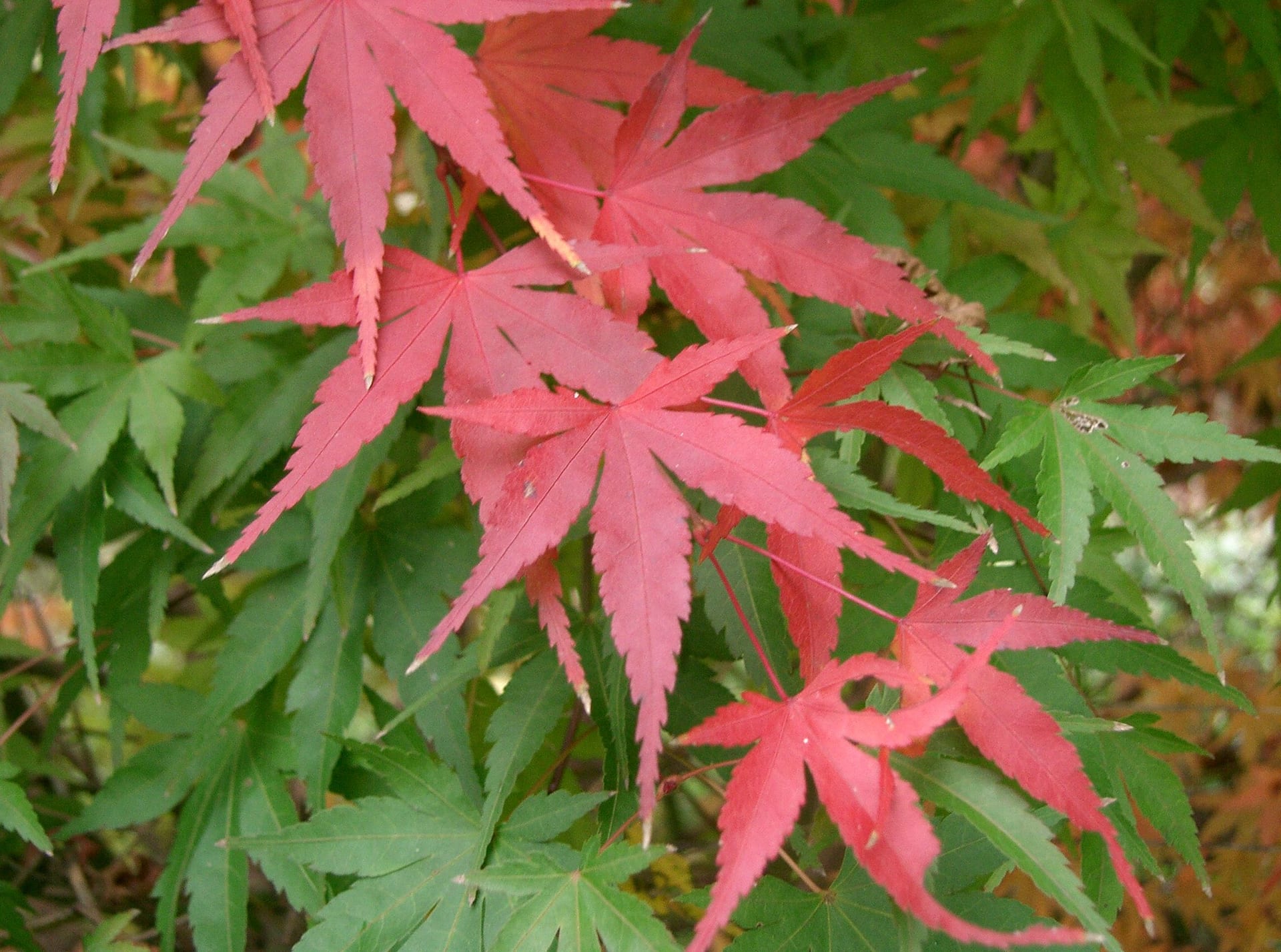
 © KENPEI / CC BY-SA 3.0
Yama-momiji (Japanese maple var. amoenum)
Yama-momiji is a wild Japanese maple native to mountain regions along the Sea of Japan coast, long valued as a classic bonsai material. Its leaves are somewhat larger than those of the Iroha maple and split into 7 to 9 deep lobes, giving the foliage a bold, natural look. The tree is hardy, grows quickly, and germinates readily, making it approachable even for beginners, while its responsiveness to pruning and shaping makes it a great way to practice training techniques. Because of its toughness, it is widely used as a parent stock or rootstock for many cultivated maple varieties, giving it a long track record as bonsai material. With foliage that changes through the seasons, it is a variety you can enjoy shaping into a tree that is uniquely your own.
View Yama-momiji (Japanese maple var. amoenum) encyclopedia →0% commission on your first sales!Register by September 30, 2026 and your first 2 plants are commission-free!
Grower Wanted!
List your plants on GrowerDirect and sell directly to customers nationwide!
6 Transparency Commitments from GrowerDirect
Growers clearly display the following information for all Bonsai listings. Guaranteed transparency for tree variety, origin, light requirements, and difficulty level.
- Tree Variety
- Real Photos
- Color & Appearance
- Growing Region
- Light Requirements
- Difficulty Level
Browse all 144 varieties
Light Requirements
Difficulty Level
Verified growers wanted for Bonsai
Growers are signing up now ahead of launch. Subscribe to be notified when new listings go live.
Getting alerts is free with a member account. When new listings match your saved search, we'll notify you by email and in-app.
Browse other categories
Verified growers (preview)
Yama-momiji (Japanese maple var. amoenum) key facts
- Growing Difficulty
- Beginner-friendly
- Lifespan
- Little data on lifespan
- Size
- Up to about 10 m, typically around 5 m in the mountains (bonsai size depends on styling)
- Watering
- Fertilizer (spring and autumn)
- Light & placement
- Likes sun but not dryness. It prefers cool conditions; in warm regions summer shade and protection from afternoon sun decide autumn colour
- Watering
- Dries fast once in leaf: about twice daily in spring, 2–3 in summer, every 1–2 days in winter, aiming at the soil. Summer drought spoils autumn colour
- Temperature & overwintering
- Very hardy; colour is often poorer in warm regions. After leaf fall let it see a few frosts, then shelter from drying wind
- Soil & repotting
- Free-draining mix; repot around March before budbreak, every 2–3 years (1–2 for mini), pruning roots to encourage fine feeders
- Fertilizer
- Organic fertilizer in mid-April once leaves harden, a top-up in May; autumn feeding from mid-August, finishing in September to aid colour
- Pruning & styling
- Pinch the central bud mid-March to mid-April; defoliate or thin leaves in mid-June; prune around leaf fall (winter cuts risk dieback). Wire bites in quickly—remove promptly
- Pests & cautions
- Poor airflow brings powdery mildew, sooty mould and aphids; prune regularly to avoid congestion. It is native—buy seed- or cutting-grown plants, not wild-dug ones
About Yama-momiji (Japanese maple var. amoenum)
Yama-momiji is a hardy wild maple from Japan's Sea of Japan mountains, known for its large, deeply lobed leaves and fast, easy growth that make it a classic beginner-friendly bonsai variety.
7 things to know before growing Yama-momiji (Japanese maple var. amoenum)
1Sun and Air Circulation
Yama-momiji prefers an outdoor spot with good sun and airflow. Strong midday sun or drying west-facing light in midsummer can scorch the leaves, so moving it to partial shade during the hottest stretch helps. It tolerates cold well and can stay outdoors through winter as long as it's shielded from direct frost.
2Watering Basics
During the growing season, water thoroughly once the soil surface dries out. In summer, when soil dries quickly, watering both morning and evening is common. In winter, growth slows down, so cut back on how often you water.
3Well-Draining Soil
Even though yama-momiji is a tough tree, well-draining soil is essential to prevent root rot. A bonsai mix built mainly around akadama, blended with kiryu sand and leaf mold, works well. A ready-made bonsai soil mix is an easy option if you'd rather not blend your own.
4Repotting Timing
The best time to repot is around March, before the buds break. Repot into a free-draining mix every two to three years (every one to two years for mini bonsai), removing old soil and tidying the roots to encourage fine feeder roots.
5Pruning and Pinching
Fast growth means regular pruning and pinching are essential to keep the tree's shape. Pinch out the central buds from mid-March to mid-April, and do leaf-cutting or leaf-thinning in mid-June. Prune around the time the leaves fall, and avoid winter pruning, which risks branch dieback.
6Enjoying Fall Color
Come autumn, the leaves turn color, giving yama-momiji its signature fall display. To bring out vivid color, keep the tree in a sunny spot through autumn and avoid letting it dry out. Sudden changes in environment can cause the leaves to curl or color unevenly, so keep conditions stable.
7Choosing a Young Tree
When choosing a young tree, look for a trunk with good taper and well-balanced branching, which makes later styling easier. Leaves split into 7 to 9 deep lobes are a good sign of a true yama-momiji. Since it's hardy and fast-growing, it's also a solid first tree for anyone trying bonsai for the first time.
Frequently asked questions about Yama-momiji (Japanese maple var. amoenum)
- Q.Is yama-momiji suitable for beginners?
- A.Yes, it's hardy, fast-growing, and germinates readily, which makes it one of the more beginner-friendly bonsai varieties. As long as you keep up with basic watering and soil care, it's unlikely to give you major trouble.
- Q.How is it different from the Iroha maple?
- A.Yama-momiji has somewhat larger leaves than the Iroha maple, split into 7 to 9 deep lobes. It's a wild species native to mountains along the Sea of Japan coast, and its toughness has made it a common parent stock and rootstock for many cultivated maple varieties.
- Q.How large can it be trained as bonsai?
- A.As bonsai it can be shaped into a wide range of sizes through pruning and training, from small shohin trees to larger specimens, depending on how it's styled.
- Q.How often does it need repotting?
- A.Every two to three years is a good guide (every one to two years for mini bonsai). The best time is around March, before the buds break.
- Q.When does it show fall color?
- A.The leaves begin turning color in autumn, giving yama-momiji its distinctive fall display. To bring out the best color, keep it in a sunny spot through autumn and make sure it doesn't dry out.
Handy Growing Tools for Yama-momiji (Japanese maple var. amoenum)
Learn more about Yama-momiji (Japanese maple var. amoenum) in the encyclopedia
View Yama-momiji (Japanese maple var. amoenum) encyclopedia entry →
Care difficulty, size, origin and light needs — all basics covered.
More in this category
Can't find the plant you're looking for?
Post your wishes for free and growers with matching plants will contact you with introductions.