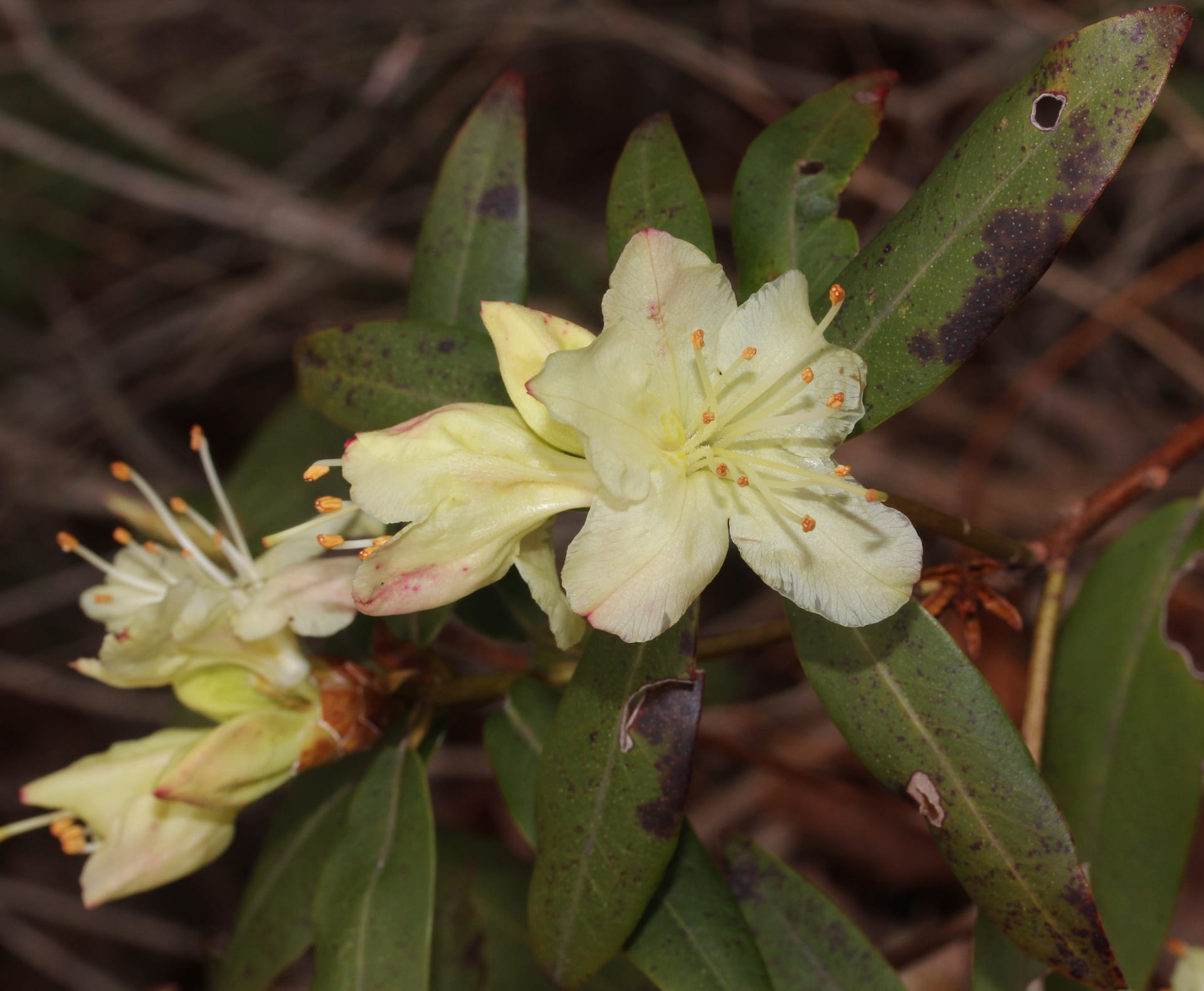
 © Alpsdake / CC BY-SA 4.0
Keisk's rhododendron
Unlike most Japanese azaleas that bloom in red or pink, Hikage-tsutsuji (Keisk's rhododendron) is a rare native species that produces cream to pale yellow flowers in April and May. A small relative of rhododendrons, it grows naturally on rocky mountain slopes and along mountain streams across Japan. Because of its particular root habits and need for careful placement, it is considered a variety best suited to experienced growers. On Yakushima, a creeping dwarf form stays remarkably compact, reaching only about 30cm after a decade, which makes it a favorite for small bonsai and alpine-style plantings. Its subtle, pale blossoms and naturally weathered look give it a quiet character unlike other tsutsuji.
View Keisk's rhododendron encyclopedia →0% commission on your first sales!Register by September 30, 2026 and your first 2 plants are commission-free!
Grower Wanted!
List your plants on GrowerDirect and sell directly to customers nationwide!
6 Transparency Commitments from GrowerDirect
Growers clearly display the following information for all Bonsai listings. Guaranteed transparency for tree variety, origin, light requirements, and difficulty level.
- Tree Variety
- Real Photos
- Color & Appearance
- Growing Region
- Light Requirements
- Difficulty Level
Browse all 144 varieties
Light Requirements
Difficulty Level
Verified growers wanted for Bonsai
Growers are signing up now ahead of launch. Subscribe to be notified when new listings go live.
Getting alerts is free with a member account. When new listings match your saved search, we'll notify you by email and in-app.
Browse other categories
Verified growers (preview)
Keisk's rhododendron key facts
- Growing Difficulty
- Advanced
- Lifespan
- Little data on lifespan
- Size
- 1–2 m tall; the Yakushima dwarf form reaches about 30 cm in 10 years
- Watering
- Fertilizer (sparingly after flowering and in autumn)
- Light & placement
- Grows in sun as well as shade but not in deep shade. Bright part shade out of hot afternoon sun is easiest
- Watering
- Likes moisture and dislikes drought. Water well as the surface starts to dry and mist in summer; leaf edges roll under when too dry
- Temperature & overwintering
- The typical form is rated to about −18°C (0°F) and the Yakushima dwarf to about −23°C (−10°F); summer heat and dryness are the harder part
- Soil & repotting
- As for azaleas, use acidic, free-draining, airy soil such as kanuma. Repot after flowering
- Fertilizer
- Slow-growing, so feed lightly—a little after flowering and in autumn
- Pruning & styling
- Prune right after flowering. Growth is slow, so little cutting is needed; keep its natural multi-stemmed habit
- Pests & cautions
- Var. hypoglaucum (grey-white leaf undersides) is a protected Nationally Rare Species and may not be traded—avoid plants you cannot identify. Buy nursery-grown plants, never wild-dug ones
About Keisk's rhododendron
Hikage-tsutsuji is a Japan-native dwarf rhododendron with cream to pale yellow blooms, best suited to experienced growers; its Yakushima dwarf form is popular as bonsai and an alpine planting.
7 things to know before growing Keisk's rhododendron
1Light Shade and Airflow
In the wild it grows on rocky mountain slopes and along streams, so it prefers bright partial shade rather than direct sun, along with good air circulation. Strong afternoon sun in summer can scorch the leaves, so shading or careful placement is important.
2Keep It From Drying Out
Hikage-tsutsuji likes steady moisture and does poorly when it dries out. Water thoroughly as soon as the soil surface starts to dry, and mist the leaves as well in summer. If the leaf edges begin to curl under, the plant is too dry, so treat that as a warning sign.
3Well-Draining Mix
Given its rocky, streamside origins, a well-draining, well-aerated potting mix suits this plant best. Acidic soil blends made for azaleas and rhododendrons, often centered on kanuma soil, are commonly used.
4Handle Roots Gently
The fine root system is sensitive to drying out and damage, so repotting is best done without heavily disturbing the root ball, timed for after flowering finishes. Repotting too frequently can stress the plant.
5Watch Summer Sun
After flowering finishes in April and May, keep an eye on strong summer sun and dryness. Some winter cold exposure mirrors its natural habitat, but potted plants need protection to keep the roots from freezing.
6Standard vs Dwarf Form
The standard type can grow to a height of 1 to 2m, while the Yakushima-derived dwarf form grows much more slowly, reaching only about 30cm after ten years. It is worth checking which type you are choosing based on the shape and space you have in mind.
7Choosing a Plant and a Legal Caution
A variety with grayish-white leaf undersides, Rhododendron keiskei var. hypoglaucum (Urajiro-hikage-tsutsuji), is designated a Nationally Rare Species under Japan's Act on Conservation of Endangered Species, and selling, transferring, or displaying or advertising it for sale is in principle prohibited. Do not list or buy plants with grayish-white leaf undersides, or any plant you cannot tell apart from that variety. Never collect plants from the wild; choose nursery-grown stock. Because it is fairly demanding to grow, it suits people who already have experience with azaleas and rhododendrons.
Frequently asked questions about Keisk's rhododendron
- Q.Can beginners grow Hikage-tsutsuji successfully?
- A.Hikage-tsutsuji is generally regarded as a challenging plant, requiring careful attention to placement, watering, and root care. It is best approached after gaining some experience growing azaleas or rhododendrons.
- Q.When does it bloom and what color are the flowers?
- A.It blooms from April to May, producing flowers in shades from cream to pale yellow. This is unusual among tsutsuji, most of which bloom in red or pink tones.
- Q.What is the difference between the Yakushima dwarf form and the standard type?
- A.The standard type grows to a height of 1 to 2m, while the Yakushima dwarf form has a creeping habit and grows much more slowly, reaching only about 30cm after ten years. The dwarf form suits those who want a small bonsai or alpine-style planting.
- Q.What kind of location suits this plant best?
- A.A spot with bright partial shade and good air circulation, similar to its native rocky mountain and streamside habitat, suits it best. Strong direct summer sun should be avoided, as it can scorch the leaves.
- Q.What should I be careful about when repotting?
- A.Because the fine roots are sensitive to drying out and damage, repotting should be done without heavily disturbing the root ball. It is best done in the calmer period after flowering, and frequent repotting should be avoided.
Handy Growing Tools for Keisk's rhododendron
Learn more about Keisk's rhododendron in the encyclopedia
View Keisk's rhododendron encyclopedia entry →
Care difficulty, size, origin and light needs — all basics covered.
More in this category
Can't find the plant you're looking for?
Post your wishes for free and growers with matching plants will contact you with introductions.