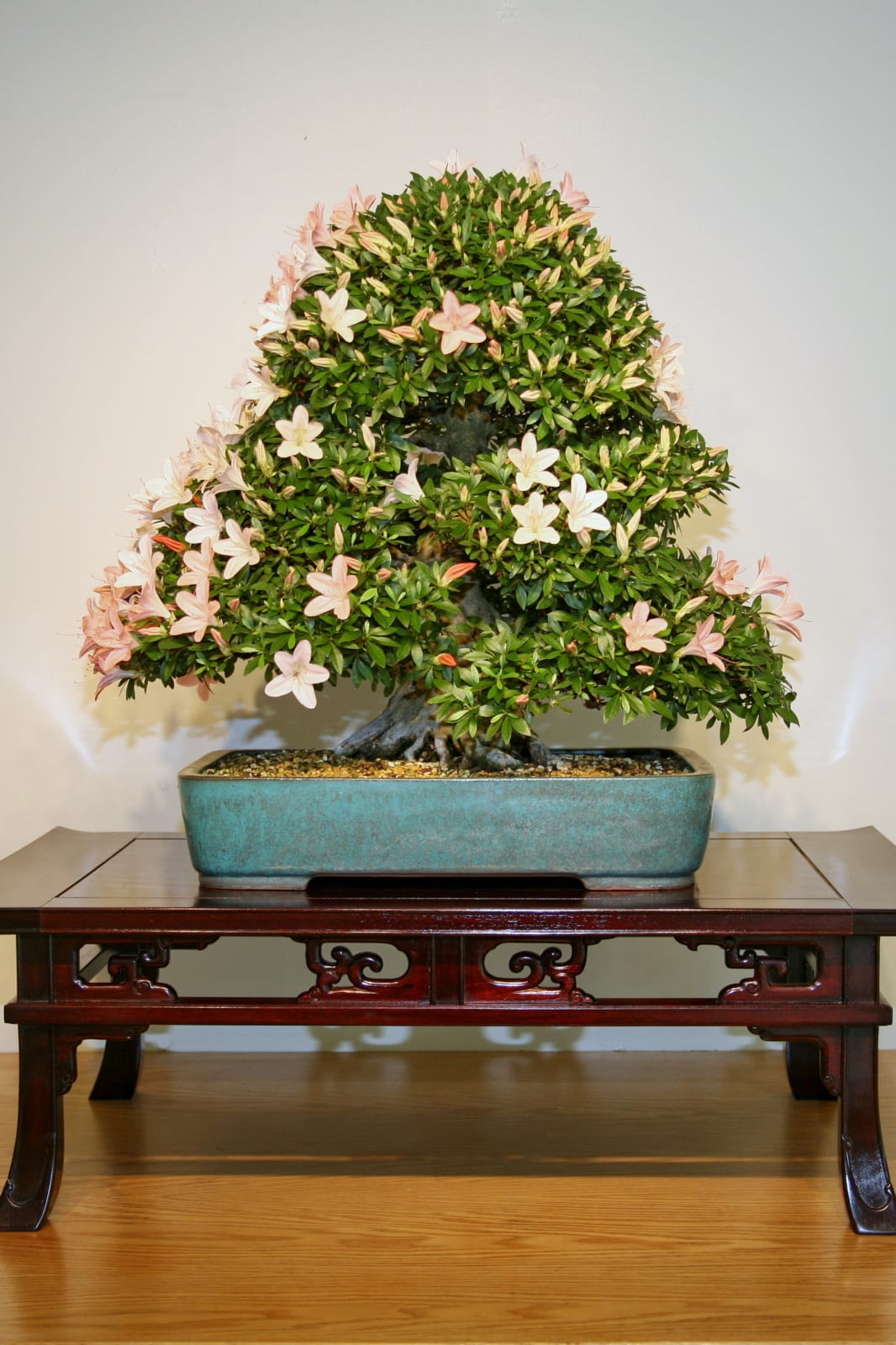
 © Cliff from Arlington, Virginia, USA / CC BY 2.0
Satsuki azalea 'Nikko'
Nikko is a Satsuki azalea that arose as a branch sport of the old cultivar Kozan. Its small flowers are pale pink (toki-iro) with a variegated pattern, and the same plant can also produce solid red, pink, and white blooms, a distinctive trait sometimes called sporting. With small leaves and good branching and budding habits, it trains easily as bonsai, making it a popular choice for beginners. Satsuki azaleas are evergreen shrubs that typically reach 0.5 to 1 meter in height, and as bonsai they are shaped to fit the size of the pot, making Nikko easy to enjoy even in limited space.
View Satsuki azalea 'Nikko' encyclopedia →0% commission on your first sales!Register by September 30, 2026 and your first 2 plants are commission-free!
Grower Wanted!
List your plants on GrowerDirect and sell directly to customers nationwide!
6 Transparency Commitments from GrowerDirect
Growers clearly display the following information for all Bonsai listings. Guaranteed transparency for tree variety, origin, light requirements, and difficulty level.
- Tree Variety
- Real Photos
- Color & Appearance
- Growing Region
- Light Requirements
- Difficulty Level
Browse all 144 varieties
Light Requirements
Difficulty Level
Verified growers wanted for Bonsai
Growers are signing up now ahead of launch. Subscribe to be notified when new listings go live.
Getting alerts is free with a member account. When new listings match your saved search, we'll notify you by email and in-app.
Browse other categories
Verified growers (preview)
Satsuki azalea 'Nikko' key facts
- Growing Difficulty
- Beginner-friendly
- Lifespan
- Little data for the cultivar
- Size
- Satsuki is an evergreen shrub of about 0.5–1 m; as bonsai it is trained to suit the pot
- Watering
- Fertilizer (April, June after flowering, Sept–Oct)
- Light & placement
- Likes light, but summer sun scorches leaves and roots. Give young plants full sun; keep finished trees in part shade, always with good airflow
- Watering
- Likes water but its fine roots rot if waterlogged: 1–2 times daily in spring, 2–3 in summer, every 2–3 days in winter. Avoid watering in the midday heat
- Temperature & overwintering
- Reasonably hardy but dislikes cold winter wind; keep the pot from freezing under eaves or similar
- Soil & repotting
- Coarse, acidic kanuma-based mix. Repot right after flowering (June) or in autumn (late Sep–early Oct)
- Fertilizer
- Solid fertilizer about April as new leaves harden, after flowering in June, and monthly in Sep–Oct. Underfeeding causes dieback
- Pruning & styling
- Flower buds form in July to mid-August, so finish pinching and pruning in June (early July west of Kanto). Wire in April and Sep–Oct
- Pests & cautions
- Pest-prone: watch for lace bugs, spider mites, aphids and thrips. Some plants bloom much like Kozan, so choose one in flower
About Satsuki azalea 'Nikko'
Nikko is a Satsuki azalea that arose as a branch sport of the old cultivar Kozan. It bears small pale pink flowers with a variegated pattern, and can also produce solid red, pink, and white blooms on the same plant, a popular, beginner-friendly bonsai variety valued for its small leaves and easy shaping.
7 things to know before growing Satsuki azalea 'Nikko'
1Sunny, airy placement
Growing Nikko in a bright, well-ventilated spot helps bring out the variegated toki-iro pattern and the vivid red, pink, and white blooms more clearly. Strong midsummer sun can scorch the leaves, so moving potted plants to partial shade during the hottest months is a good precaution.
2Small leaves mean careful watering
With its small leaves and fine roots, Nikko is sensitive to drying out. Water thoroughly once the soil surface feels dry, and be especially careful during flowering and summer months.
3Soil built around kanuma
Bonsai growers commonly use kanuma soil, valued for balancing drainage with moisture retention, as the main component for Satsuki azaleas. Since Nikko is trained with a compact root mass, choosing the right soil helps keep it vigorous.
4Repot after flowering, thanks to strong budding
The best time to repot is just after the flowers fade. Because Nikko buds reliably, it recovers well even when the root ball is worked on at this stage, making it easier to maintain as bonsai.
5Prune after flowering to shape it
With its small leaves and good branching habit, Nikko is easy to shape through pruning and pinching after flowering. Regular care helps maintain a compact, bonsai-like form.
6One plant, several flower colors
Along with its variegated toki-iro blooms, Nikko can produce solid red, pink, or white flowers on the same plant. Watching how the pattern varies by year or branch is part of the appeal.
7Check leaves and branching when choosing
When choosing a plant, look for undamaged leaves and dense branching, which makes shaping easier later on. Its small leaves and reliable budding make it manageable even for beginners.
Frequently asked questions about Satsuki azalea 'Nikko'
- Q.Is Nikko suitable for beginners?
- A.Yes, Nikko is considered a beginner-friendly variety. Its small leaves, reliable budding, and manageable growth habit make it a good choice for those new to growing Satsuki azaleas as bonsai.
- Q.What do the flowers look like?
- A.The typical bloom is a small flower with a variegated pattern on a pale pink (toki-iro) base, but the same plant can also produce solid red, pink, or white flowers. The exact pattern can vary from year to year.
- Q.How large does it grow?
- A.Satsuki azaleas are evergreen shrubs that reach about 0.5 to 1 meter in height, but as bonsai they are kept small and shaped to fit the pot. Pruning makes it easy to control the plant's overall form.
- Q.How is Nikko related to Kozan?
- A.Nikko arose as a branch sport of the old cultivar Kozan. It carries traits inherited from Kozan while showing its own mix of variegated toki-iro blooms and solid red, pink, and white flowers.
- Q.When is the best time to repot?
- A.The ideal time to repot is right after flowering ends. Repotting without disturbing the root ball too much helps minimize stress on the plant.
Handy Growing Tools for Satsuki azalea 'Nikko'
Learn more about Satsuki azalea 'Nikko' in the encyclopedia
View Satsuki azalea 'Nikko' encyclopedia entry →
Care difficulty, size, origin and light needs — all basics covered.
More in this category
Can't find the plant you're looking for?
Post your wishes for free and growers with matching plants will contact you with introductions.