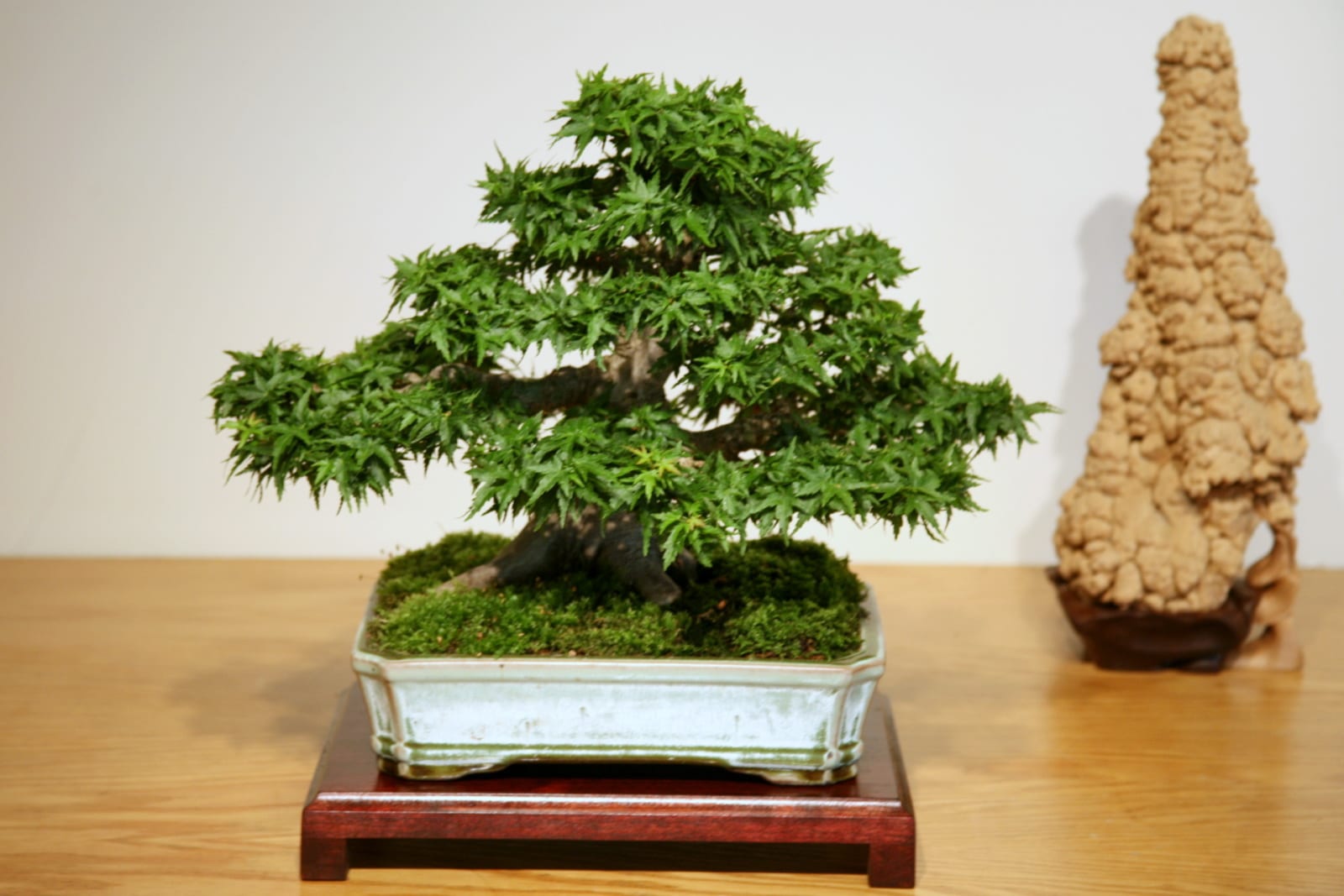
 © Cliff from Arlington, Virginia, USA / CC BY 2.0
Kotohime Japanese maple
Kotohime is an extremely dwarf Japanese maple known for its tiny leaves and short internodes. As a leading yatsubusa (many-branching) maple variety, it branches profusely and readily develops a dense, finely twigged silhouette even in a small pot, making it a long-time favorite for mame and shohin bonsai. It's generally considered a variety for intermediate growers, though it becomes manageable once you have the basics of placement and watering down. Because it also propagates readily from cuttings, growers can gradually build up their collection by rooting new plants from an existing tree. Packed into a palm-sized pot, Kotohime offers the delicate branching and seasonal color of a maple in miniature form.
View Kotohime Japanese maple encyclopedia →0% commission on your first sales!Register by September 30, 2026 and your first 2 plants are commission-free!
Grower Wanted!
List your plants on GrowerDirect and sell directly to customers nationwide!
6 Transparency Commitments from GrowerDirect
Growers clearly display the following information for all Bonsai listings. Guaranteed transparency for tree variety, origin, light requirements, and difficulty level.
- Tree Variety
- Real Photos
- Color & Appearance
- Growing Region
- Light Requirements
- Difficulty Level
Browse all 144 varieties
Light Requirements
Difficulty Level
Verified growers wanted for Bonsai
Growers are signing up now ahead of launch. Subscribe to be notified when new listings go live.
Getting alerts is free with a member account. When new listings match your saved search, we'll notify you by email and in-app.
Browse other categories
Verified growers (preview)
Kotohime Japanese maple key facts
- Growing Difficulty
- Intermediate
- Lifespan
- Little data for the cultivar
- Size
- Extremely dwarf; easy to keep as mame to shohin bonsai
- Watering
- Fertilizer (spring and autumn, sparingly)
- Light & placement
- Sun and good airflow; it dislikes afternoon sun, so shade 50–70% from the end of the rainy season to early September to prevent scorch
- Watering
- Tiny pots dry very fast: about twice daily in spring, 2–3 in summer, at the soil. Summer drought causes scorch and dieback
- Temperature & overwintering
- Cold-hardy (A. palmatum: USDA zone 5). After leaf fall let it see 2–3 frosts, then shelter from drying wind and late frost
- Soil & repotting
- Free-draining mix; repot around March before budbreak, every 2–3 years (1–2 for mini), pruning roots to encourage fine feeders
- Fertilizer
- Organic fertilizer in mid-April once leaves harden, a top-up in May; autumn feeding from mid-August, finishing in September to aid colour
- Pruning & styling
- Internodes are short, so simply removing the central bud builds ramification. Avoid full defoliation; thin leaves instead. Prune around leaf fall
- Pests & cautions
- Aphids on new shoots and powdery mildew from the rainy season. The thin leaves are easily damaged by sprays—follow label rates
About Kotohime Japanese maple
Kotohime is a leading yatsubusa Japanese maple with tiny leaves and dense branching, ideal for mame and shohin bonsai in small pots. It also propagates easily from cuttings.
7 things to know before growing Kotohime Japanese maple
1Placement
Kotohime prefers a spot with good sun and airflow, but strong direct summer sun can scorch its leaves. Because its leaves are extremely small, moving it to bright partial shade in the afternoon is safer, especially while it's still in a small pot.
2Watering
Because Kotohime is grown in a small pot as an extremely dwarf variety, the soil surface dries out quickly. Check the soil regularly during the growing season and water thoroughly once it dries.
3Soil
Since roots fill a small pot quickly, a well-draining, well-aerated bonsai soil mix is important. An akadama-based blend is a common choice.
4Repotting
Because mame and shohin-sized pots fill with roots relatively fast, Kotohime tends to need repotting at shorter intervals than larger bonsai. The best time is just before new growth starts, when the roots can be trimmed and refreshed.
5Pruning and Pinching
To make the most of its yatsubusa branching habit, pinch back new shoots regularly to encourage more branches to form. This ongoing care is what builds up the fine, twiggy silhouette Kotohime is known for.
6Seasonal Care
Its tiny leaves are sensitive to heat and drying out, so watch for leaf scorch and dehydration in summer. In winter, the roots in a small pot are more exposed to cold, so some frost protection is worth considering during the coldest stretches.
7Choosing a Good Specimen
Kotohime's character shows in its small leaves and tightly spaced internodes that create fine branching. When choosing a tree, look for even, well-distributed branching and leaves, and check that there's no dead wood.
Frequently asked questions about Kotohime Japanese maple
- Q.Is Kotohime suitable for beginners?
- A.It's generally considered a variety for intermediate growers, since its tiny leaves and small pot mean basic care like watering needs a bit more attention. Once you're comfortable with bonsai fundamentals, it becomes easier to manage over time.
- Q.How large does Kotohime typically grow?
- A.It's an extremely dwarf variety that's easy to maintain at mame or shohin bonsai size. It can stay in a small pot while keeping a compact form for a long time.
- Q.Can Kotohime be propagated from cuttings?
- A.Yes, Kotohime is known as a variety that roots readily from cuttings. This makes it possible to grow new plants from an existing tree and gradually build up your collection.
- Q.What makes Kotohime different from other Japanese maples?
- A.Kotohime is a leading yatsubusa maple variety, meaning it has unusually small leaves and short internodes. This lets it develop a dense, finely branched silhouette even in a small pot.
- Q.How often does Kotohime need repotting?
- A.Because it's grown in a small pot, its roots fill the space relatively quickly, so it tends to need repotting more often than larger bonsai. It's best done just before new growth starts, checking root condition each time.
Handy Growing Tools for Kotohime Japanese maple
Learn more about Kotohime Japanese maple in the encyclopedia
View Kotohime Japanese maple encyclopedia entry →
Care difficulty, size, origin and light needs — all basics covered.
More in this category
Can't find the plant you're looking for?
Post your wishes for free and growers with matching plants will contact you with introductions.