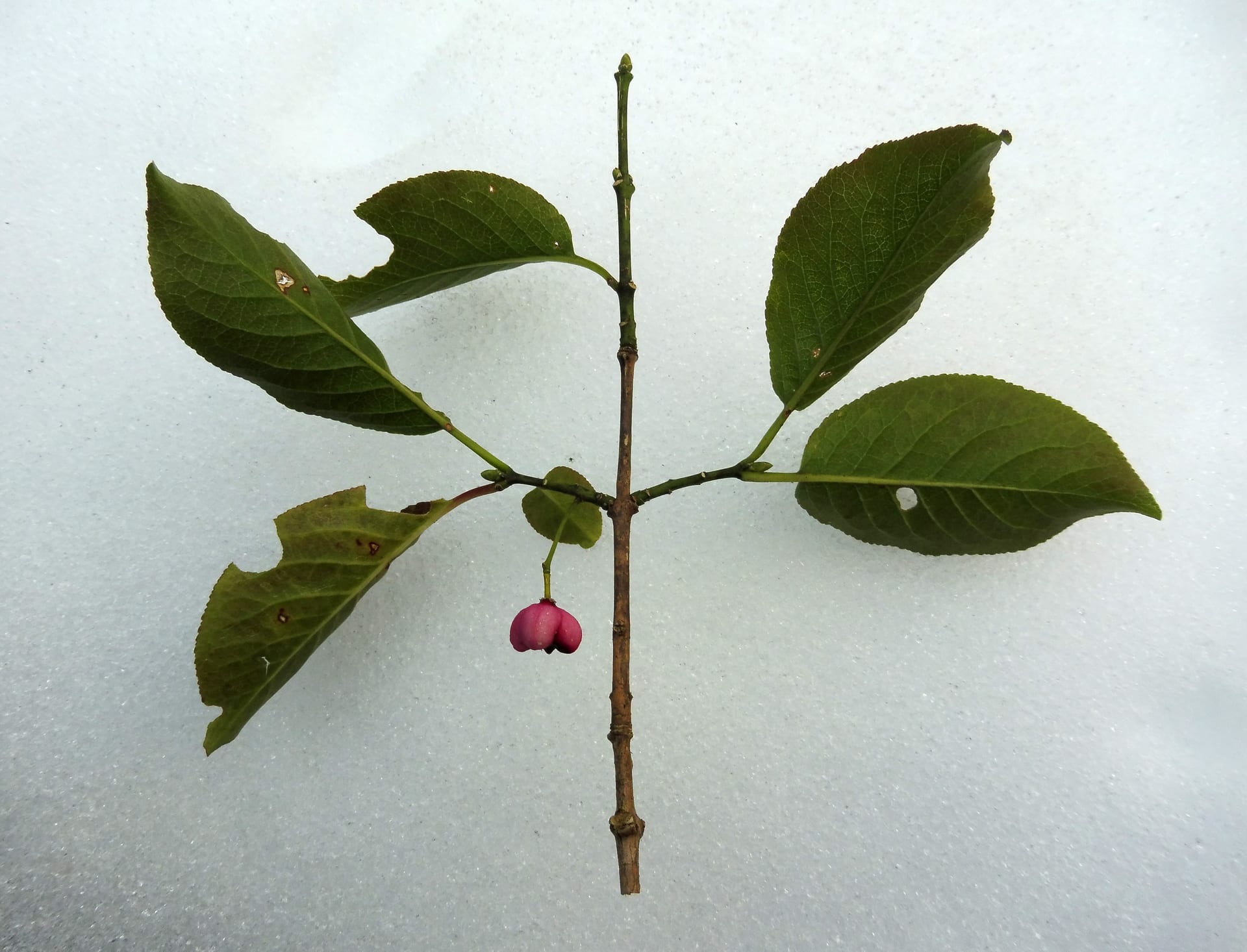
 © Mason Brock (Masebrock) / Public domain
Hamilton's spindletree
Mayumi (Hamilton's spindletree) is a deciduous tree in the spindle tree family, valued in bonsai for its square pink fruit and vivid autumn color. In fall its branches fill with pale pink, angular fruit that split into four sections as they ripen, revealing bright red seeds inside. Its autumn foliage is equally attractive, giving the tree seasonal interest year-round. Mayumi is generally considered an easy species for beginners to grow. Because it is dioecious, though, a male tree is needed nearby to reliably pollinate a female tree and ensure fruit set. Trees typically stay around 3 meters tall, though some can reach as much as 15 meters.
View Hamilton's spindletree encyclopedia →0% commission on your first sales!Register by September 30, 2026 and your first 2 plants are commission-free!
Grower Wanted!
List your plants on GrowerDirect and sell directly to customers nationwide!
6 Transparency Commitments from GrowerDirect
Growers clearly display the following information for all Bonsai listings. Guaranteed transparency for tree variety, origin, light requirements, and difficulty level.
- Tree Variety
- Real Photos
- Color & Appearance
- Growing Region
- Light Requirements
- Difficulty Level
Browse all 144 varieties
Light Requirements
Difficulty Level
Verified growers wanted for Bonsai
Growers are signing up now ahead of launch. Subscribe to be notified when new listings go live.
Getting alerts is free with a member account. When new listings match your saved search, we'll notify you by email and in-app.
Browse other categories
Verified growers (preview)
Hamilton's spindletree key facts
- Growing Difficulty
- Beginner-friendly
- Lifespan
- Little data on lifespan
- Size
- Usually about 3 m, occasionally up to 15 m
- Watering
- Fertilizer (late Feb–early March, then April–August after fruit set; stop from September)
- Light & placement
- A forest-edge tree suited to part shade. Shade it from afternoon sun in summer, then give full sun from September for autumn colour and fruit
- Watering
- Very thirsty: twice daily in spring/autumn, 2–3 times in summer, every 2 days in winter. Uptake slows after mid-July, so check dryness. Keep water off flowers
- Temperature & overwintering
- Cold-hardy, but its sappy wood is prone to winter dieback and frozen roots—protect it in a cold frame after leaf fall
- Soil & repotting
- Roots fill the pot within a year. Repot in mid-March or September: yearly for young trees, every 1–2 years for mature ones
- Fertilizer
- Feed fruiting trees generously, adding bone meal to oilcake for phosphorus. Stop in September so the fruit colours
- Pruning & styling
- Leave vigorous shoots for a while to build up short fruiting spurs, then cut them in early August to early September. Little fine pinching is needed
- Pests & cautions
- Watch for aphids, lace bugs, scale and leaf rollers. Keep a male tree for pollination; fruiting every year weakens the tree. Seeds are toxic
About Hamilton's spindletree
Mayumi is a deciduous spindle tree whose pale pink fall fruit splits open to reveal red seeds, with vivid autumn leaves. Beginner-friendly, though a male tree is needed nearby for reliable fruiting.
7 things to know before growing Hamilton's spindletree
1Partial Shade to Bright Shade
Mayumi naturally grows along forest edges, so partial shade to bright shade suits it. In summer, use shade cloth to protect it from afternoon sun and leaf scorch. From September on, give it plenty of sun to bring out autumn color and help the fruit color up.
2Watering Basics
Water thoroughly once the soil surface has dried, which is the general rule for this species. It dries out faster during the spring-to-fall growing season, so watch for underwatering, while lighter watering is fine once the leaves have dropped.
3Choosing Soil
Choose a soil mix that balances drainage with water retention. A standard bonsai mix based on akadama with some leaf mold works well for mayumi.
4When to Repot
Mayumi's roots grow quickly and can fill a pot within a year. Repot young trees every year and mature trees every one to two years. The best times are mid-March or September.
5Seasonal Pruning
Trimming unwanted branches while the tree is bare in the dormant season helps shape next year's form, foliage color, and fruiting. During the growing season, trim back overly long shoots as needed to maintain the silhouette.
6Picking Male vs. Female
Mayumi is dioecious, so if you want reliable fruiting you'll need both a female tree and a male tree nearby for pollination. Confirming which sex a tree is at the time of purchase can save you from being surprised later when a female tree alone fails to fruit.
7Enjoying Foliage and Fruit
In autumn mayumi offers both colorful foliage and fruit that splits into four sections to reveal red seeds inside. Keeping up with the basics — good light and air circulation — helps bring out strong autumn color and a good fruit set.
Frequently asked questions about Hamilton's spindletree
- Q.Is mayumi easy to grow for beginners?
- A.Mayumi is generally considered a beginner-friendly species. As long as you keep up with basic light and watering care, it's manageable even for those new to bonsai.
- Q.How do I get mayumi to fruit every year?
- A.Because mayumi is dioecious, a female tree alone often won't set fruit reliably. Keeping a male tree nearby for pollination makes fruiting more consistent.
- Q.How large does mayumi grow?
- A.As a bonsai or garden tree, mayumi typically stays around 3 meters tall. In rare cases it can grow as tall as about 15 meters.
- Q.When is the best time to repot mayumi?
- A.Repot in mid-March or in September. The roots grow fast enough to fill the pot within a year, so repot young trees every year and mature trees every one to two years.
- Q.Can I enjoy both autumn leaves and fruit at the same time?
- A.Yes, mayumi offers both attractive autumn foliage and fruiting at the same time of year. As the fruit ripens it splits into four sections to reveal red seeds inside, adding to the seasonal display alongside the leaf color.
Handy Growing Tools for Hamilton's spindletree
Learn more about Hamilton's spindletree in the encyclopedia
View Hamilton's spindletree encyclopedia entry →
Care difficulty, size, origin and light needs — all basics covered.
More in this category
Can't find the plant you're looking for?
Post your wishes for free and growers with matching plants will contact you with introductions.