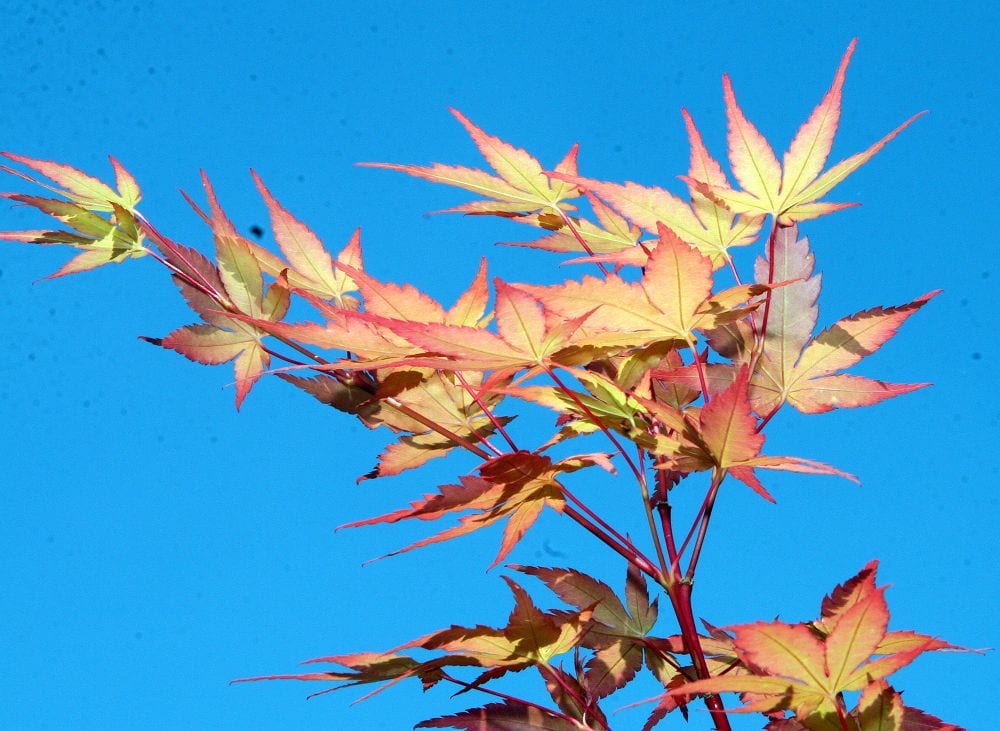
 © David J. Stang / CC BY-SA 4.0
Sango-kaku (coral-bark maple)
Sango-kaku is a maple variety known for the way its young branches turn a vivid coral color from autumn into winter. Only branches in their first or second year develop this color; older wood gradually fades, so pruning to encourage fresh young growth is the key to keeping the bark vibrant. Its biggest draw is the bright red branch structure that remains after the leaves fall, making it stand out in the garden or in a pot just as other maples settle into their bare winter look. Considered a variety for intermediate growers, it grows upright to about 6 to 7.5 meters in its natural form, though bonsai specimens are typically trained to a small or medium size to showcase the changing bark color. Grown both as bonsai and as a garden tree, it offers a different look through the seasons.
View Sango-kaku (coral-bark maple) encyclopedia →0% commission on your first sales!Register by September 30, 2026 and your first 2 plants are commission-free!
Grower Wanted!
List your plants on GrowerDirect and sell directly to customers nationwide!
6 Transparency Commitments from GrowerDirect
Growers clearly display the following information for all Bonsai listings. Guaranteed transparency for tree variety, origin, light requirements, and difficulty level.
- Tree Variety
- Real Photos
- Color & Appearance
- Growing Region
- Light Requirements
- Difficulty Level
Browse all 144 varieties
Light Requirements
Difficulty Level
Verified growers wanted for Bonsai
Growers are signing up now ahead of launch. Subscribe to be notified when new listings go live.
Getting alerts is free with a member account. When new listings match your saved search, we'll notify you by email and in-app.
Browse other categories
Verified growers (preview)
Sango-kaku (coral-bark maple) key facts
- Growing Difficulty
- Intermediate
- Lifespan
- Little data for the cultivar
- Size
- Upright, 6–7.5 m in the ground (bonsai: shohin to medium)
- Watering
- Fertilizer (spring and autumn, sparingly)
- Light & placement
- Sun to part shade, sheltered from strong wind. Shade in summer against scorch; give full light from autumn to bring out twig and leaf colour
- Watering
- Dries fast once in leaf: about twice daily in spring, 2–3 in summer, every 1–2 days in winter, aiming at the soil. Summer drought spoils autumn colour
- Temperature & overwintering
- Cold-hardy (USDA zone 5). Winter is its display season; shelter from drying wind and late frost
- Soil & repotting
- Free-draining mix; repot around March before budbreak, every 2–3 years (1–2 for mini), pruning roots to encourage fine feeders
- Fertilizer
- Organic fertilizer in mid-April once leaves harden, a top-up in May; autumn feeding from mid-August, finishing in September to aid colour
- Pruning & styling
- Colour is brightest on 1–2-year wood, so cut back older shoots around leaf fall to keep renewing growth. Pinch mid-March to mid-April
- Pests & cautions
- Reported to be highly susceptible to bacterial blight—remove blackened, dying shoots early and keep tools clean. Also watch for aphids and powdery mildew
About Sango-kaku (coral-bark maple)
Sango-kaku is a maple whose young branches turn bright coral in autumn and winter. Only one- to two-year-old wood colors up, making the bare winter silhouette its main appeal; grown as both bonsai and garden tree, suited to intermediate growers.
7 things to know before growing Sango-kaku (coral-bark maple)
1Choose a Sunny, Airy Spot
Sango-kaku prefers a bright, well-ventilated spot outdoors. Good light through autumn and winter brings out its coral bark color at its best. Strong summer afternoon sun can scorch the leaves, so container-grown trees benefit from partial shade during the hottest months.
2Water with Clear Wet-Dry Cycles
Water thoroughly once the soil surface dries out. Potted trees dry out faster, so watch closely during the growing season from spring through autumn. At the same time, avoid letting water sit in the saucer, since constantly soggy soil can damage the roots.
3Use Well-Draining Soil
Like most maples, Sango-kaku dislikes waterlogged roots, so well-draining soil is essential. A bonsai or akadama-based mix blended with leaf mold gives a good balance of drainage and moisture retention.
4Repot During Dormancy
Repot roughly every few years once the roots become pot-bound, since crowded roots can affect growth and bark color. The dormant period after leaf drop puts the least stress on the roots.
5Winter Bark Is the Star of the Show
Sango-kaku is grown to showcase its bright red bark after the leaves fall, not just its foliage. Its true character shows most in the leafless season of autumn and winter, rather than when the canopy is full in summer.
6Look for Young, Colorful Branches When Choosing a Tree
Vivid bark color appears only on branches one to two years old, while older wood gradually fades. When selecting a tree, check that young branches are growing well and coloring clearly, which gives a good sense of how the color will develop over time.
7Prune to Renew Young Branches
Because Sango-kaku's coral color belongs only to young wood, pruning out faded old branches to encourage fresh growth is the key to keeping the color vivid. Left to its natural upright form the tree can reach about 6 to 7.5 meters, while bonsai specimens are kept to a small or medium size through regular pruning that manages both shape and bark color.
Frequently asked questions about Sango-kaku (coral-bark maple)
- Q.Is Sango-kaku suitable for beginners?
- A.Sango-kaku is generally considered a variety for intermediate growers. It calls for a working knowledge of maple care, including watering, soil management, and the pruning needed to keep the bark color vivid, so it suits those with some prior experience growing maples or bonsai.
- Q.Why isn't the bark turning coral-colored?
- A.The coral color only appears on branches that are one to two years old; older wood naturally loses its color over time. To keep the bark vivid, older branches need to be pruned out so new, young growth can take over.
- Q.Is there anything to enjoy after the leaves have fallen?
- A.The leafless season is actually when Sango-kaku shines most. Once the leaves drop in autumn and winter, the bright coral-colored branches become the main attraction.
- Q.Is it grown as a bonsai or as a garden tree?
- A.Sango-kaku is available as both a bonsai and a garden tree. Planted in the ground it grows into an upright form reaching about 6 to 7.5 meters, while bonsai specimens are kept to a small or medium size to highlight the changing bark color.
- Q.How large does it grow?
- A.Left to its natural form, it grows upright to about 6 to 7.5 meters tall. When trained as bonsai, it's typically kept to a small or medium size.
Handy Growing Tools for Sango-kaku (coral-bark maple)
Learn more about Sango-kaku (coral-bark maple) in the encyclopedia
View Sango-kaku (coral-bark maple) encyclopedia entry →
Care difficulty, size, origin and light needs — all basics covered.
More in this category
Can't find the plant you're looking for?
Post your wishes for free and growers with matching plants will contact you with introductions.