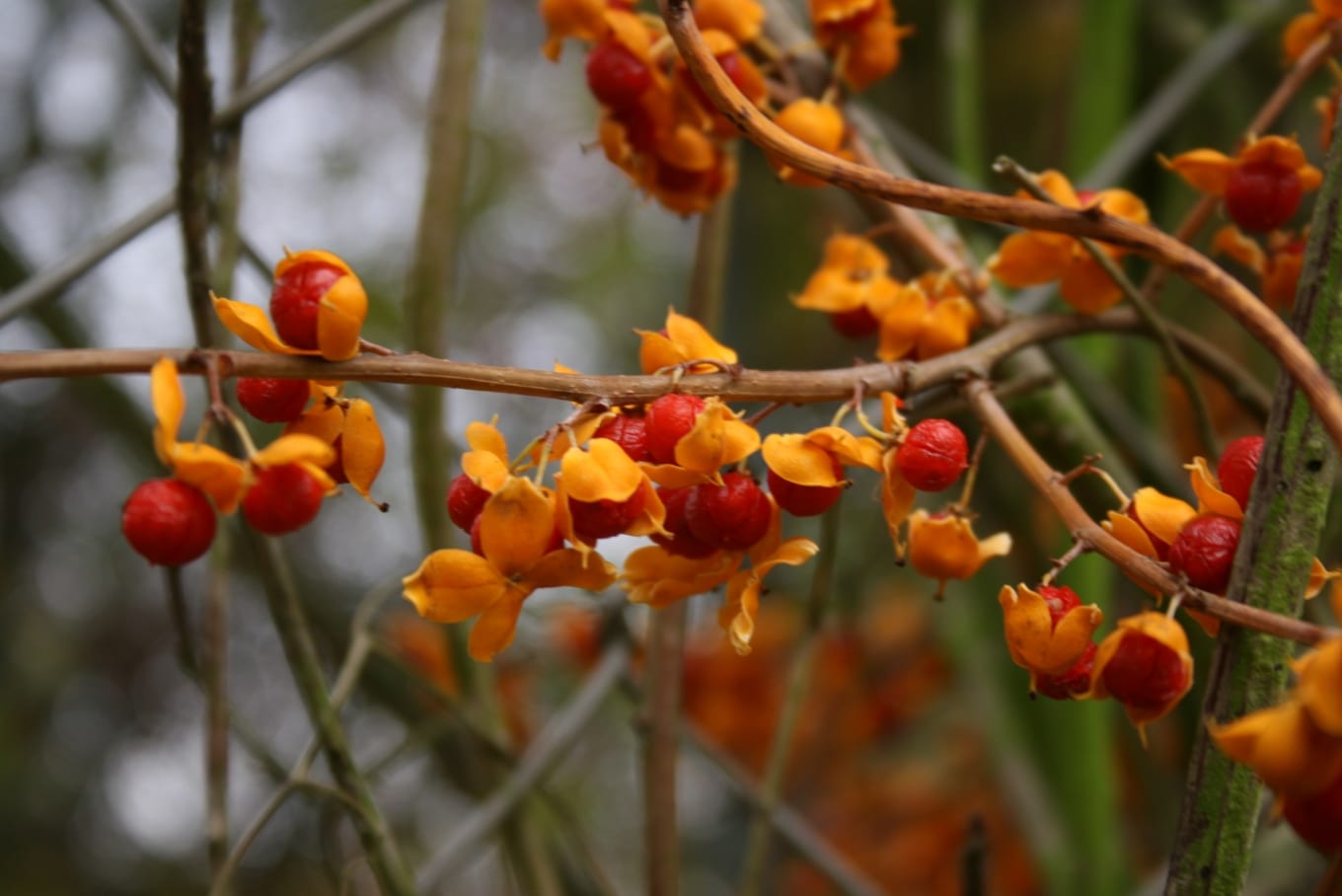
 © Sten Porse / CC BY-SA 3.0
Oriental bittersweet
Oriental bittersweet (known in Japanese as tsuru-umemodoki) is a deciduous vine in the bittersweet family. In autumn its yellow berries split open in three to reveal bright orange seeds inside, a display that lingers on the bare branches long after the leaves have fallen, often into February. In bonsai, the vine is kept compact through regular pruning, showcasing branches dotted with fruit. It's considered a good choice for beginners and generally easy to manage. One thing to keep in mind: it's dioecious, so a female plant alone won't produce fruit — a male plant is also needed nearby for pollination.
View Oriental bittersweet encyclopedia →0% commission on your first sales!Register by September 30, 2026 and your first 2 plants are commission-free!
Grower Wanted!
List your plants on GrowerDirect and sell directly to customers nationwide!
6 Transparency Commitments from GrowerDirect
Growers clearly display the following information for all Bonsai listings. Guaranteed transparency for tree variety, origin, light requirements, and difficulty level.
- Tree Variety
- Real Photos
- Color & Appearance
- Growing Region
- Light Requirements
- Difficulty Level
Browse all 144 varieties
Light Requirements
Difficulty Level
Verified growers wanted for Bonsai
Growers are signing up now ahead of launch. Subscribe to be notified when new listings go live.
Getting alerts is free with a member account. When new listings match your saved search, we'll notify you by email and in-app.
Browse other categories
Verified growers (preview)
Oriental bittersweet key facts
- Growing Difficulty
- Beginner-friendly
- Lifespan
- Little data on lifespan
- Size
- Vines exceed 10 m and climb 5–20 m high (kept small by pruning as bonsai)
- Watering
- Fertilizer (April, then June–October after fruit set; none during flowering)
- Light & placement
- Sunny, airy position—shade reduces fruiting. From the end of the rainy season give part shade and avoid afternoon sun
- Watering
- Likes water: 1–2 times daily in spring, 2–3 in summer, every 2–3 days in winter. Take special care from flowering to fruit set
- Temperature & overwintering
- Heat- and cold-tolerant, but shelter from cold wind and keep the pot from freezing in winter
- Soil & repotting
- Pot-binds easily: repot every 1–2 years in March to early April before budbreak. Trimmed roots can be used as root cuttings
- Fertilizer
- Feed around April after budbreak, stop during flowering and fruit set, then resume June–October with ample phosphorus in autumn. Overfeeding causes leggy growth
- Pruning & styling
- Flower buds form at nodes of last year's shoots, so let this year's growth run. Cut over-long shoots to 2–3 nodes in late August; do main pruning between leaf fall and budbreak
- Pests & cautions
- Male and female plants are separate—keep a female plus a male pollinator for fruit. Old stems snap when bent, so wire only new shoots
About Oriental bittersweet
Oriental bittersweet is a deciduous vine whose yellow berries split to reveal orange seeds each autumn, lasting into February. Beginner-friendly, and kept compact in bonsai through pruning.
7 things to know before growing Oriental bittersweet
1Choose a Sunny Spot
Oriental bittersweet thrives in full sun with good air circulation outdoors. Insufficient light tends to reduce fruit set, so give the pot as much sun as possible.
2Water Thoroughly When Dry
Water generously once the soil surface has dried out. Because the vine transpires heavily through its leaves, watch closely for dryness during the height of summer.
3Use Well-Draining Soil
This vine prefers soil that balances good drainage with adequate moisture retention. A bonsai mix centered on akadama soil is easy to work with.
4Repot Before Bud Break
The roots fill the pot quickly, so repot once every one to two years in March to early April, before the buds open. Gently loosen the root ball and set it in fresh soil. Trimmed roots can even be used to propagate new plants by root cuttings.
5Prune to Keep It Compact
In the wild the vine climbs high by twining around other trees, but in bonsai pruning keeps it compact. Flower buds form at the nodes of the previous year's growth, so let this year's shoots grow somewhat, and cut back overly vigorous shoots to two or three nodes in late August.
6Pair a Female with a Male Plant
Oriental bittersweet is dioecious, so a female plant alone won't set fruit. If you want berries, you'll need a male plant nearby for pollination.
7Enjoy the Branches After Leaf Fall
Even after the autumn leaves color and drop, the berries — split open to show their orange seeds — stay on the branches into around February. The bare silhouette and fruit color are a highlight of the bonsai.
Frequently asked questions about Oriental bittersweet
- Q.How large does Oriental bittersweet grow?
- A.In the wild, the vine climbs high by twining around other trees. In bonsai, a pot and regular pruning keep it to a much smaller size.
- Q.Is it suitable for beginners?
- A.Yes, it's generally considered beginner-friendly — following the basics of light, watering, and soil care makes it manageable. As a vine, it does need ongoing pruning and training.
- Q.What do I need to get berries?
- A.Because it's dioecious, a female plant alone won't produce fruit. You'll need a male plant nearby as well, so pollination can occur when it flowers.
- Q.How long do the berries last?
- A.The yellow berries split into three in autumn to reveal orange seeds, and they stay on the branches for display into around February.
- Q.What growing conditions does it need?
- A.It does best in a sunny, well-ventilated spot outdoors. The roots fill the pot quickly, so repot every one to two years in March to early April, before the buds open.
Handy Growing Tools for Oriental bittersweet
Learn more about Oriental bittersweet in the encyclopedia
View Oriental bittersweet encyclopedia entry →
Care difficulty, size, origin and light needs — all basics covered.
More in this category
Can't find the plant you're looking for?
Post your wishes for free and growers with matching plants will contact you with introductions.