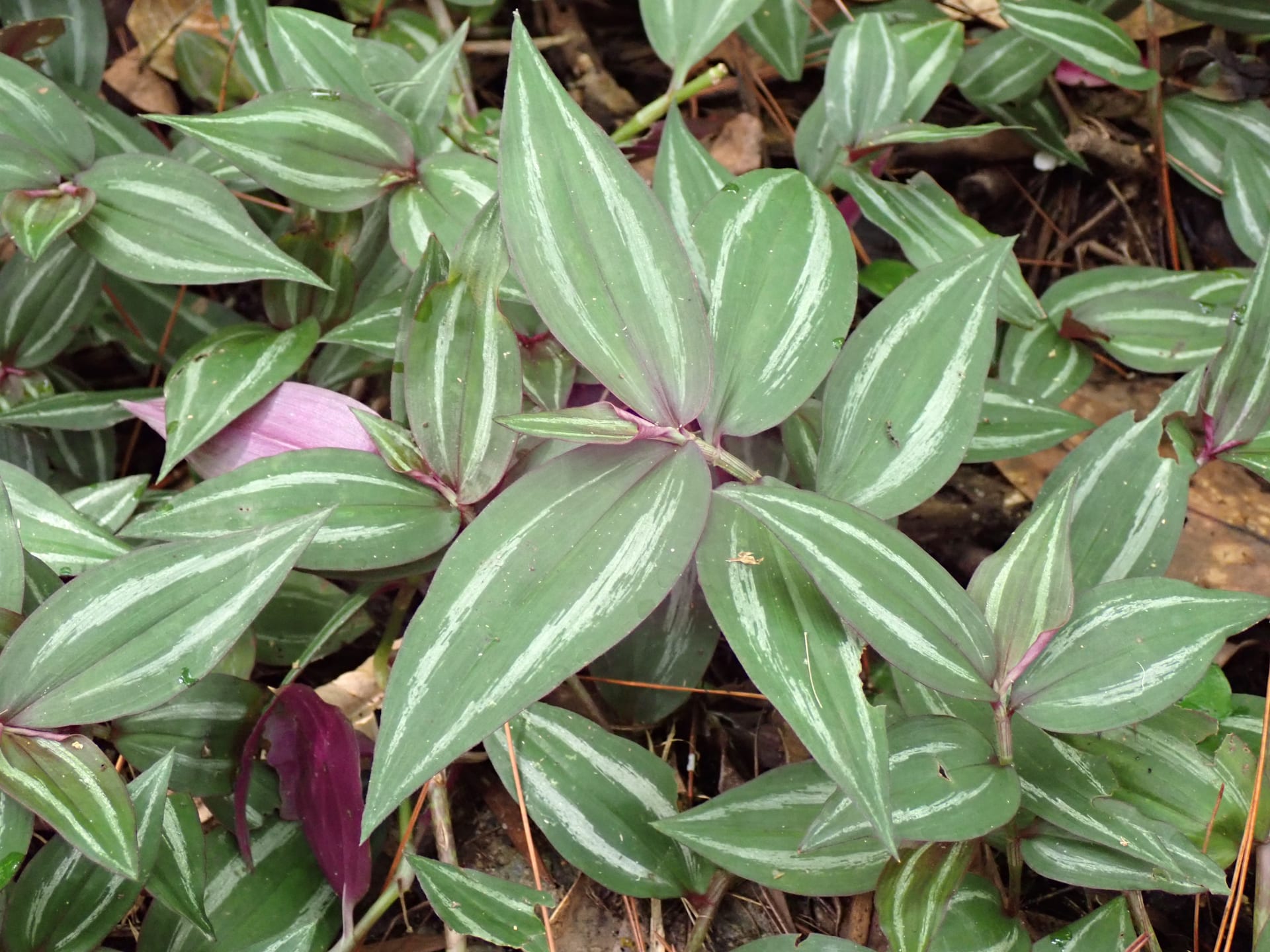
Source: Wikimedia Commons
Tradescantia
BeginnerTradescantia
A trailing plant with beautiful purple and silver leaf colors. Fast growing and perfect for hanging.
About
Tradescantia is a genus of about 85 species of herbaceous perennial plants in the family Commelinaceae, native to the Americas from southern Canada to northern Argentina. Commonly known as spiderwort, inch plant, or wandering Jew — though the latter name is now considered offensive and is being replaced — tradescantias are beloved for their rapid growth, trailing stems, and vividly coloured foliage in shades of green, purple, silver, and pink. Exceptionally fast-growing and easy to propagate from stem cuttings in water or soil, they are frequently shared among friends. Tolerant of a range of light conditions — brighter light produces more vibrant variegation, particularly in coloured-leaf cultivars. Water when the soil dries, as consistently wet conditions cause stem rot. Regular pinching and trimming keeps plants bushy and healthy. Their colourful, informal charm makes them popular trailing plants for shelves and hanging displays.
Source: Wikipedia (CC BY-SA 4.0)
Size of the Tradescantia
The Tradescantia grows to Trailing (30-100cm).
Basic Info
Origin
The Americas from southern Canada to northern Argentina
Lifespan
Perennial (vine)
Size
Trailing (30-100cm)
Temperature
15〜30℃
Humidity
50〜70%
Watering & Fertilizer
Watering, Liquid fertilizer
Growing Tips
Light & Placement
Adapts from bright indirect light to partial shade. Variegated types need more light, and their color fades in dim spots.
Watering
Water once the soil has dried. Overwatering causes stem rot, so never leave water in the saucer.
Temperature & Overwintering
In winter keep it away from cold windows in a bright room. Dry heater air damages the leaves, so keep it at a distance.
Soil & Repotting
Use a free-draining mix. It grows fast and becomes root-bound quickly, so repot one size up once roots fill the pot.
Propagation
Extremely easy from cuttings. A stem cut with a node roots readily in water or soil.
Pruning & Shaping
It grows very fast, so trim regularly to keep its shape. Cutting leggy stems short makes the plant fuller.
Tradescantia FAQ
QWhat is the growing difficulty level for Tradescantia?
Beginner. A variety suitable for beginners. No special equipment or experience is required—you can grow it without problems by setting up a basic cultivation environment.
QHow large does Tradescantia get?
The mature size of Tradescantia is Trailing (30-100cm). This may vary slightly depending on cultivation environment and individual differences.
QHow should I water and fertilize Tradescantia?
Tradescantia: watering & fertilizer — Watering, Liquid fertilizer. Aim for appropriate frequency and amount.
QWhat is the typical price for Tradescantia?
The price of Tradescantia varies significantly by variety, characteristics, size, and lineage. Please check GrowerDirect's price guide for the latest market information.
Last updated: August 31, 2026
References & Sources
Edited & verified by: GrowerDirect Editorial Team
The classifications, regulations, and growing data on this page are created and verified based on the primary information database below.
Primary sources
Related Species
Find listings for this species
Related Articles
Optimizing Foliage Plant Leaf Shine | Humidity Management to Achieve Gloss and Plant Health
Environmental management techniques to bring out glossy shine on foliage plant leaves. Techniques to achieve healthy and beautiful leaf expression through optimizing light, humidity, and water quality.
Why New Leaves on Foliage Plants Are Smaller — Practical Solutions for Light, Humidity, and Nutrition
We analyze the causes behind stunted growth and smaller new leaves on foliage plants. From light environment and humidity management to fertilization strategy and root health, we explain each factor based on empirical data and introduce methods to restore new leaf size.
Spider Mite and Scale Insect Control: Practical Pest Prevention
Learn to identify spider mites and scale insects on houseplants and recognize damage signs, master practical spider mite control methods, discover effective scale insect elimination techniques, create pest-resistant environments with seasonal management, understand pesticide safety precautions, and discover early detection and prevention strategies.
Root Rot Prevention and Root Zone Regeneration Management in Foliage Plants | Soil Selection, Watering, and Early Diagnosis & Recovery Techniques
Root rot is the greatest threat to foliage plants. This article covers practical knowledge from the mechanisms of root rot development to prevention, early-stage diagnosis and treatment methods, and ensuring long-term plant health through soil and watering management.
🩺 Common diseases
Can't find the plant you're looking for?
Post your wishes for free and growers with matching plants will contact you with introductions.