Source: Wikimedia Commons
Odontoglossum
AdvancedOdontoglossum
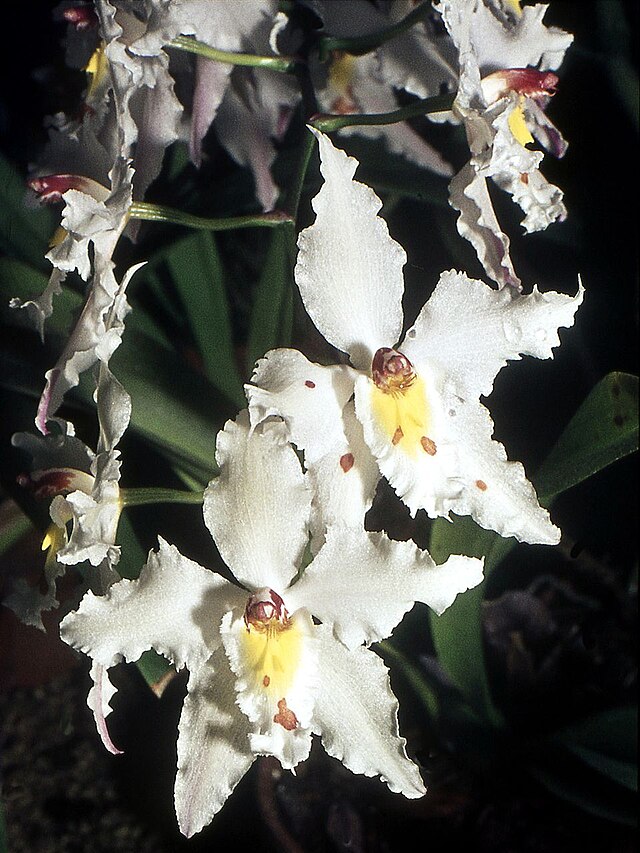
A cool-growing orchid from South American highlands with beautifully patterned flowers on long spikes.
About
Odontoglossum, first named in 1816 by Karl Sigismund Kunth, is a formerly accepted genus of orchids that is now regarded as a synonym of Oncidium. Several hundred species have previously been placed in Odontoglossum. The scientific name of the genus is derived from the Greek words odon (tooth) and glossa (tongue), referring to the two tooth-like calluses on the base of the lip. Species formerly placed in this genus are cool to cold growing orchids to be found on open spots in the humid cloud forest at higher elevations from Central- and West South America to Guyana, with most species around the northern Andes. The abbreviation for this genus is Odm. in the horticultural trade. Many of the species formerly placed in the genus are in great demand with orchid lovers because of their spectacular and flamboyant flowers.
Source: Wikipedia (CC BY-SA 4.0)
Lifespan of the Odontoglossum
The Odontoglossum lives 10+ years.
Size of the Odontoglossum
The Odontoglossum grows to 20-40cm.
Temperature & humidity for the Odontoglossum
The ideal temperature for the Odontoglossum is 10〜22℃.
Basic Info
Origin
Andean cloud forests of Colombia, Ecuador, and Peru
Lifespan
10+ years
Size
20-40cm
Temperature
10〜22℃
Humidity
50〜70%
Growing Tips
Light & Placement
Bright indirect light and high humidity (70-80%) suit it. Avoid direct sun and keep it in a cool, well-ventilated spot.
Watering
It likes high humidity, so water before the potting mix dries out completely. Water promptly once it starts to dry.
Temperature & Overwintering
It wants a cool 10-22°C. As a highland plant it suffers in summer heat, so heat protection matters most.
Soil & Repotting
Pot in sphagnum moss or bark. Pack it loosely so the medium stays moist yet air still reaches the roots.
Pests & Cautions
It weakens easily in summer heat, so prioritize lowering the temperature and keep the air moving to avoid stuffiness.
Odontoglossum FAQ
QWhat is the growing difficulty level for Odontoglossum?
Advanced. A variety suitable for advanced growers. Requires advanced cultivation techniques and specialized equipment, with careful environmental adjustments needed.
QWhat is the ideal temperature for Odontoglossum?
The ideal temperature for Odontoglossum is 10〜22℃. Avoid sudden temperature changes and maintain a stable environment.
QWhat is the lifespan of Odontoglossum?
The average lifespan of Odontoglossum is 10+ years. With proper cultivation environment and nutrient management, you can keep it healthy for a long time.
QHow large does Odontoglossum get?
The mature size of Odontoglossum is 20-40cm. This may vary slightly depending on cultivation environment and individual differences.
QWhat is the typical price for Odontoglossum?
The price of Odontoglossum varies significantly by variety, characteristics, size, and lineage. Please check GrowerDirect's price guide for the latest market information.
Last updated: August 31, 2026
References & Sources
Edited & verified by: GrowerDirect Editorial Team
The classifications, regulations, and growing data on this page are created and verified based on the primary information database below.
Taxonomy & Authority
Accepted name: Odontoglossum Kunth
Authority databases: GBIF · POWO · POWO: Odontoglossum is treated as a synonym of Oncidium · RHS orchid hybrid registration (International Orchid Register) · AOS (American Orchid Society)
Nomenclature follows global taxonomic authority databases.
Regulations & Conservation Status
The family Orchidaceae is listed entirely in CITES Appendix II (except for the genera Paphiopedilum and Phragmipedium and certain species, which are in Appendix I). Cultivars and hybrids are subject to family-level regulation; however, artificially propagated specimens may benefit from simplified trading procedures under the Appendices.
Sources: CITES Appendices (Orchidaceae spp. = Appendix II) / CITES Appendix I Orchid Checklist (Kew/UNEP-WCMC 2019)
Regulations may change. Always verify the latest information with the relevant authorities.
Related Species
Find listings for this species
Related Articles
Orchid Division and Bulb Propagation to New Plant Development | Complete Roadmap from Seedling to Flowering Stock
Orchid division is an important propagation method for bulb-bearing orchids such as Cymbidiums and Dendrobiums. This article provides a detailed explanation of the complete process from division to bulb propagation and new plant development. It covers the full range of successful techniques, from selecting the optimal timing, separating bulbs, planting new plants with initial care management, to the timeline through flowering.
Coelogyne Genus Seasonal Care Guide | Withholding Water in the Dry Season and Tips for Regulating the Bloom Cycle
A seasonal guide to Coelogyne, a type of epiphytic orchid, from watering during the growing season to dry-season drought management and tips for regulating the bloom cycle.
Post-Bloom Care: The Annual Cycle from New Growth to Flower Formation
Learn the annual care cycle for orchids from the end of flowering to the next bloom. This guide covers post-flower care including flower stem cutting methods, signs to observe during new shoot development, summer growth period considerations, requirements for flower bud formation, and finishing care from bud emergence through blooming.
Can't find the plant you're looking for?
Post your wishes for free and growers with matching plants will contact you with introductions.