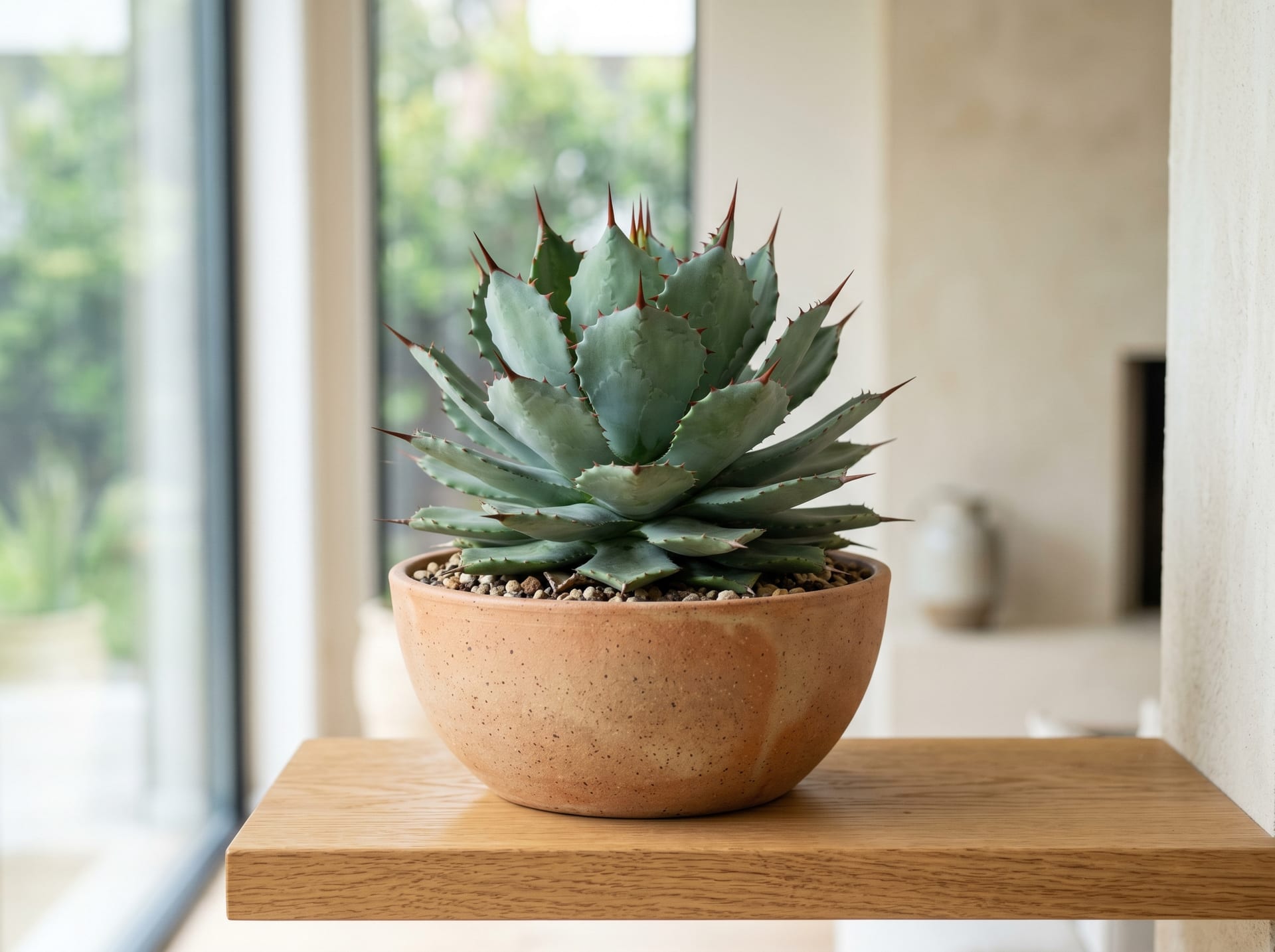
Isthmensis
Agave isismenensis is a rare species native to Mexico, recognized for its compact rosette and finely toothed leaf margins that give it a distinctive character. Its slow growth rate makes it manageable for a wide range of growers, from beginners to enthusiasts. Despite its refined appearance, it is a tough, drought-tolerant plant well-suited to modern succulent collections.
- 價格行情
- ¥6,000〜¥6,000
前 3 筆銷售免佣金!於2026年8月31日前登記生產者→前3筆成交的手續費免費!
栽培者 招募中!
在 ボタちょく 上架,直接銷售給全國的客戶吧!
ボタちょく承諾的 6 項透明性重點
龍舌蘭出品中栽培者將明示以下資訊。確保品種、產地、所需光量、栽培難度的透明度。
- 品種明示
- 實物照片
- 色澤
- 產地明示
- 所需光量
- 難度明示
Browse all 15 varieties
龍舌蘭分類正在招募認證栽培者
栽培者正在陸續註冊,即將上架。設定上架通知,不錯過新商品。
「接收上架通知」需免費註冊會員即可設定。當有符合您儲存條件的新商品上架時,我們會以郵件和站內通知提醒您。
已註冊的栽培者(搶先看)
關於Isthmensis
Agave isthmensis is a rare agave native to the Isthmus of Tehuantepec region in Oaxaca, Mexico, with its species name reflecting this origin. It is best recognized by its tightly compact rosette of short, broad, grayish-green leaves adorned with finely serrated margins and a sharp terminal spine — details that give the plant a precise, sculptural quality. Compared to many larger agave species, its modest size makes it well suited to container growing, which has earned it a devoted following among collectors and succulent enthusiasts. Although growth is slow, this characteristic helps the plant maintain its neat, symmetrical form for years. It tolerates heat and drought well but dislikes excess moisture; provided drainage is adequate, it is not particularly difficult to cultivate. Wild specimens are rarely traded, making nursery-grown plants the main source and contributing to its reputation as a prized collector's item.
販售Isthmensis的精選生産者
查看所有販售Isthmensis的生産者清單(1件)→開始照料Isthmensis前需要了解的7件事
1Limited Availability
Agave isismenensis has limited distribution and is best sourced from specialty succulent shops or dedicated online sellers. Prices tend to be higher than common agave varieties, so comparing multiple sources before purchasing is advisable. Buying from reputable growers helps ensure plant health and accurate identification.
2Sunlight Is Essential
This agave thrives in strong sunlight and ideally needs more than six hours of direct sun daily. Insufficient light causes etiolation, which disrupts its naturally compact rosette shape. Outdoor cultivation is recommended; if kept indoors, a bright south-facing window or supplemental grow lighting is necessary.
3Water Sparingly
During the growing season (spring through autumn), water thoroughly only after the soil has dried out completely. In winter, reduce watering to roughly once a month to prevent root rot during dormancy. Overwatering is the most common cause of failure with this species, so erring on the side of dryness is always the safer approach.
4Use Fast-Draining Soil
A well-draining mix of succulent or cactus soil combined with 30–50% pumice or perlite works well. Standard potting soil retains too much moisture and is unsuitable. Always use pots with drainage holes and add a layer of coarse gravel at the bottom to encourage rapid water escape.
5Handle With Care
The leaf tips of Agave isismenensis are sharply pointed and can cause injury if handled carelessly. Always wear thick gloves when repotting or moving the plant, and stay aware of spine direction. Placing the plant out of reach of small children and pets is a basic safety precaution.
6Monocarpic Flowering Habit
Like all agaves, Agave isismenensis is monocarpic — it flowers only once in its lifetime and the parent plant dies after blooming. Flowering typically takes many years and is seen as the plant's final achievement. Before flowering, most plants produce offsets (pups) that can be separated and grown on to continue the lineage.
7Check Cold Hardiness
Agave isismenensis has some cold tolerance, but it can be vulnerable to frost and prolonged freezing temperatures. In colder regions of Japan (such as Tohoku or Hokkaido), moving the plant indoors or into a greenhouse during winter is advisable. In warmer areas like the Kanto region and southward, overwintering under an eave away from rain may be possible.
Isthmensis的常見問題
- Q.Can Agave isthmensis be grown indoors?
- A.Yes, it can be grown indoors near a bright, sunny window. However, insufficient light may cause the plant to stretch and lose its compact form, so the brightest possible spot is recommended. Moving it outdoors during summer helps maintain a tight, healthy rosette.
- Q.How often should I water Agave isthmensis?
- A.During the growing season (spring to autumn), water approximately every two to three weeks, allowing the soil to dry out completely between waterings. In winter, when growth slows, reduce this to once or twice a month. Always check soil moisture before watering rather than following a strict schedule.
- Q.Does it produce offsets (pups) readily?
- A.Agave isthmensis is relatively prolific at producing offsets, which may appear around the base of mature plants. Once large enough, these pups can be separated and potted individually to propagate the plant. The rate of offset production varies depending on the individual plant and growing conditions.
- Q.How often does it need repotting?
- A.Due to its slow growth rate, repotting is needed roughly every two to four years. Signs that repotting is due include roots emerging from the drainage holes or the pot becoming visibly root-bound. Spring, when growth resumes, is the best time to repot.
- Q.What should I check when purchasing a plant?
- A.Check that the leaves form a symmetrical, even rosette without discoloration or soft rot. The base of the plant should feel firm and stable in the pot, which is a good indicator of healthy roots. Also inspect the spaces between leaves for signs of common pests such as mealybugs.