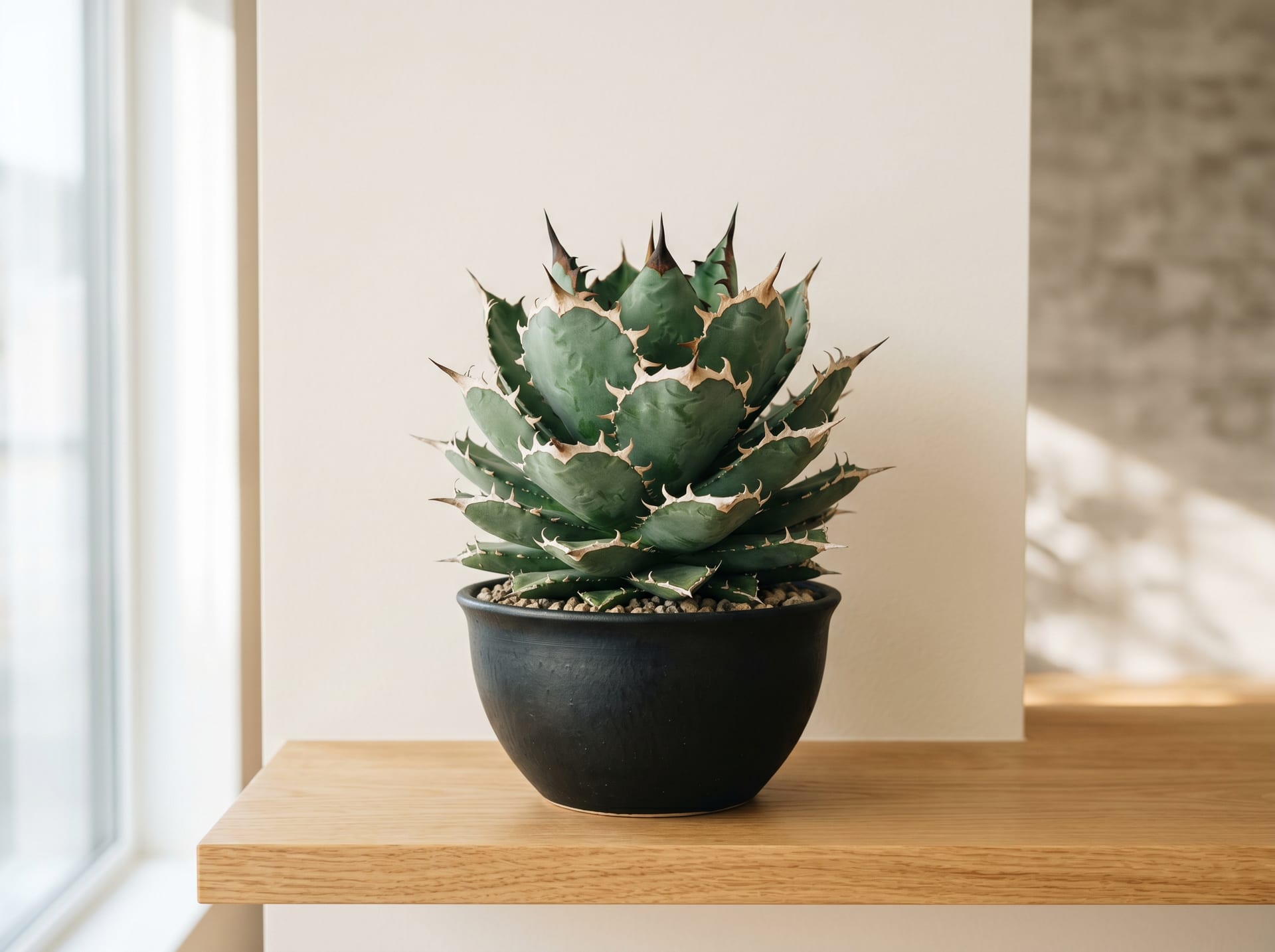
白鯨龍舌蘭
The species that started the agave boom. Thick leaves with white teeth vary by origin: 'White Whale', 'Hime Ganryu', 'FO-076'.
View 白鯨龍舌蘭 encyclopedia →- 價格行情
- ¥6,000〜¥6,000
前 3 筆銷售免佣金!於2026年8月31日前登記生產者→前3筆成交的手續費免費!
栽培者 招募中!
在 ボタちょく 上架,直接銷售給全國的客戶吧!
ボタちょく承諾的 6 項透明性重點
龍舌蘭出品中栽培者將明示以下資訊。確保品種、產地、所需光量、栽培難度的透明度。
- 品種明示
- 實物照片
- 色澤
- 產地明示
- 所需光量
- 難度明示
Browse all 15 varieties
龍舌蘭分類正在招募認證栽培者
栽培者正在陸續註冊,即將上架。設定上架通知,不錯過新商品。
「接收上架通知」需免費註冊會員即可設定。當有符合您儲存條件的新商品上架時,我們會以郵件和站內通知提醒您。
已註冊的栽培者(搶先看)
白鯨龍舌蘭的基本資料
- 栽培難度
- 適合中級者
- 體型
- 20-50cm rosette
- 適宜溫度
- 5〜40℃(適温15〜35℃)
- 澆水
- Water: when dry in spring/fall / reduce in summer / monthly in winter
- Soil
- Akadama:Hyuga:Pumice 1:1:1. Prioritize drainage
- Light
- Direct sunlight recommended. Supplement with LED indoors
- Rooting
- Bare root: water culture → soil planting in two stages
- Notes
- Susceptible to rot. Ensure airflow in rainy season. Bring indoors in winter
關於白鯨龍舌蘭
Agave titanota originates from the rocky slopes and cliffs of Oaxaca, Mexico, where it grows in harsh, well-drained terrain. The plant's signature feature — dense, bold white teeth lining the leaf margins — gives it a sculptural, almost architectural quality that captivates succulent enthusiasts worldwide. Leaves range from blue-grey to silvery white and intensify in color under strong light. Because leaf width, tooth shape, and overall silhouette vary considerably depending on collection site and selective breeding, dozens of named clones have emerged over the years, including Hakugei, Himeganryu, and FO-076, driving an active collector community. Titanota's manageable size, exceptional drought tolerance, and striking appearance make it one of the most accessible yet rewarding agaves to cultivate on a balcony or windowsill.
販售白鯨龍舌蘭的精選生産者
查看所有販售白鯨龍舌蘭的生産者清單(1件)→開始照料白鯨龍舌蘭前需要了解的7件事
1Loves Full Sun
Titanota thrives in intense, direct sunlight year-round. Outdoors, a south-facing spot with unobstructed sun is ideal; indoors, place it at the brightest window available. Insufficient light causes etiolation, stretching the plant and diminishing its characteristic compact, sculptural shape.
2Water Sparingly
During the growing season (spring to autumn), water only after the soil has dried out completely, then wait a few extra days before watering again. In winter, reduce watering to roughly once a month to prevent root rot. Never leave water sitting in the saucer, and always ensure good drainage.
3Use Fast-Draining Soil
Mix a commercial cactus/succulent soil with 30–50% pumice or small-grain akadama to achieve excellent aeration and drainage. General-purpose potting mix retains too much moisture and significantly increases the risk of root rot. Place a layer of pumice at the bottom of the pot to keep drainage channels clear.
4Moderately Cold-Hardy
Among agaves, titanota is relatively cold-tolerant and can sometimes overwinter outdoors down to around −5°C with light frost. However, prolonged freezing temperatures or heavy snow can cause damage, so moving plants under eaves or into a simple cold frame during the depths of winter is advisable. Note that potted plants are more vulnerable to cold than in-ground plants.
5Watch Out for the Teeth
The terminal spine at the leaf tip and the marginal teeth along the leaf edges are extremely sharp and can cause deep puncture wounds if handled bare-handed. Always wear thick gloves when repotting or moving the plant, and keep it out of reach of children and pets. If punctured, clean the wound thoroughly and seek medical attention if needed.
6Slow but Steady Growth
Titanota grows slowly, and it is not unusual for visible size increases to take several years after purchase. Over-fertilizing can soften the leaves and diminish their characteristic firm, rigid texture. During the growing season, a diluted liquid fertilizer applied once or twice a month is sufficient.
7Price Varies by Lineage
Prices for titanota vary enormously depending on lineage and origin — named selections such as "Hakugei," "FO-076," and "Himeganryu" can range from a few thousand yen for common forms to tens of thousands or more for rare specimens. Purchase from reputable breeders or specialist shops and ask about the plant's documented origin or lineage. Starting with more affordable, widely available forms is a practical way to learn cultivation before investing in premium selections.
白鯨龍舌蘭的常見問題
- Q.Can titanota be grown indoors?
- A.Titanota can be grown indoors if light levels are high enough, but insufficient sunlight will cause etiolation and loss of the plant's characteristic compact form. Place it at a south-facing window or use a grow light to supplement natural light.
- Q.What is the difference between named selections?
- A.Named selections like Hakugei and FO-076 differ in tooth thickness, leaf width, and color due to variations in collection site, parent plant, and breeder selection. Even within the same name, individual plants can vary, so checking the lineage before purchase is advisable.
- Q.When and how often should I repot?
- A.Repot when roots emerge from the drainage holes or the plant has grown to roughly the same size as its pot. Spring (April to May) is the best time. Gently trim old roots, move to a pot one size up, and avoid disturbing the roots excessively. Repotting every two to four years is typically sufficient given the plant's slow growth.
- Q.How do I propagate titanota?
- A.Titanota occasionally produces offsets (pups) at the base, which can be separated and potted once they have developed some size. Seed propagation is possible but very slow, and seedlings may not reliably express the traits of a named selection. Dividing offsets is the most reliable method for propagating a specific clone.
白鯨龍舌蘭栽培的實用工具
Learn more about 白鯨龍舌蘭 in the encyclopedia
View 白鯨龍舌蘭 encyclopedia entry →
Care difficulty, size, origin and light needs — all basics covered.