The Complete Guide to Aquatic Plant Pearling | Conditions and Mechanisms for Maximizing Photosynthesis
A scientific explanation of the mechanism behind beautiful bubbles (pearling) rising from aquatic plants. Comprehensive coverage of light intensity, CO2, and fertilizer balance, causes when pearling doesn't occur, and techniques to encourage bubble formation.
Key Takeaways
A scientific explanation of the mechanism behind beautiful bubbles (pearling) rising from aquatic plants. Comprehensive coverage of light intensity, CO2, and fertilizer balance, causes when pearling doesn't occur, and techniques to encourage bubble formation.
Related Species
When enjoying aquatic plant layouts, you sometimes encounter moments when small, silvery bubbles rise one after another from leaf surfaces. This phenomenon is known as "pearling" among aquarium enthusiasts and is widely recognized as evidence that aquatic plants are performing healthy photosynthesis. This article explains the mechanism and conditions behind pearling, as well as specific techniques for consistently enjoying bubble formation.
What is Pearling? | The Science Behind the Bubbles
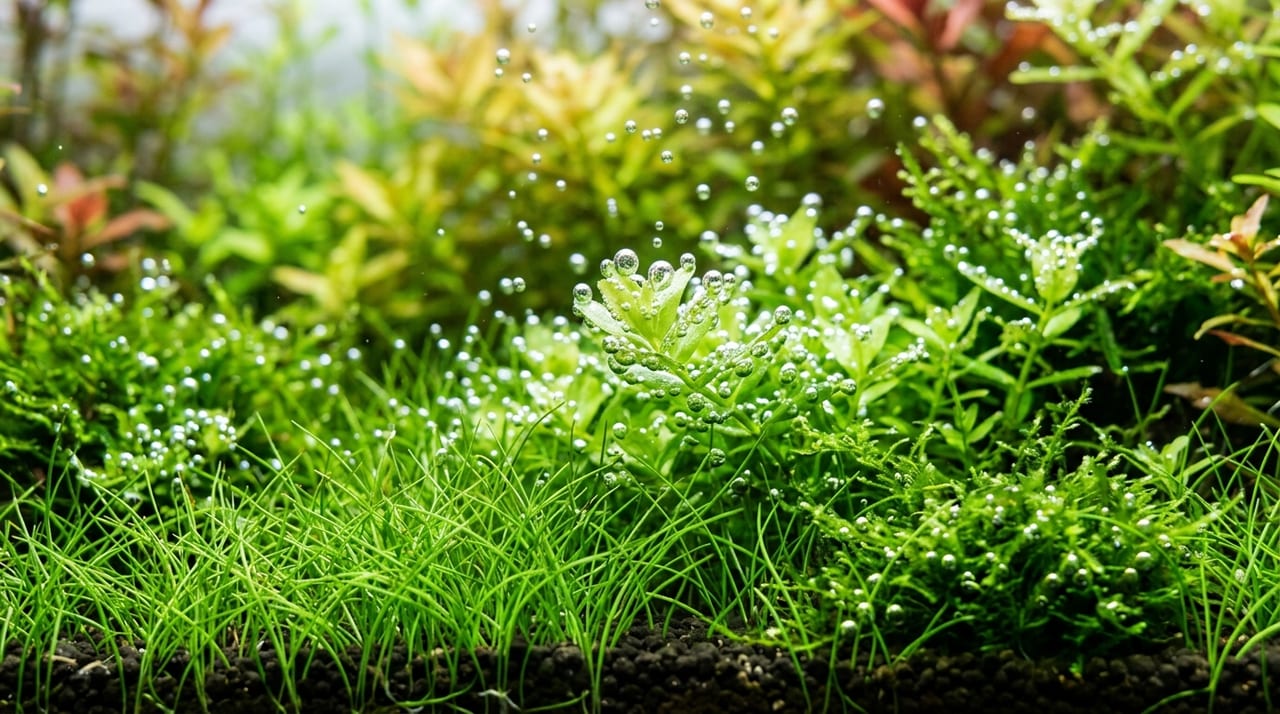
Pearling refers to the phenomenon in which oxygen bubbles form on the surface of aquatic plant leaves and stems, eventually rising through the water. It's that brilliant shimmer you see in display tanks at aquarium shops and in competition aquascapes.
The Bubbles Are Oxygen
Aquatic plants produce sugars from carbon dioxide and water through photosynthesis, releasing oxygen as a byproduct. There is a limit to how much oxygen can dissolve in water (dissolved oxygen content), called the "saturation dissolved oxygen concentration." In freshwater at 25°C and one atmosphere of pressure, the limit is approximately 8.3 mg/L. When aquatic plants photosynthesize actively, the photosynthesis rate exceeds the rate at which oxygen can dissolve, causing oxygen to precipitate as bubbles at the leaf surface when it reaches supersaturation.
In other words, pearling is evidence that aquatic plants are photosynthesizing so actively that they exceed the oxygen capacity of the tank, and serves as an indicator that the environment is in an extremely favorable state for the plants.
Times When Pearling Most Likely Occurs
Pearling typically peaks 2 to 4 hours after the lights turn on. During this time window, the aquatic plants have adapted well to the light, and CO2 is being supplied steadily. Immediately after a water change, gas exchange accelerates and bubbles are less likely to form. As evening approaches and the lights turn off, nutrients and CO2 become depleted, and the intensity of bubble formation tends to diminish.
The 3 Conditions That Trigger Pearling
To enjoy bubble formation, balance among three elements—light, CO2, and fertilizer—is crucial. If even one is lacking, photosynthesis in aquatic plants will plateau and bubbles won't form.
1. Sufficient Light Intensity
The photosynthesis rate of aquatic plants is proportional to light intensity, but beyond a certain threshold it saturates, and the rate won't increase further. To trigger pearling, you need to provide light close to the plant's "light saturation point."
- Foreground plants and red stem plants: Aim for PAR values of 50–80 μmol/m²/s or higher
- Background plants and typical green varieties: PAR values of 30–50 μmol/m²/s or higher
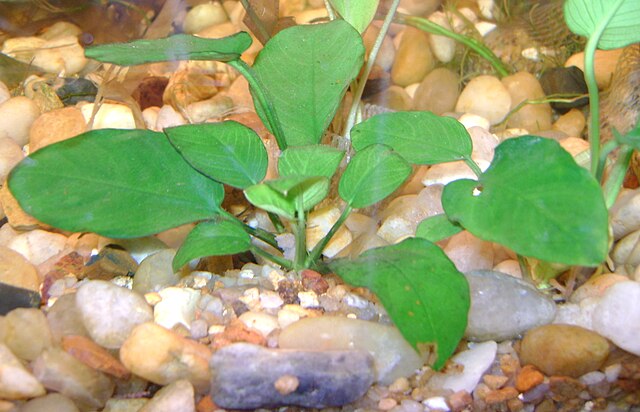
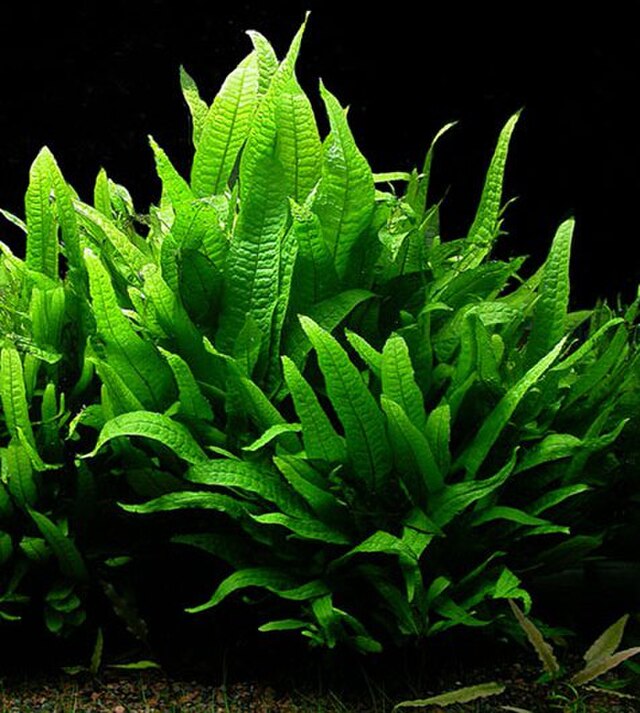
- Shade-loving plants (Anubias nana, Microsorum, etc.): Bubbles will form at PAR values of 20–30 μmol/m²/s, though less abundantly
In a standard 60 cm aquarium, installing LED lights equivalent to 45W–60W within 20 cm of the water surface will achieve a level at which pearling is observable in most aquatic plants. By using healthy aquatic plant seedlings purchased directly from growers through GrowerDirect, you can achieve pearling more reliably from shortly after introduction.
2. CO2 Supplementation
CO2 is the substrate (raw material) for photosynthesis itself. While aquatic plants can grow without it, maintaining photosynthesis at a level that produces bubbles generally requires a CO2 concentration of 15–30 mg/L. A typical CO2 dosing rate for a 60 cm aquarium is 1–2 bubbles per second (60–120 bubbles per minute). The basics of equipment selection and setup are covered in detail in Aquatic Plant CO2 Supplementation Basics.
If you set up a drop checker (pH indicator) and maintain a green color, you can confirm that the CO2 concentration is roughly in the appropriate range. Blue indicates insufficiency; yellow indicates excess.
3. Fertilizer Balance
Even with sufficient light and CO2, photosynthesis will stop if nutrients are lacking. The most important elements are as follows:
- Nitrogen (N): Leaf growth and chlorophyll synthesis
- Phosphorus (P): Energy metabolism
- Potassium (K): Stomatal regulation and osmotic pressure adjustment
- Magnesium (Mg): Central atom of chlorophyll
- Iron (Fe): Cofactor in electron transport chains
The basic approach is to add liquid fertilizer daily to twice per week at the recommended dose, and to embed solid fertilizer when nutrients in the substrate begin to deplete.
Why Pearling Doesn't Happen and How to Fix It
"I've set up the right conditions, but no bubbles are forming"—this is a complaint many aquatic plant enthusiasts experience at some point. Let's check the causes one by one.
Water Surface Disturbance Is Too Strong
If aeration or water flow is too strong, supersaturated oxygen escapes to the atmosphere through the water surface too quickly. During times when you want to enjoy pearling, turn off the air pump and submerge the filter outlet to minimize gas exchange.
Immediately After a Water Change
Tap water has a certain amount of dissolved oxygen, and it takes time to reach supersaturation. It's normal for no bubbles to form immediately after a water change; they will begin appearing gradually after waiting a few hours.
Old Leaves Covered in Algae
Leaves covered in algae have impaired light and gas exchange, making it harder for bubbles to attach. Remove old leaves through trimming and increase the area of young leaves to boost overall bubble production. Source healthy plants from growers and avoid introducing algae in the first place—these are also important preventive measures. See Advanced Aquatic Plant Trimming Techniques for specific trimming tips.
Micronutrient Deficiency
Even if nitrogen, phosphorus, and potassium are sufficient, deficiencies in micronutrients like iron and manganese reduce photosynthetic efficiency. Adding a commercial all-purpose micronutrient liquid fertilizer once per week often improves the situation.
Techniques to Maximize Pearling Display
When you want to emphasize pearling for photography or viewing, combining the following techniques can be effective.
Water Change Timing and Bubble Formation
Exchanging with cool fresh water increases dissolved oxygen capacity, which paradoxically weakens pearling. If you want to enjoy bubble formation, do the water change the day before and observe on the day when the water temperature is stable.
Gently Brush Leaf Surfaces
Creating fine surface irregularities that serve as bubble nucleation sites encourages continuous bubble formation from those spots. By gently brushing leaves with a soft brush or tweezers just before photography, you can stage the moment when bubbles suddenly rise.
Forced CO2 Boost
Even if you normally dose at 1 bubble per second, increasing to 3–4 bubbles per second for just 30 minutes before observation dramatically accelerates photosynthesis. After observation, immediately return to the normal dosing rate and be sure to replenish oxygen through aeration.
Conclusion | Bubbles Are Your Tank's Health Checkup
Pearling is not merely a beautiful phenomenon; it's a mirror reflecting the health of your plants and tank environment. In tanks with continuous bubble formation, aquatic plants grow vigorously, algae is suppressed, and an oxygen-rich, comfortable environment is maintained.
As you fine-tune the balance of light, CO2, and fertilizer, try to achieve the pearling unique to your own tank. Source healthy aquatic plant seedlings directly from growers through GrowerDirect and enjoy bubble formation in peak condition. In that moment when bubbles rise, the deep allure of the aquarium hobby will surely captivate your heart.