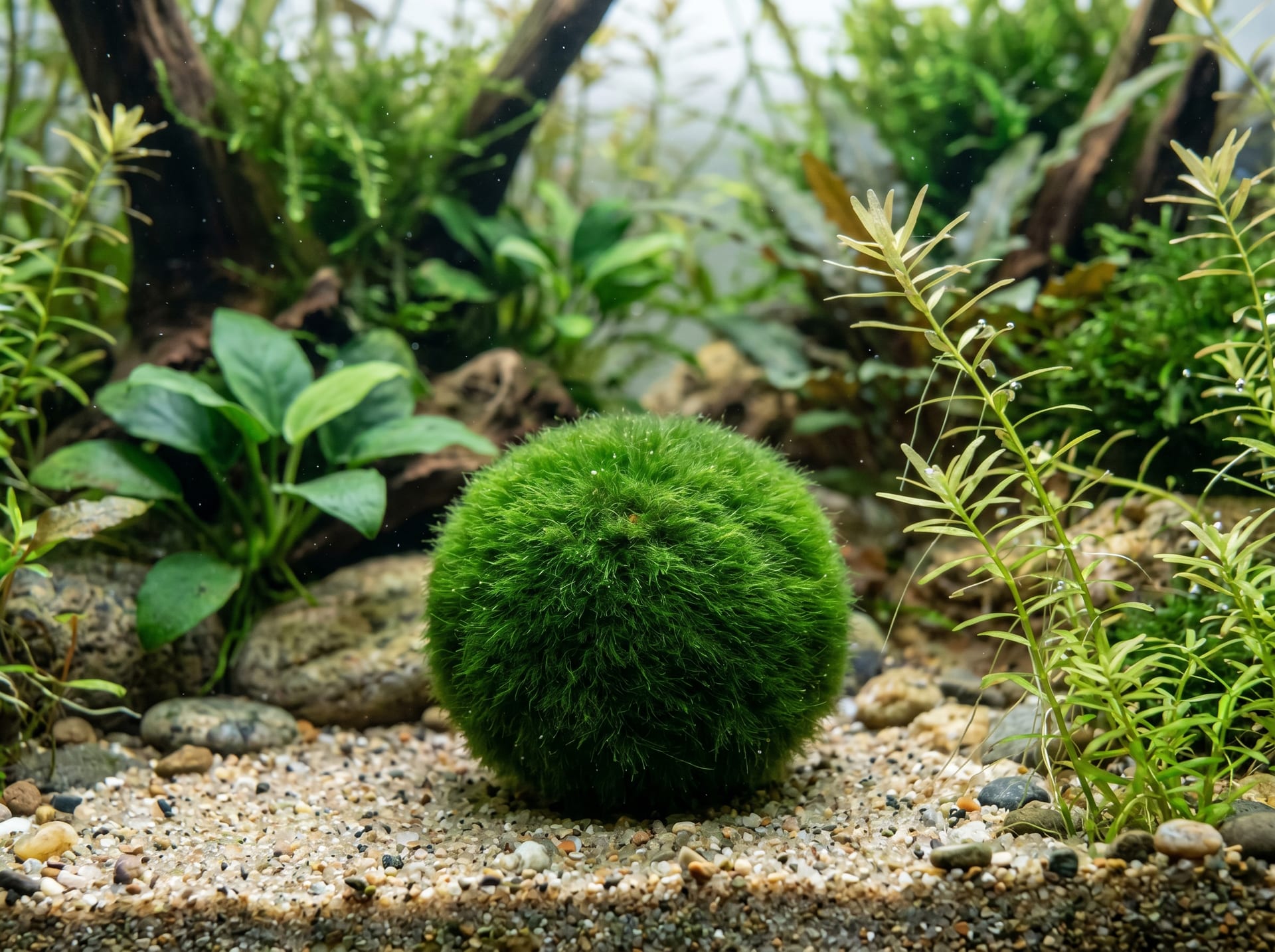
AI-generated image
Marimo Moss Ball
BeginnerAegagropila linnaei
Spherical algae famous as a natural monument of Lake Akan, Hokkaido. Simply sink in tank. Rolling maintains shape. Extremely slow growing but can live for decades.
About
Marimo (Aegagropila linnaei) is a green alga in the family Pithophoraceae with an unusual growth habit in which filamentous strands aggregate into a ball. In Japan, the large spherical marimo of Lake Akan in Hokkaido is famous as a Special Natural Monument, though most specimens in the trade are hand-rolled, cultivated balls. It grows by photosynthesis, prefers low light and cool water, and needs no CO2 or fertilizer. Roll it gently and periodically to maintain its shape, and watch for rising temperatures in summer. Lightly squeezing it during water changes helps expel internal debris. It is easy to keep alongside small livestock such as shrimp and medaka, and is also popular in bottle aquariums.
Size of the Marimo Moss Ball
The Marimo Moss Ball grows to 2-15cm (ball diameter).
Temperature & humidity for the Marimo Moss Ball
The ideal temperature for the Marimo Moss Ball is 15〜25℃.
Easy to keep and beginner-friendly, it is sensitive to sustained high temperatures (above ~28°C), strong direct light, and accumulated debris, which cause discoloration or breakup.
Basic Info
Origin
Cool lakes of the Northern Hemisphere (Japan, Northern Europe, etc.)
Size
2-15cm (ball diameter)
Temperature
15〜25℃
Watering & Fertilizer
None needed. Trace elements in water suffice
Growing Tips
Water Temperature & Quality
Prefers a cool water temperature of 15-25°C. Prolonged temperatures above 28°C cause discolouration and breakup, so watch for rising temperatures in summer.
CO2 & Fertilizer
No CO2 or fertiliser is needed; the trace elements in the water are enough. It grows by photosynthesis, so all it needs is weak light.
Lighting
Low light OK. Avoid direct sunlight
Maintenance
Roll occasionally to maintain shape. Gently squeeze during water changes
Cautions
Can be kept in tanks with small livestock such as shrimp and medaka, or in bottles. Discolouration and breakup are caused by high temperatures, strong direct light and accumulated dirt.
Marimo Moss Ball FAQ
QWhat is the growing difficulty level for Marimo Moss Ball?
Beginner. A variety suitable for beginners. No special equipment or experience is required—you can grow it without problems by setting up a basic cultivation environment.
QWhat is the ideal temperature for Marimo Moss Ball?
The ideal temperature for Marimo Moss Ball is 15〜25℃. Avoid sudden temperature changes and maintain a stable environment.
QHow large does Marimo Moss Ball get?
The mature size of Marimo Moss Ball is 2-15cm (ball diameter). This may vary slightly depending on cultivation environment and individual differences.
QHow should I water and fertilize Marimo Moss Ball?
Marimo Moss Ball: watering & fertilizer — None needed. Trace elements in water suffice. Aim for appropriate frequency and amount.
QWhat is the typical price for Marimo Moss Ball?
The price of Marimo Moss Ball varies significantly by variety, characteristics, size, and lineage. Please check GrowerDirect's price guide for the latest market information.
Last updated: June 24, 2026
References & Sources
Edited & verified by: GrowerDirect Editorial Team
The classifications, regulations, and growing data on this page are created and verified based on the primary information database below.
Taxonomy & Authority
Accepted name: Aegagropila linnaei Kützing
Authority databases: GBIF
Nomenclature follows global taxonomic authority databases.
Regulations & Conservation Status
Sources: Ministry of the Environment Designated Invasive Species List (Invasive Species Act) / CITES Appendix II listed plant taxa (family and genus level)
Regulations may change. Always verify the latest information with the relevant authorities.
Related Species
Find listings for this species
Related Articles
Rose Boiling Explained | Why Buds Won't Open and Prevention Strategies
Rose boiling is a phenomenon where outer petals wetted by rain or dew stick together as they dry, causing buds to fail to open and deteriorate. This guide explains the varieties and weather conditions prone to boiling, prevention methods through rain protection, fertilization, and moisture management, and how to gently separate stuck petals.
Agave 'Fireball' Cultivation Guide | Maintaining a Compact Spherical Form Through Proper Care
Detailed explanation of cultivation methods for Agave 'Fireball' (Agave 'Fireball'). Covers key points for maintaining a compact spherical rosette through proper soil, watering, and light management, as well as steps for separating and propagating pups (offsets), and troubleshooting for common issues such as leggy growth, root rot, and scale insects—explained in a beginner-friendly manner.
Complete Guide to Aquatic Plant CO2 Systems | Practical Manual from Setup to Daily Maintenance
CO2 is an essential element for aquatic plants to perform photosynthesis. This article covers everything needed to cultivate fast-growing stem plants and red-tinted aquatic plants, from selecting CO2 injection systems, installing solenoid valve regulators, positioning diffusers, to daily maintenance.
Aquatic Plant Tank Used Soil and Substrate Disposal and Recycling Methods | Correct Disposal Methods and Reuse Tips
Explains the correct disposal methods for used substrate in aquatic plant tanks. Introduces the proper disposal procedures according to local municipal rules and the concept of reuse for short-term usage.
🩺 Common diseases
Can't find the plant you're looking for?
Post your wishes for free and growers with matching plants will contact you with introductions.