Agave 'Fireball' Cultivation Guide | Maintaining a Compact Spherical Form Through Proper Care
Detailed explanation of cultivation methods for Agave 'Fireball' (Agave 'Fireball'). Covers key points for maintaining a compact spherical rosette through proper soil, watering, and light management, as well as steps for separating and propagating pups (offsets), and troubleshooting for common issues such as leggy growth, root rot, and scale insects—explained in a beginner-friendly manner.
Key Takeaways
Detailed explanation of cultivation methods for Agave 'Fireball' (Agave 'Fireball'). Covers key points for maintaining a compact spherical rosette through proper soil, watering, and light management, as well as steps for separating and propagating pups (offsets), and troubleshooting for common issues such as leggy growth, root rot, and scale insects—explained in a beginner-friendly manner.
Related Species
About Agave 'Fireball'
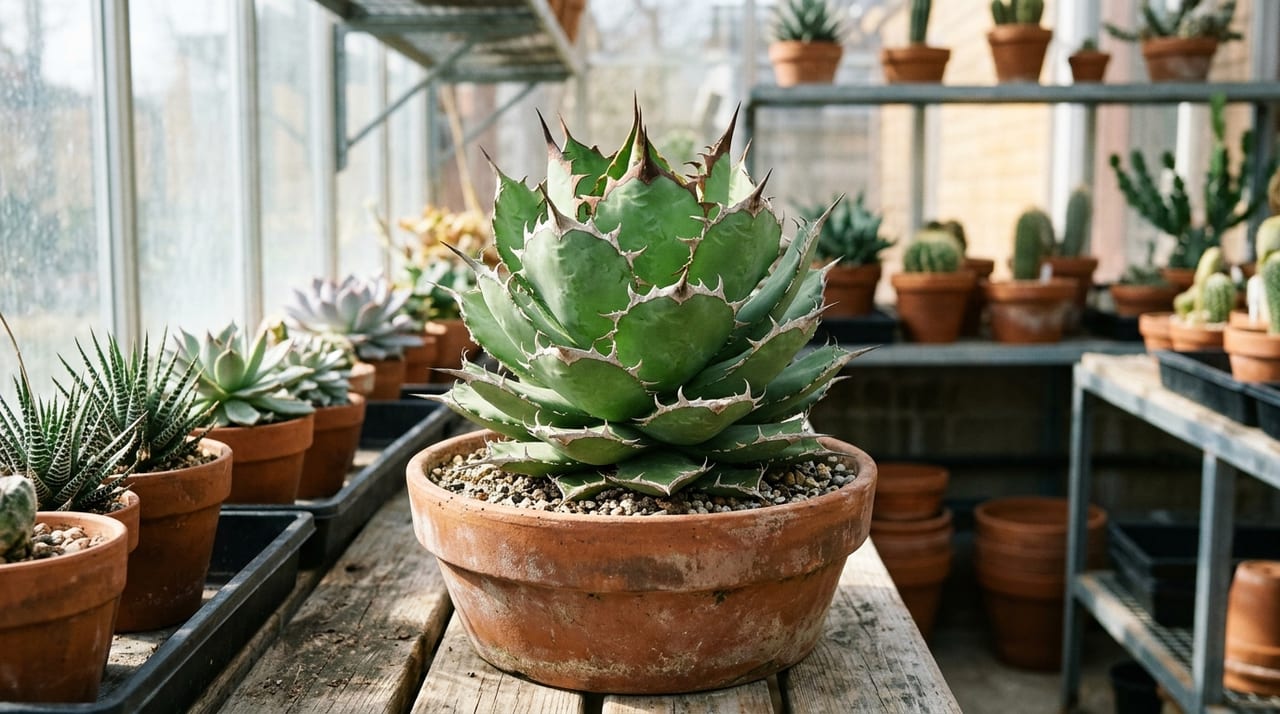
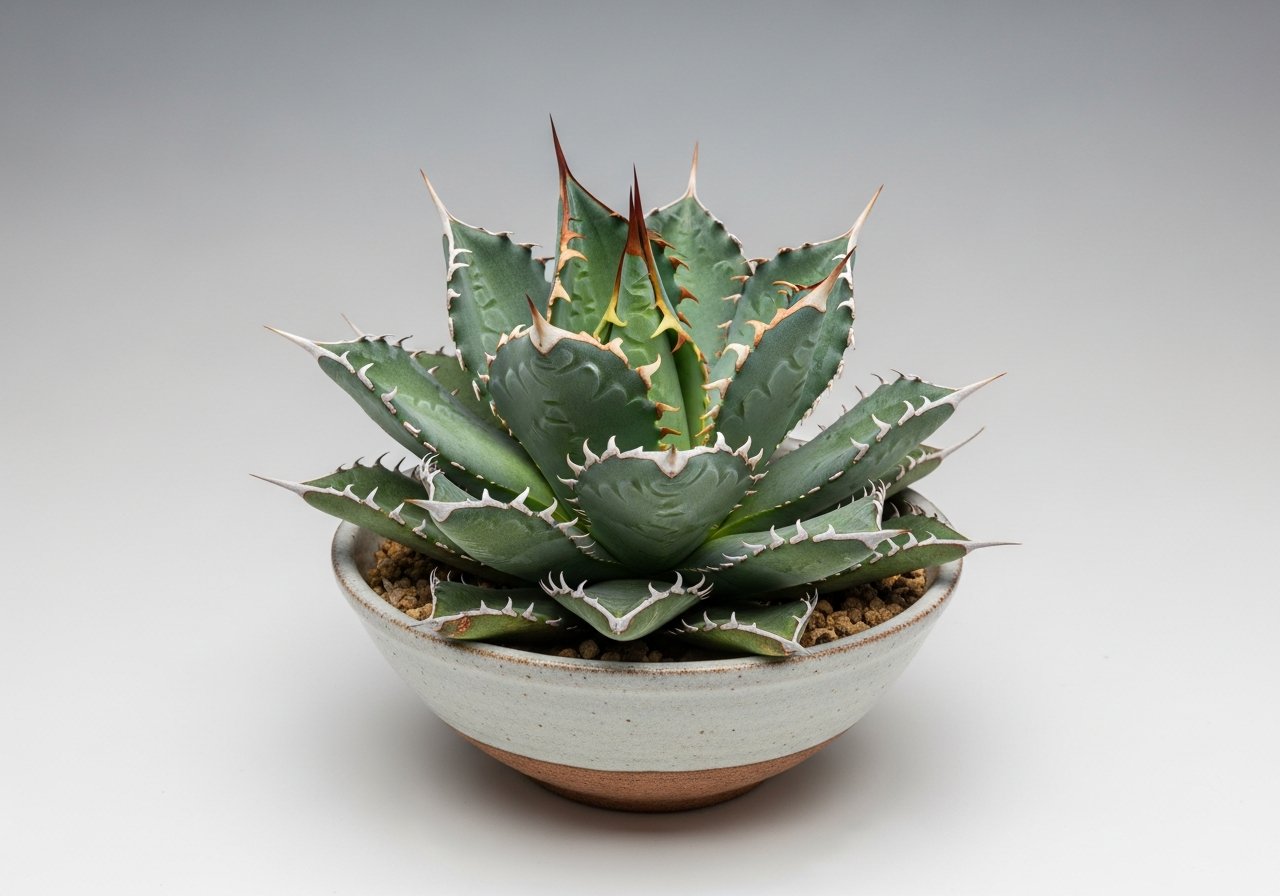
Agave 'Fireball' (Agave 'Fireball') is a compact ornamental agave variety, believed to be a selected or hybrid cultivar of Agave lophantha or Agave univittata. As its English name "Fireball" suggests, the leaves overlap densely to form a compact spherical rosette, giving the appearance of flames, hence the name.
The leaves are typically green to gray-green with bright vertical stripes (variegation) running through the center. The leaf tips and leaf margins feature clear spines and fine serrations. Even at maturity, the rosette diameter is only 20–40 cm, making it exceptionally compact—ideal for indoor container cultivation or small-space agave collections. Pups (offsets) are relatively easy to produce, making the plant well-suited for propagation, exchange, and commercial sale.
Cultivation Characteristics and Difficulty Level
Fireball is one of the more resilient agaves and a suitable entry-level species for beginners. It excels in heat and drought tolerance while being straightforward to manage. However, as a small species, its root capacity is limited, making it somewhat less tolerant of excess moisture compared to larger varieties—this requires particular attention.
Difficulty Level for Growing: Beginner to Intermediate
Summary of Characteristics
| Feature | Details |
|---|---|
| Mature Size | Rosette diameter 20–40 cm |
| Growth Rate | Moderate (standard for small species) |
| Cold Tolerance | Approximately −3 to −5 °C (short-term) |
| Heat Tolerance | Can withstand temperatures exceeding 40 °C |
| Pups (Offsets) | Produced relatively easily |
Recommended Cultivation Environment
Environmental Parameters
| Item | Recommended Value |
|---|---|
| Placement | Outdoor location receiving 4+ hours of direct sunlight, or a south-facing windowsill |
| Summer Management | No shading required (very hardy even in intense summer sun) |
| Winter Management | Indoors at 5 °C or above, or with frost protection essential |
| Watering Frequency (Spring/Fall) | 3–5 days after soil has completely dried out |
| Watering Frequency (Summer) | 1–2 times per week (preferably in late afternoon or evening) |
| Watering Frequency (Winter) | 1–2 times per month (nearly full dormancy) |
Soil Mix and Pot Selection
Since Fireball is compact, root space is limited. The balance between soil drainage and pot size is especially important.
Recommended Soil Mix (Adjusted for Small Species)
- Hyuga soil – 40%
- Akadama (small grain) – 30%
- Fine lava rock – 20%
- Perlite – 10%
Keep organic matter (leaf mold, etc.) to a minimum (0–5%). High organic content promotes excess moisture retention, and small species develop root rot faster than larger varieties.
Recommended Pot Size
A pot slightly larger than the root ball is ideal. Avoid excessive pot size, as an imbalance between plant and container promotes moisture retention. Terracotta pots or slitted pots are recommended.
Watering Tips
Fireball has moderate growth as a small species and requires less water than larger agaves.
Watering Checkpoints
- Water when the pot feels light when lifted (a sign the soil has dried)
- Avoid water pooling at the leaf base (center), as it directly causes rot
- After watering, place in a well-ventilated area to dry quickly
- In summer, water in the morning or late afternoon/evening (roots may steam in daytime heat)
Light Management
Fireball thrives in bright light. Insufficient light causes leggy growth and loss of variegation (reversion to solid green).
- Outdoor Management: Place in direct sunlight from spring through fall (no shading required)
- Indoor Management: Provide full-spectrum LED lighting for 12–16 hours daily (5000K or above recommended)
- Fall/Winter Transition: Bring indoors before frost (when temperatures will drop below 5 °C)
- Spring Acclimatization: When moving from indoors to outdoors, gradually acclimate to direct sun (photoacclimation: start with shade → partial shade → direct sunlight in stages)
Fertilizing
Keep fertilization minimal to maintain a compact form. Excess feeding causes soft, weak leaves and leggy growth.
- Growing Season (March–October): Apply solid slow-release fertilizer once monthly at half the recommended rate
- High Summer Heat and Winter Dormancy: No fertilizer
- Avoid high-nitrogen fertilizers, as they promote leggy growth and weakness. Choose balanced NPK or formulations favoring phosphorus and potassium.
Pup Propagation Method
Fireball readily produces pups (offsets) at the base of the parent plant.
Steps for Pup Separation
- Separate pups when they reach 1/3 to 1/2 the size of the parent
- Using a clean knife, sever the connection to the parent; allow the cut to dry for 2–3 days
- Insert into dry soil mix (primarily volcanic soil)
- Water sparingly (once weekly) until roots develop (3–6 weeks)
- Once new leaves begin to unfold, resume normal care
Since pups retain the parent's traits, offspring from high-quality plants offer consistent quality.
Common Troubleshooting
| Symptom | Cause | Solution |
|---|---|---|
| Thin, elongated leaves (leggy growth) | Insufficient light | Increase direct sunlight exposure |
| Soft tissue at leaf base/center | Excess moisture / root rot | Allow to dry; if root rot is confirmed, remove rotted roots and repot in fresh soil |
| Loss of variegation (reversion to green) | Insufficient light / overfertilizing | Strengthen light exposure; reduce fertilization |
| Scale insect infestation | Occurs readily in dry, warm conditions | Manually remove with cotton swab or tool, then apply pesticide |
| Leaf spines injure hands | Management issue | Place cork or eraser tips over sharp spines as a safety measure |
Summary
Agave 'Fireball', with its compact spherical form and attractive leaf pattern, is an excellent entry-level agave suitable for both indoor and outdoor enjoyment. By adhering to the three fundamentals—lean, dry-side care; ample light; and proper soil—even beginners can maintain a beautiful plant long-term. Because pups emerge readily, the species is also well-suited for propagation through division and exchange or sale, making it an excellent introductory species for plant growers.
Fireball's Position Within a Collection
Agave 'Fireball' is widely popular as an introduction to agave collecting due to its compact size and ready production of pups.
Characteristics for Collecting
- Compact size makes it easy to grow many varieties (simultaneous management of multiple plants is straightforward)
- Natural population growth as pups emerge
- When displayed alongside similarly compact, well-formed species such as Agave pygmaea and Agave sciddiger, striking visual contrasts emerge
- The distinct variegation serves as a visual accent, elevating the overall appearance of the entire collection
Fireball Management Calendar
Spring (March–May): Start of the active growing season. Gradually increase watering frequency and resume fertilization. Spring is the ideal time for repotting.
Summer (June–August): Peak growth period. Fireball thrives in direct sunlight; no shading is required. However, water in the evening to prevent root steam. Maintain the routine of watering only after soil has dried.
Fall (September–November): Growth continues. Maintain watering and fertilization. As temperatures cool, gradually reduce watering frequency.
Winter (December–February): Dormant season. Bring indoors where temperatures remain above 5 °C, and reduce watering to 1–2 times monthly in small amounts. If you wish to maintain growth using supplemental LED lighting, provide 12+ hours of illumination daily.
Repotting Timing and Signs
Missing the signs that Fireball needs repotting can result in root binding and rot.
Signs Indicating Repotting Is Needed
- Roots are profusely emerging from drainage holes
- The pot dries rapidly after watering (roots have filled the container)
- Growth has suddenly stalled (possible root binding)
- 2–3 years have elapsed since purchase
Always repot in spring or fall. After planting in fresh soil mix, hold off watering for 1–2 weeks to allow roots to establish in their new medium.