Complete Guide to Growing Agave Victoriae-Reginae (Queen Victoria Agave): Cultivation Management to Showcase Geometric Leaf Patterns
A guide to growing Agave Victoriae-Reginae. It covers the key points of care, including a potting mix with 30–40% pumice or perlite, watering 2–3 times a month from spring to autumn, and repotting once every 2–3 years, and explains that it rarely produces offsets and is propagated from seed.
Key Takeaways
A guide to growing Agave Victoriae-Reginae. It covers the key points of care, including a potting mix with 30–40% pumice or perlite, watering 2–3 times a month from spring to autumn, and repotting once every 2–3 years, and explains that it rarely produces offsets and is propagated from seed.
Related Species
Introduction
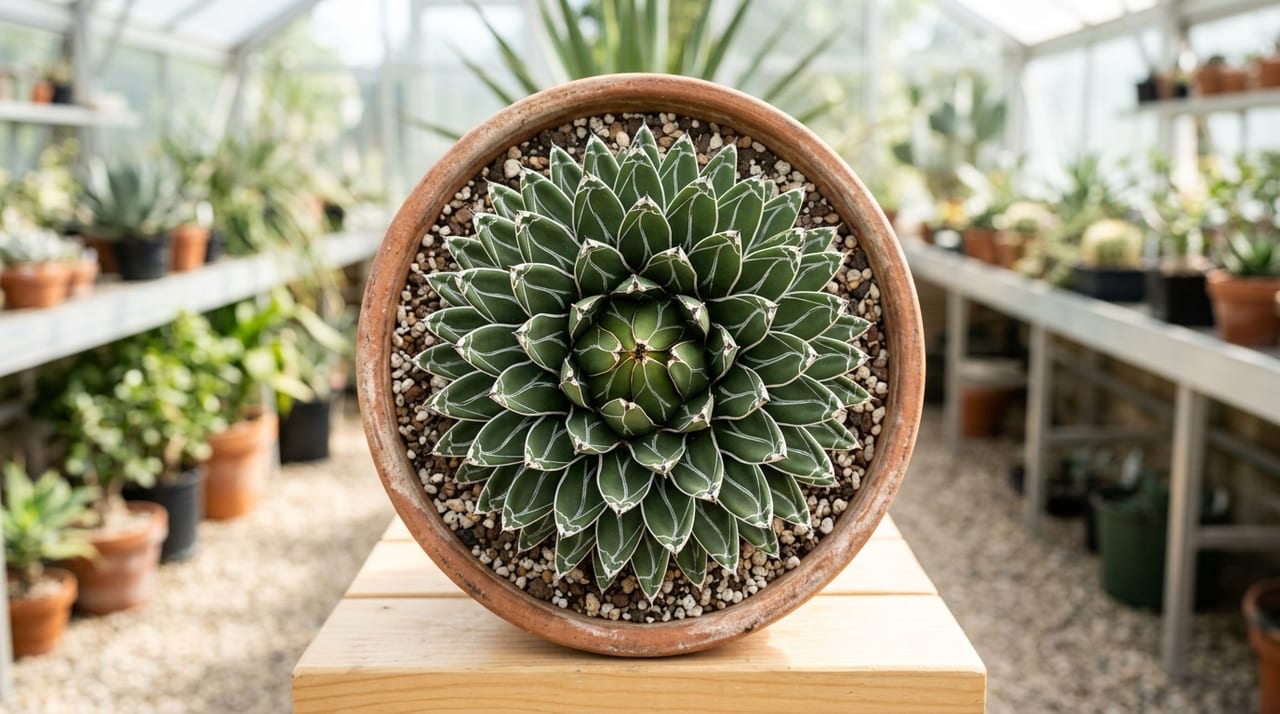
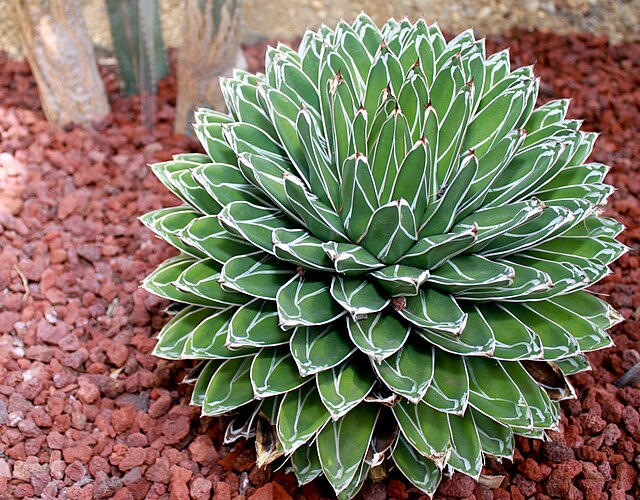
Agave victoriae-reginae (Queen Victoria Agave), one of hundreds of Agave species, is a unique specimen among its genus. Thick dark green leaves arranged in a radial pattern are etched with white-lined geometric patterns, displaying a beauty reminiscent of sculpture. Unlike large, sharp-spined Agaves such as A. titanota and A. holida, Agave victoriae-reginae captivates through its intricate leaf patterns while maintaining a compact form. This article introduces key cultivation management practices for growing this distinctive Agave in good health.
Characteristics and Native Habitat
Agave victoriae-reginae is native to dry, limestone slopes in Coahuila and Durango states in northeastern Mexico. Having adapted to harsh, arid conditions, it is extremely hardy and relatively easy to manage if excessive watering is avoided. The leaves are rigid, with a single sharp spine at the tip, but lack the full-margin serrated edges of A. titanota; instead, white linear patterns run across the leaf surface. These patterns vary by individual, and among collectors, specimens with wide, beautiful lines are highly valued.
Growth is extremely slow, conspicuously slower than other Agaves. Taking years to grow gradually, it is also a species that allows enjoyment of the same plant over a long period. Another characteristic distinguishing it from mass-produced Agaves is that it rarely produces offsets and is primarily propagated from seed.
Watering and Soil Basics
The most important aspect of watering Agave victoriae-reginae is avoiding root rot. To recreate the dry, limestone environment of its native habitat, use well-draining soil. Mixing perlite or pumice (approximately 30–40%) into standard succulent soil creates a highly draining environment that prevents waterlogging.
The basic rule is to water only after the soil has completely dried, and then wait a few more days. Seasonal guidelines are as follows:
| Season | Watering Guidelines |
|---|---|
| Spring–Autumn (growing season) | Approximately 2–3 times per month, adjusted according to soil dryness |
| Winter (growth nearly halted) | Approximately once per month, or cease watering entirely |
| Temperatures below 10°C | Reduce watering frequency further due to diminished root activity |
Sunlight and Growing Environment
Agave victoriae-reginae prefers strong sunlight. Key points for different growing environments are as follows:
- Outdoor cultivation: While tolerant of intense summer sunlight, abrupt exposure to direct sun can cause sunburn; gradual acclimatization is recommended.
- Indoor cultivation: Place in the brightest location possible; if light is insufficient, consider supplemental LED grow lights to achieve sharper, more vivid leaf patterns.
- Cold hardiness: While relatively hardy compared to other Agaves, it is susceptible to frost; in cold climates, move indoors to a bright location during winter rather than maintaining outdoors.
Propagation and Repotting
Since Agave victoriae-reginae rarely produces offsets, seed propagation is the primary method. Growth from seed is extremely slow, taking years from sowing to reach ornamental size; however, this allows for an extended enjoyment of the cultivation process itself.
Repot when roots fill the pot or when growth slows. Frequent repotting is unnecessary; once every 2–3 years is sufficient. When repotting, gently remove old soil without damaging roots and plant in fresh, well-draining soil. Key tip: Keep watering minimal for 1–2 weeks after repotting until roots adjust to their new environment.
Summary
Although Agave victoriae-reginae may seem demanding due to its slow growth, it is actually relatively easy to cultivate if well-draining soil and adequate sunlight are provided. To enjoy its beautifully geometric leaves long-term, proper watering to prevent root rot and gradual light acclimatization to prevent sunburn are key. By approaching cultivation with patience and time, you can experience the joy of developing a uniquely beautiful specimen.
Differences from Other Agaves and Collectibility
While large, sharp-spined Agaves such as A. titanota and A. holida appeal through their dramatic presence, Agave victoriae-reginae captivates through refined precision. The white lines etched on each leaf vary subtly by individual, making collecting distinctly different specimens of the same species a pleasure. Due to slow growth, developing a large specimen takes many years, but this allows patient observation of the evolving beauty of leaf patterns year after year.
Additionally, Agave victoriae-reginae is a monocarpic plant; when it flowers, it devotes all its energy to blooms, after which the plant dies. However, flowering typically requires decades; for ornamental cultivation, enjoying the long-term changes in leaf appearance rather than awaiting flowers is the focus. Approaching this species with patience and without haste is fundamental to its care.