Complete Care Guide for Agave horrida | Care Tips for a Popular Species with Sharp, Black Saw-like Teeth
Explaining how to grow Agave horrida, a species prized for its sharp, black saw-like teeth and tight growth habit. We've compiled cultivation tips from placement and watering to soil, repotting, and propagation.
Key Takeaways
Explaining how to grow Agave horrida, a species prized for its sharp, black saw-like teeth and tight growth habit. We've compiled cultivation tips from placement and watering to soil, repotting, and propagation.
Related Species
What is Agave horrida and what kind of variety is it
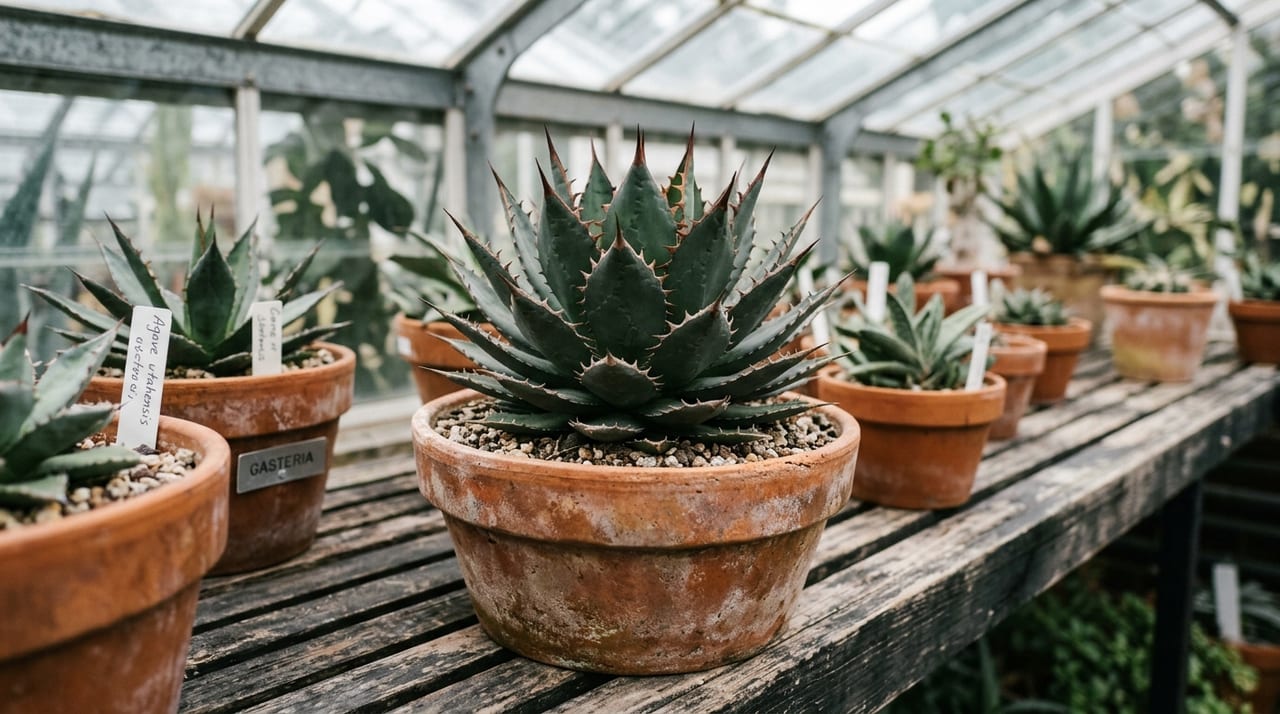
Agave horrida is a succulent plant characterized by sharp, dark-toned saw-like teeth and a tightly packed rosette form. Its main features are as follows.
- Sharp, dark-toned saw-like teeth and a tightly packed rosette form
- Compared to related species like Titanotas, the leaf width is slightly narrower and the saw-like teeth along the leaf edges are more densely arranged
- Growth is slow, making it easy to maintain a compact form
- The tightness of the growth habit and the sharpness of the saw-like teeth vary greatly between individuals, making selection enjoyable
It commands a strong presence when displayed in collections on shelves and is one of the species whose popularity has been increasing in recent years. Rather than outdoor garden planting, it is suited to pot cultivation where the growth habit can be carefully shaped over time, and many enthusiasts enjoy the process of cultivating small plants into their ideal form over several years.
Placement and Light
Like all Agaves, horrida prefers strong sunlight. When choosing a location, keep the following points in mind.
- Outdoors, it grows without issue even under direct summer sunlight
- Plants that have been kept indoors may develop sunscald if suddenly exposed to intense sunlight, so it's safer to establish an acclimation period where they gradually adjust to increased light
- In low-light environments, the plant easily becomes etiolated, with increased spacing between leaves, losing its attractive compact form
- Choose a location with good air circulation and direct sunlight throughout the day
When managing on a balcony or similar location, also pay attention to reflected heat from walls or railings, and in midsummer it's reassuring to monitor the leaf condition and decide whether shading is necessary.
Watering and Seasonal Management
Horrida is a drought-tolerant perennial that dislikes constantly wet roots. The basic watering approach is "deliberate watering"—wait until the soil surface is completely dry, then water thoroughly until it drains from the pot's drainage holes.
| Season | Watering Guide |
|---|---|
| Winter (slow growth) | Space out watering further and keep the soil relatively dry to reduce the risk of root rot |
| Spring to Fall (growing season) | Don't miss the drying point; water regularly to promote robust growth |
Developing a habit of observing leaf firmness and turgidity with each watering will help you detect water stress or root problems early.
Soil and Repotting
Preparing well-draining soil is essential for maintaining healthy roots. A commercially available succulent and cactus soil mixed with pumice or perlite to improve aeration and drainage is easy to use.
Repotting is recommended when roots have filled the pot or at the beginning of the growing season. The repotting procedure is as follows.
- Gently remove old soil
- Trim any damaged roots with clean scissors
- Plant in fresh soil
- Withhold watering for several days to a week after repotting, wait for roots to settle, then resume normal care
Choosing a pot with good aeration, such as a terracotta pot, helps prevent problems from excess moisture. The basic rule is to select a pot only slightly larger than the root ball; planting in an excessively large pot makes the soil dry slowly and can cause root rot, so care is needed. Increase pot size every few years as the plant grows, monitoring growth at a comfortable pace.
Propagation and Pest and Disease Management
As Agave horrida matures, it often produces offsets at the base of the plant, which are typically separated to propagate new plants. The propagation procedure is as follows.
- Once an offset has grown to adequate size and appears ready to develop roots independently, carefully separate it from the parent plant using a clean blade
- Allow the cut surface to dry in a well-ventilated, shaded area for several days to a week, forming a firm callus
- Once the cut surface has callused over, plant it in soil
- Keep watering minimal until roots develop, maintaining only slight soil moisture
The slow growth process when raising offsets allows you to enjoy subtle changes over a long period, which is one of the unique charms of Agave cultivation.
Poor air circulation and prolonged excess moisture favor the appearance of scale insects, spider mites, and similar pests. Key points for pest and disease management are as follows.
- Regularly inspect the base and undersides of leaves, making early detection a priority
- Damaged lower leaves often harbor pests, so remove dead leaves promptly
- If growing outdoors, watch for excess moisture from prolonged rain, and move the plant to a sheltered location during extended wet periods
- Because water easily accumulates at the base, pay attention to how rain and wind affect the plant
- If pests are found, wipe or prune affected areas before damage spreads
Acting quickly is the key to keeping the plant healthy.
Selection and Enjoyment
When acquiring an Agave horrida, check the following points.
- Is the base of the plant stable and firm?
- Are there no unnatural damage or discoloration on the leaves?
Even within the same species, individual plants differ in the color of the saw-like teeth and the tightness of the growth habit, and comparing these differences while selecting is one of the true pleasures of Agave cultivation. If you can purchase plants directly from a grower who has carefully tended them, you can more easily select a plant to your preference while reviewing the growing conditions and management history.
For some time after purchase, the plant is still adjusting to its new environment, so rather than repotting immediately upon arrival, it's better to first let it settle in its current soil for several days to a week, allowing it to acclimate to the light and air circulation of its new location before transitioning to normal care—this approach minimizes problems. By working with the plant over time while respecting seasonal growth patterns, you can enjoy watching the sharp saw-like teeth and compact rosette become more refined year after year. Keeping cultivation records will also serve as a reference when reviewing watering frequency and light conditions, proving helpful for a long-term relationship with the plant.