Agave funkiana Complete Care Guide | Characteristics, Soil, Watering, Propagation
Complete guide to caring for Agave funkiana. Features of this popular Mexico-native agave with fine leaves and distinctive form, optimal soil composition, watering timing, light management, repotting, and detailed information on propagation.
Key Takeaways
Complete guide to caring for Agave funkiana. Features of this popular Mexico-native agave with fine leaves and distinctive form, optimal soil composition, watering timing, light management, repotting, and detailed information on propagation.
Related Species
About Agave funkiana
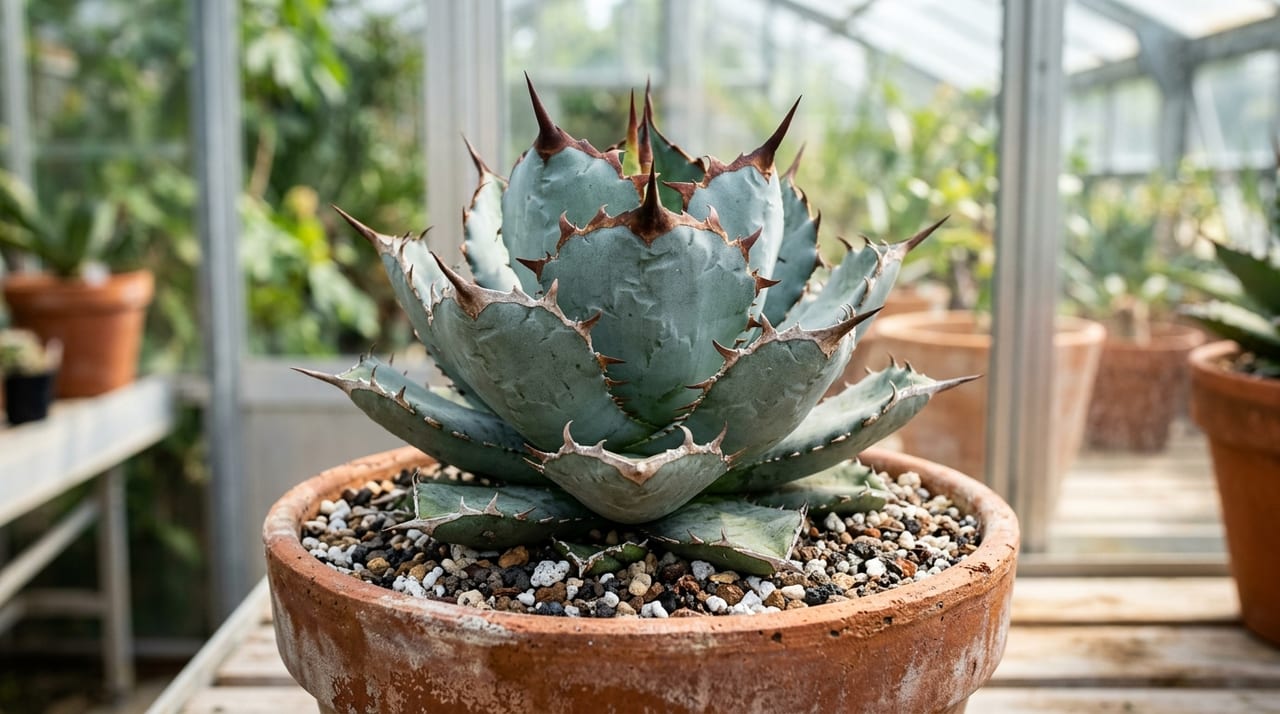
Agave funkiana (Agave funkiana) is a species of agave native to Tamaulipas and Nuevo León states in Mexico. It features a distinctive form with long, slender leaves radiating outward and strong spines at the leaf tips, and has recently gained attention among collectors.
Key Characteristics
| Item | Details |
|---|---|
| Native Region | Mexico (Tamaulipas and Nuevo León states) |
| Leaf Characteristics | Long, slender linear leaves, green to blue-green, strong terminal spines at tips |
| Mature Size | Approximately 60–100 cm diameter (varies by individual) |
| Marginal Spines | Small teeth-like spines arranged along leaf margins |
| Flowering | Monocarpic (parent rosette dies after flowering) |
| Cold Hardiness | -5 to -8°C (relatively cold-hardy) |
| Ease of Care | ★★☆ (Intermediate) |
Compared to titanota and potatorium, the leaves are finer, and its distinctive linear silhouette is the main appeal. Rather than the volume of the rosette, it is an agave to be appreciated for its spicy, wild character.
Soil Composition
Funkiana prefers well-draining soil. It is susceptible to root rot in overly moist conditions, so drainage is the top priority when mixing soil.
Recommended Soil Mix Recipes
Hyuuga soil (fine) : Pumice (small) : Akadama (small) = 4:4:2
Or simply:
Hyuuga soil : Akadama = 6:4
If using commercial succulent potting mix as a base, add at least 30% Hyuuga soil or pumice to improve drainage.
About Pots
Terracotta or black plastic pots are suitable. Terracotta offers high airflow and reduced root rot risk, but dries quickly, requiring more frequent watering. During the growing season (spring to summer), managing in plastic pots that retain more moisture is also an option.
Watering Management
Spring and Fall (Growing Season)
March–May and September–October are the periods of most vigorous growth. Water thoroughly until it drains from the pot bottom, 2–3 days after the soil has completely dried. As a general rule, water approximately once every 5–7 days.
Summer (High Temperature and Humidity)
During the rainy season through August, be careful of overwatering. In areas with heavy rainfall, move to a sheltered location and reduce watering. When temperatures exceed 35°C continuously, growth slows; space waterings even further.
Winter (Dormancy)
From late October through early March, the plant enters dormancy. During this period, water minimally—approximately once or twice per month—just enough to prevent complete root desiccation.
Light and Temperature Management
Light Requirements
Funkiana prefers bright light. Ideally, manage it outdoors in full south-facing sun. If growing indoors, use a bright windowsill or plant growth LEDs.
- Minimum recommended illumination: 20,000 lux or higher
- Outdoor recommendation: 5–8 hours of direct sunlight
- With LED: Full-spectrum, 50W equivalent or higher
Insufficient light causes leaves to become thin and elongated (etiolation), compromising rosette form. Sudden exposure to intense light after purchase causes leaf burn; acclimate gradually over 1–2 weeks.
Temperature
Cold hardiness is relatively high among agaves; some individuals tolerate temperatures down to -5 to -8°C. However, it is sensitive to frost and freezing; winter protection with frost cloth or a greenhouse is recommended.
| Season | Ideal Temperature | Notes |
|---|---|---|
| Spring–Summer | 20–35°C | Move to partial shade if exceeding 35°C |
| Fall | 15–25°C | Maintain light while reducing water |
| Winter | 0–15°C | Frost protection essential below 0°C |
Repotting Timing and Method
Spring (March–May) is the ideal time to repot as growth begins. Repot when roots emerge from the pot bottom or when soil has degraded and drainage has declined.
Repotting Steps
- Skip watering the day before and let soil dry.
- Remove the pot and gently shake away old soil.
- Trim damaged (brown/rotten) roots with clean scissors.
- Let the cut surfaces dry for about 1 hour.
- Add fresh soil to fill about 1/3 of the pot, position the plant, and fill gaps with soil.
- Withhold water for 1 week after repotting and keep in bright shade.
Propagation (Offsets and Seeds)
Propagation by Offsets (Pups)
Mature plants produce offsets (pups) at the base. Once offsets reach 5 cm or larger in diameter, they can be separated from the mother plant.
- Separate the offset from the base with a knife.
- Apply fungicide to the cut and dry for 2–3 days.
- Plant in moist soil and keep in bright shade until roots develop.
Propagation from Seed
Funkiana seed is rarely available domestically; sourcing from foreign seed suppliers is the primary method for seed propagation. Sow in May–August at germination temperatures of 25–30°C. Use bottom-watering to keep soil moist until germination.
Common Problems and Solutions
Root Rot
Cause: Overwatering, poor drainage, excessive winter watering
Solution: Remove rotted roots, apply fungicide, and repot in dry soil. Withhold water for 1–2 weeks.
Leaf Burn
Cause: Sudden exposure to intense direct sunlight
Solution: Affected tissue will not recover, but the plant usually survives. Gradually increase light exposure to prevent future damage.
Etiolation (Stretching)
Cause: Insufficient light
Solution: Move to brighter location or use LED supplementation. Etiolated leaves will not recover, but new growth will be compact.
Spine Deformation
Cause: Overwatering or excessive fertilization
Solution: Reduce watering frequency and limit fertilizer to dilute liquid fertilizer once monthly during the growing season.
Summary: The Appeal of Funkiana and Care Tips
Agave funkiana is a distinctive species with fine leaves and a wild, architectural form that sets it apart from other agaves. The basics of care are the same as for titanota and oteroi: well-draining soil, sufficient light, and winter dry management are the three key points.
Because it is somewhat difficult to source domestically, we recommend purchasing from domestic growers or reputable importers. It is a noteworthy species for collectors seeking cold-hardy agaves suitable for colder climates. We encourage you to give it a try.