Agave Growth Rate and Size | Guide to Variety-Specific Expectations
Agave growth rate is almost entirely determined by variety. This guide compares growth speed and final rosette diameter of popular varieties like Titanota, Horrida, Parryi, and Americana in a comparison table, and explains the differences between outdoor and indoor growth as well as management to accelerate growth.
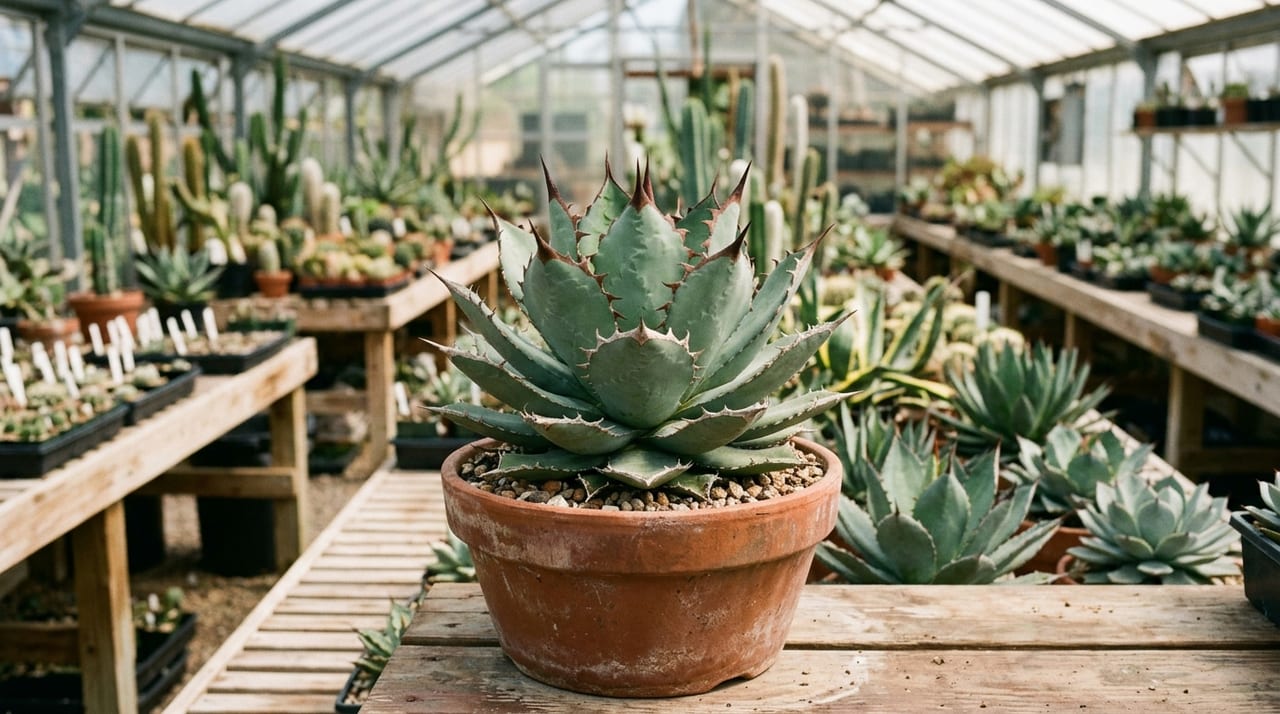
Key Takeaways
Agave growth rate is almost entirely determined by variety. This guide compares growth speed and final rosette diameter of popular varieties like Titanota, Horrida, Parryi, and Americana in a comparison table, and explains the differences between outdoor and indoor growth as well as management to accelerate growth.
Agave is a succulent plant native to the arid regions of Mexico and North America, characterized by a rosette form in which sharp, spined leaves spread radially. In recent years, it has become increasingly popular as a part of the succulent boom in Japan, and is enjoyed by a wide range of people from collectors to beginners.
When growing agaves, many people wonder "how large will it become?" and "how fast will it grow?" In fact, agaves vary greatly in growth rate and final size depending on variety, and also change depending on placement and management methods. This article provides a detailed explanation of variety-specific expectations, and also introduces key environmental and management factors that influence growth.
Variety-Specific Growth Rate and Final Size
Over 200 species of agave have been identified to date, ranging from compact mini varieties to large varieties that can be grown as shade trees. Let's understand the growth characteristics of representative varieties. If you'd like to compare more varieties, please also see Agave Popular 100 Varieties Identification Guide.
| Variety | Growth Speed | Final Rosette Diameter | Guide |
|---|---|---|---|
| Americana (A. americana) | Fast | Over 100cm | A large variety that can exceed 1m in diameter in a few years under the right conditions |
| Horrida (A. horrida) | Moderate | 50–80cm | Wide, spreading rosette |
| Ovatifolia (A. ovatifolia) | Moderate | 60–80cm | Broad, soft leaves with powder blue color |
| Titanota (A. titanota) | Moderate | 40–60cm | 5–8 leaves per year. From seedling to 30cm diameter in 3–5 years |
| Parryi (A. parryi) | Slow | 30–50cm | High cold hardiness, suitable for outdoor cultivation |
The details of each variety are as follows.
Titanota (A. titanota)
One of the most popular varieties in Japan. It unfolds approximately 5–8 new leaves per year, and the time it takes from seedling to reach 30cm diameter is approximately 3–5 years. The final rosette diameter is often 40–60cm, which is also attractive as a collectible size. Variation appears easily in the shape and color of the serration on the leaf edges, and each Titanota plant has a unique appearance. If you'd like to compare different Titanota trade names such as NO WAY, FJ, and Black, Agave Titanota Variety Catalog is also helpful.
Horrida (A. horrida)
A variety with moderate growth speed that is characterized by forming a wide, spreading rosette. When mature, it reaches 50–80cm in diameter and develops into an impressive plant. The spines on the leaf tips are sharp and it has a strong, hardy nature, making it relatively easy to grow even for beginners.
Parryi (A. parryi)
Growth is somewhat slower compared to other varieties, and it is popular for its rounded, compact form. The final size is approximately 30–50cm in diameter, and its high cold hardiness makes it suitable for outdoor cultivation. In cold regions like Hokkaido, outdoor overwintering is possible in some cases, making it also recommended for those considering planting in gardens. For more detailed information about cold-hardy varieties, see Cold-Hardy Agave Variety Guide.
Americana (A. americana)
A particularly fast-growing large variety among agaves that can exceed 1m in diameter in a few years under the right conditions. It is attractive for those who want to grow large specimens, but space is required. In warm regions, it serves as an impressive landscape plant when planted in gardens.
Ovatifolia (A. ovatifolia)
A popular variety with broad, soft leaves. Growth is moderate and reaches 60–80cm in diameter. The powder blue color of the leaves is beautiful, and it is valued by enthusiasts as a variety with high ornamental value.
How Many Years Until Agaves Get Large? Selecting Fast-Growing Varieties
If you want to "grow it large quickly," the shortcut is to select a large variety first. As shown in the table above, large varieties like Americana can exceed 1m in diameter in a few years under the right conditions, but Parryi and Titanota have a final size of around 30–60cm, so no matter how many years you grow them, they won't become like large varieties. How many years it takes to get large is determined by variety before management.
If you grow Titanota from seed, the target time to reach 30cm diameter is approximately 3–5 years. However, the final size will differ between outdoor direct sunlight and a window indoors even over the same number of years, so please check the environmental differences in the next section as well.
Another thing to keep in mind is the nature of selected individuals. The trade names such as White Whale, Kegon, and Genryu that circulate in Titanota varieties are often selected for their compact growth form with short, tightly packed leaves, and tend to have slower leaf expansion and smaller final sizes compared to the wild type. When you feel "the same Titanota is not getting bigger," it's often not the plant's poor condition, but rather a characteristic of the selected individual itself. To seek larger sizes, the way of thinking is to select strains that grow large rather than selected individuals.
How Different Outdoor and Indoor Growth Speeds Are
Agave is a plant that loves sunlight very much. Even with the same variety, growth speed differs greatly depending on the cultivation environment.
Outdoor (with direct sunlight)
This is the most ideal environment. By receiving sufficient light, the leaves become thick and compact, resulting in what is called a "cool-looking plant form." Growth speed is clearly faster than indoors, and during the growing season (spring to autumn), you can see the number of leaves increasing visibly. To avoid excessive rain, it's a good idea to move the plant to a place like under the eaves during the rainy season from June to summer.
Indoor (by a window, well-lit)
You can grow agaves indoors by a south-facing window with good sunlight, but in most cases the light intensity is less than half that of outdoors. Growth becomes slow and "etiolation" may occur, where leaves become long and spaced out. It's fine to bring them indoors for winter management, but year-round indoor management makes it difficult to bring out the plant's full potential. For tips on growing agaves indoors, see Agave Indoor Growing Complete Guide for detailed explanations.
Utilizing LED Grow Lights
In recent years, LED lights for plant growth have become widespread, making it possible to secure a certain amount of light even indoors. If you use full-spectrum LED lights, you can maintain growth speed close to outdoors in some cases. This is an effective option for those who cannot secure outdoor space, such as apartment dwellers.
Management Tips to Promote Growth
With proper management, you can give agaves a boost in growth without forcing them.
Pot Size Selection
Agaves, which develop roots well, suddenly slow growth when the pot becomes root-bound. By repotting into a pot one size larger than the current plant diameter, root elongation is accompanied by more active growth of the above-ground parts. However, pots that are too large make the soil dry slower and increase the risk of root rot, so care is needed. Pot selection standards are summarized in Agave Pot and Container Selection Complete Guide.
Watering with Variability
During the growing season from spring to autumn, water thoroughly when the soil is well dried. The basic principle is to "keep it slightly dry," but if you stop watering completely, growth will stop. Especially during the hot summer, evaporation is intense, so check the condition about once or twice a week and adjust accordingly. During the dormant winter period, reduce watering to about once a month or almost no water.
How to Use Fertilizer
You can promote growth by applying a small amount of slow-release compound fertilizer during the growing season. Over-application can cause etiolation or root damage, so it's safe to start with about half the recommended amount. In the case of liquid fertilizer, applying diluted fertilizer as a substitute for watering about once every two weeks is less prone to failure.
Ensuring Air Circulation
A well-ventilated environment maintains root health and prevents diseases and pests. Crowded placement can cause dampness, so make sure to keep adequate space between plants. In the case of outdoor management, it's also important to place the plant in a stable location to prevent it from falling over due to typhoons or strong winds.
The Joy of Growing from Seed and Enjoying Growth Over Time
One of the attractions of agave is the pleasure of growing from seed, called "seedling." The process of a seedling that is only a few centimeters large growing into a solid plant over many years is a unique satisfaction that is difficult to experience with other plants.
Seedlings are cheaper to obtain than commercially available mature plants, and seeds of rare varieties also circulate in the market. However, as mentioned earlier, it can take several years to over 10 years to become a mature plant, so you need the resolve to commit to it for the long term. If you keep a growth record with photos, it becomes a great joy when you look back later.
On the other hand, if you want to enjoy a plant with high ornamental value right away, choosing a somewhat mature plant or an imported plant with roots already established is also a wise choice. If you want to know how to evaluate the grade and quality when choosing a plant, please also see Agave Individual Grade and Quality Evaluation Guide.
GrowerDirect's Safe and Secure System
GrowerDirect is a platform where you can purchase plants, including agaves, directly from growers. Because no intermediaries are involved, being able to hear directly from the seller about their growing background and management methods is a major advantage.
- Seedlings with growing records: You can check the sowing date and photos of the growth process, with clear cultivation history
- Imported plants with established roots: They are listed after confirming the root condition, so post-purchase problems are rare
- Variety and size consultation: You can directly ask sellers about varieties that suit your space and preferences
- Traceability: It's clear who grew it, where, and how it was grown, giving you peace of mind
Even for beginners, there's an environment where you can easily ask questions like "which variety should I start with?" and "is it suitable for my home environment?" Please find your ideal agave on GrowerDirect.