Guide to Agave Individual Grade & Quality Assessment | Quality Evaluation Points That Determine Market Price
An explanation of evaluation criteria for discerning individual differences in agave plants. This guide summarizes key points to know before purchasing, from checkpoints for spines, color, growth point, and root development to estimated market prices.
Key Takeaways
An explanation of evaluation criteria for discerning individual differences in agave plants. This guide summarizes key points to know before purchasing, from checkpoints for spines, color, growth point, and root development to estimated market prices.
Related Species
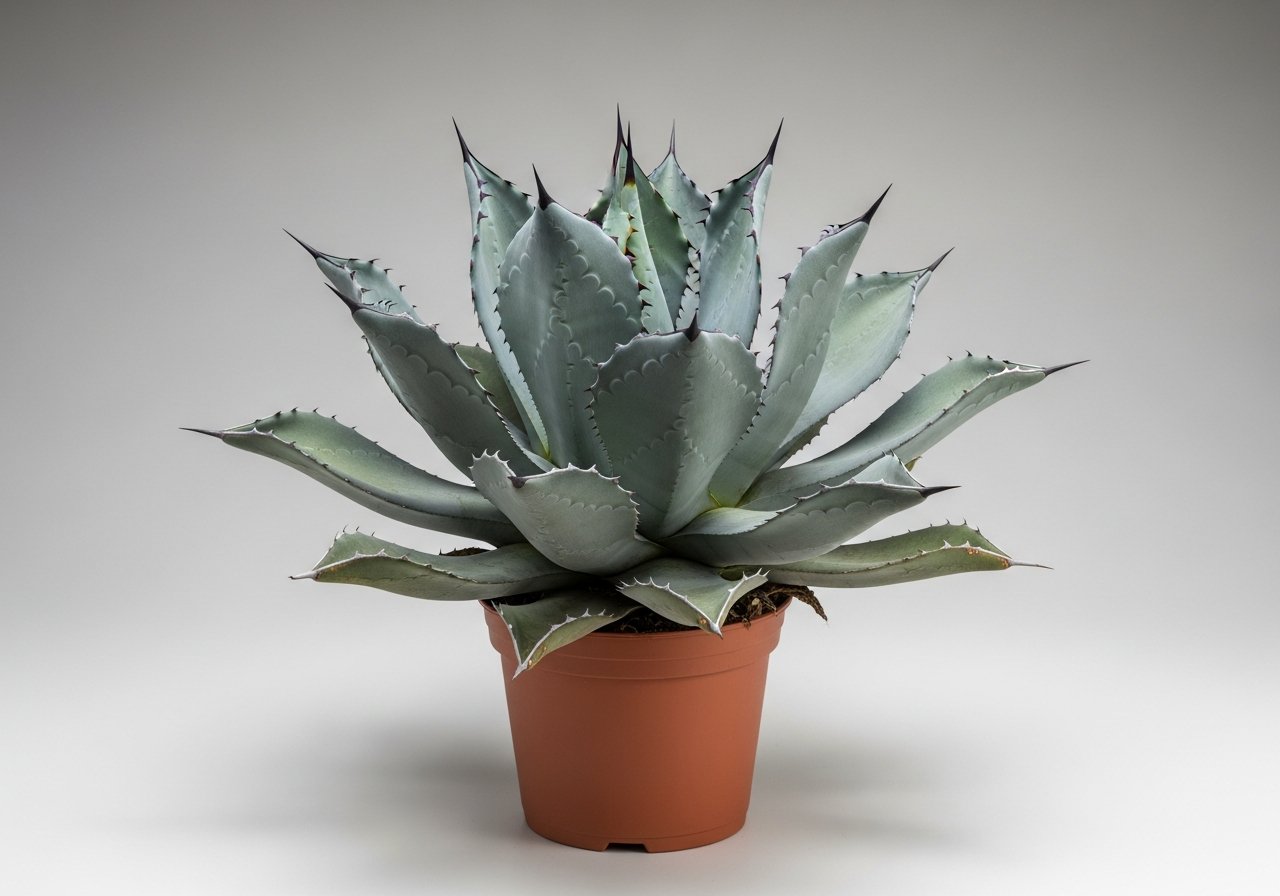
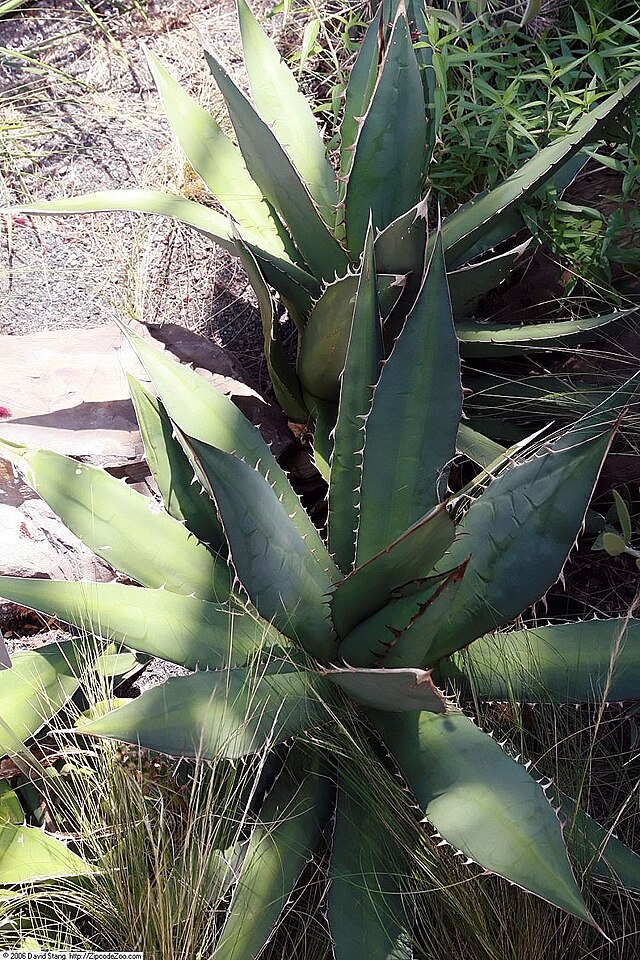
Agave has become a particularly well-established collector's market among succulents. Even plants with the same scientific name show enormous individual variation, and without knowledge of evaluation criteria, you cannot determine whether a market price is fair or inflated. This article explains both the fundamentals and advanced applications of agave quality assessment useful for everyone from beginners to collectors.
Grading Basics: Framework for Type-Based and Size-Based Evaluation
Agave quality assessment first establishes a broad framework based on "type" and "size."
Type classification divides agave into: 1) rosette form (typical radiating form), 2) columnar form (e.g., Agave cucurbitata group), and 3) tree-form or cluster-forming types. Agave ovatifolia and Agave parrasana have stable, consistent growth forms and therefore have relatively stable market prices for beginners. In contrast, Agave victoriae-reginae is known for forming a perfect spherical rosette, and the high degree of completion directly influences its price.
Size is an important axis for market evaluation because it directly correlates agave's growth speed with initial investment. Specimens that have reached full adult size do not simply fetch several times the price merely for being "large"; rather, size serves as proof that "no defects emerged during the growth process to reach that size." Like Agave titanota lines, specimens exceeding 30cm in diameter as mature plants have reliable market demand.
Judging Appearance Quality: Evaluation Criteria for Spines, Color, and Patterns
Spine Condition and Uniformity of Arrangement
Spines are the "face" of an agave. Whether the spines are uniform, free of damage or abrasion, and have not faded in color reveals how carefully the specimen has been managed.
Particularly for premium specimens like Agave schidigera and Agave striata, which have fine, delicate spines, even slightly bent or chipped spine tips can result in a 20-30% price reduction. Conversely, for specimens with thick, robust spines like Agave sisalana and Agave tequilana, minor spine damage may be tolerated.
The geometric regularity of spine arrangement is also important. Specimens with spines neatly aligned along the leaf veins typically have higher inherent genetic grades and tend to exhibit stable growth afterward.
Color Variation and Stability of Variegation
Agave color is determined by both growing conditions (light, temperature, fertilization) and genetic factors. Specimens like Agave titanota and Agave cupreata displaying deep blue-purple or dark green tones have their color intensity and uniformity directly reflected in market prices.
For variegated varieties (e.g., Agave colorata-variegata), assessment is more complex. Variegated specimens are not necessarily premium, and the critical factor is variegation stability. Specimens whose variegation—inherited from the parent plant—fades during growth or conversely spreads extensively are avoided by collectors. The degree to which variegation width, pattern, and frequency vary among individuals of the same line directly correlates to that bloodline's grade assessment.
Confirming Growth Point, Root Development, and Health
Growth Point Vitality and Leaf Texture
Because agave grows slowly compared to other succulents, whether the growth point (central new leaves) is healthy significantly influences management difficulty over the next 3-5 years.
A healthy growth point that is firmly raised, with new leaves gradually transitioning from a translucent pale color to the parent plant's color, is proof of healthy metabolism. Conversely, specimens with wilted growth points, or with new leaves that are either excessively soft or too rigid, likely have root development problems and carry higher post-purchase risks.
Leaf tissue texture is also an evaluation criterion. When gently touched by hand, specimens like Agave parrasana that show appropriate turgidity and feel crisp and succulent indicate that roots are functioning adequately.
Root Development and Pot Size Balance
Ideally, remove the specimen from its pot before purchasing to inspect the roots. Whether thick white roots are distributed throughout the pot clearly indicates the specimen's health.
When roots are sparse and brown or dead, growth is nearly arrested and recovery can take 6-12 months. Especially for specimens whose roots were damaged during distribution—even if they look good at purchase—unexpected decline may occur six months later. Insufficient root development in large varieties like Agave ovatifolia and Agave mapisaga significantly affects future growth rate, so market prices commonly reflect 30-50% discounts.
Beginner's Checklist: Five Items to Confirm Before Purchasing
The following is a checklist anyone can use when purchasing agave. The more checkmarks, the higher the grade.
- Are spines uniform? — At least 80% of spines are intact without chipping
- Has color not faded? — New and old leaves do not differ significantly in color
- Is the growth point raised? — Fresh green leaves are visible at the center
- Do the leaves have turgidity? — When touched, the leaves feel crisp and succulent
- Are roots visible when tilting the pot? — White roots emerge not only in the soil but around the drainage hole
Specimens meeting all five criteria are optimal grade for beginners to start with. If one or two criteria are not met, they become negotiating points for price reduction.
Advanced Evaluation Criteria for Collectors: Determining Line, Bloodline, and Rarity
Value of Line and Bloodline
In the agave collector market, differences arising from line variation are extremely pronounced even among plants with the same scientific name. Agave victoriae-reginae has multiple circulation lines ranging from super-compact form through standard to large form, each with different market valuations. Additionally, Agave titanota is subdivided into fine lines where color, spine thickness, and variegation patterns can result in price differences of 2-5 times, which is not uncommon.
To verify bloodline, refer to: ①the seller's provenance documentation, ②visual comparison with sibling specimens grown under the same line, and ③cultivation records (fertilization history, substrate, daylight hours).
Rarity and Supply Asymmetry
Varieties with extremely limited domestic circulation in Japan, such as Agave utahensis and Agave gentryi, have unstable market prices. Because supply falls short of demand, waiting several months to acquire a single specimen is not uncommon, and prices tend to be inflated accordingly.
Conversely, varieties like Agave ovatifolia and Agave sisalana that are easy to propagate in large quantities have relatively stable market prices, and these are recommended as starting points for newcomers.
Growth Records and Evidence of Cultivation Environment
Collector-grade specimens increasingly come with a "cultivation record" at purchase. When the record documents fertilizer type, fertilizer concentration, watering cycle, and direct sunlight hours, it becomes easier to replicate the same growing conditions during post-purchase care, significantly reducing failure risk.
Market Price Guide and Price Range Reference
Agave market prices follow the following tiered structure.
- Beginner small specimens (5-10cm) — ¥500–¥2,000. Agave parrasana and Agave ovatifolia concentrate in this range.
- Intermediate medium specimens (15-25cm) — ¥3,000–¥15,000. Many varieties with distinctive spines or color. Includes standard Agave titanota and Agave victoriae-reginae.
- Advanced large specimens (30cm+) — ¥20,000–¥100,000+. Line grade, bloodline, and high degree of completion directly determine price.
- Rare lines / collector-exclusive specimens — ¥100,000+. Varieties with circulation limited to 1-2 specimens annually.
If a high price is quoted, always ask the seller "why this price?" Your assessment will differ depending on whether the reason is simply "rarity" or whether there is substantive justification in size, grade, or bloodline.