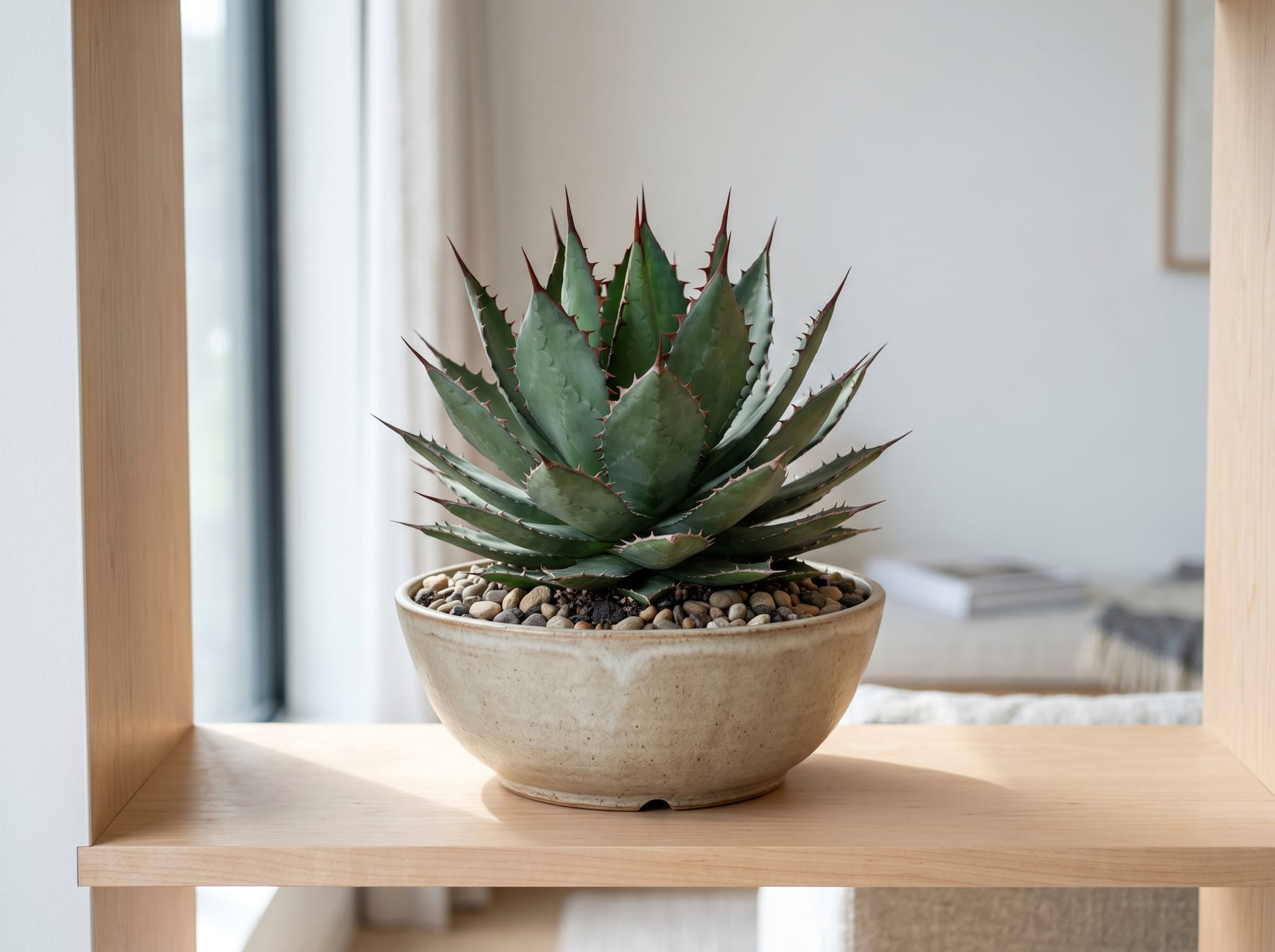
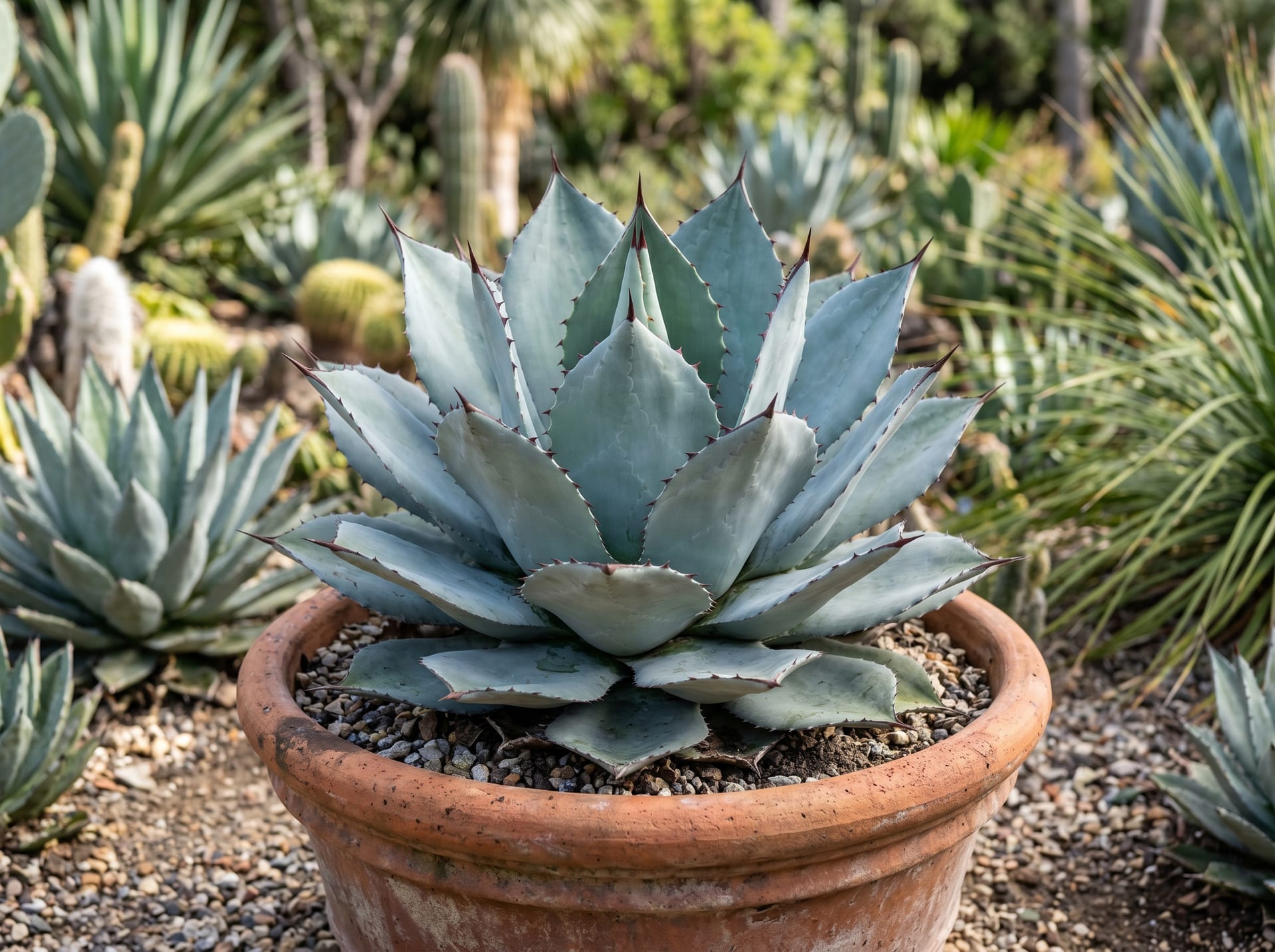
AI-generated image
Agave Horrida
IntermediateAgave horrida
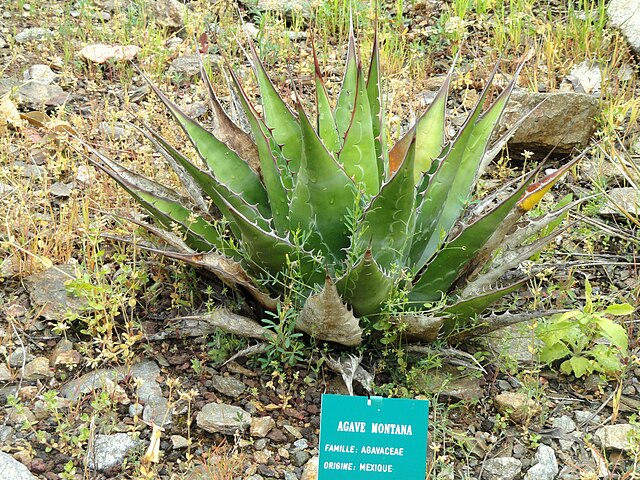
Native to Mexico. Dark green fleshy leaves lined with sharp black teeth give a wild appearance. More cold-hardy than Titanota and adapts well to Japan's climate. Somewhat slow-growing.
About
Agave horrida is a medium-sized species native to the dry rocky slopes and hillsides of Hidalgo state in central Mexico. The epithet 'horrida' aptly describes the plant's fierce appearance: dense, dark green fleshy leaves are lined with prominent black to dark brown teeth along the margins, creating a bold and wild aesthetic. Mature rosettes typically reach 40–70 cm in diameter, remaining compact enough for container cultivation. Growth is moderately slow. It is slightly more shade-tolerant than Agave titanota, making it somewhat more adaptable to indoor conditions, though full sun remains ideal. Use a fast-draining mix of akadama, kanuma, and pumice. Water when the soil is fully dry, reducing to once a month in winter. Numerous selected forms circulate among collectors, valued for variation in tooth size, leaf color, and overall form.
Size of the Agave Horrida
The Agave Horrida grows to 30-60cm rosette.
Temperature & humidity for the Agave Horrida
The ideal temperature for the Agave Horrida is 10〜35℃.
It tolerates temperatures down to around 5°C and adapts reasonably well to Japan's climate.
Basic Info
Origin
Hidalgo, Mexico
Size
30-60cm rosette
Temperature
0〜40℃
Watering & Fertilizer
Water: when dry in spring/fall / reduce in summer / monthly in winter
Growing Tips
Soil
Mix of Akadama, Kanuma, and pumice. Prioritize drainage
Light
Direct sunlight ideal. Slightly more shade tolerant than Titanota
Watering
Water after the soil dries, and in winter cut back to about once a month. Avoiding excess moisture keeps the rosette compact.
Temperature & Overwintering
The ideal range is 10-35°C, and it tolerates down to about 5°C without trouble. In winter shield it from frost and keep it above 0°C.
Notes
Teeth are extremely sharp — thick gloves essential when repotting
Agave Horrida FAQ
QWhat is the growing difficulty level for Agave Horrida?
Intermediate. A variety suitable for intermediate growers. Requires some cultivation experience and knowledge of environment management. Pay careful attention to temperature and humidity control.
QWhat is the ideal temperature for Agave Horrida?
The ideal temperature for Agave Horrida is 10〜35℃. Avoid sudden temperature changes and maintain a stable environment.
QHow large does Agave Horrida get?
The mature size of Agave Horrida is 30-60cm rosette. This may vary slightly depending on cultivation environment and individual differences.
QHow should I water and fertilize Agave Horrida?
Agave Horrida: watering & fertilizer — Water: when dry in spring/fall / reduce in summer / monthly in winter. Aim for appropriate frequency and amount.
QWhat is the typical price for Agave Horrida?
The price of Agave Horrida varies significantly by variety, characteristics, size, and lineage. Please check GrowerDirect's price guide for the latest market information.
Last updated: June 24, 2026
References & Sources
Edited & verified by: GrowerDirect Editorial Team
The classifications, regulations, and growing data on this page are created and verified based on the primary information database below.
Taxonomy & Authority
Regulations & Conservation Status
Sources: CITES Appendices (List of species protected by CITES Appendix II) / Ministry of the Environment Designated Invasive Species List (confirmed Agave non-applicable)
Regulations may change. Always verify the latest information with the relevant authorities.
Related Species
Find listings for this species
Related Articles
Complete Care Guide for Agave horrida | Care Tips for a Popular Species with Sharp, Black Saw-like Teeth
Explaining how to grow Agave horrida, a species prized for its sharp, black saw-like teeth and tight growth habit. We've compiled cultivation tips from placement and watering to soil, repotting, and propagation.
Agave Titanota vs. Horrida Complete Buyer's Guide | Comprehensive Price Comparison, Cultivation Difficulty, and Where to Buy
A comprehensive price comparison, cultivation difficulty analysis, size considerations, and sourcing guide for Agave titanota and horrida. This expert guide helps you decide which variety suits you best, with detailed explanations of each plant's characteristics and purchasing tips.
Agave Titanota vs. Horrida Care Guide: Managing Two Popular Species Despite Their Similarities
Agave titanota and horrida species are hugely popular among collectors. Although they look similar, their origins, growing conditions, and care requirements differ significantly. This guide details the characteristics of both species and practical tips for managing each.
Preventing Leaf Burn in Agave and Light Management | Transition Strategy from Indoor to Outdoor Cultivation
Light management strategy to prevent agave leaf burn completely while successfully transitioning from indoor to outdoor environments. This article explains practical methods including gradual light intensity adjustment, seasonal placement changes, and UV protection measures.
🩺 Common diseases
Can't find the plant you're looking for?
Post your wishes for free and growers with matching plants will contact you with introductions.