A Beginner's Guide to Growing Agave
For beginners who want to start growing agave. We provide comprehensive guidance on soil composition, watering frequency, light and temperature management, repotting and rooting management, and recommended beginner varieties such as Titanota and Horrida.
Key Takeaways
For beginners who want to start growing agave. We provide comprehensive guidance on soil composition, watering frequency, light and temperature management, repotting and rooting management, and recommended beginner varieties such as Titanota and Horrida.
What kind of plant is agave? Its charm and characteristics
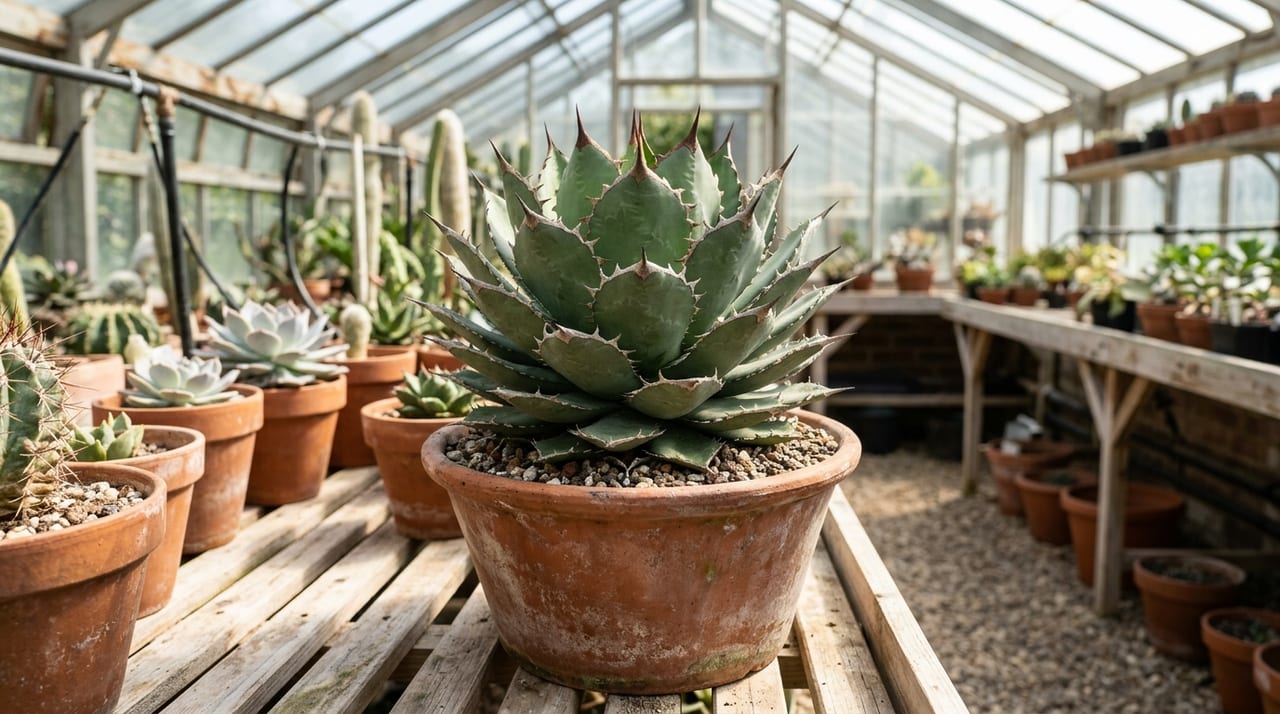
Agave is a succulent plant native to arid regions and rocky areas of North America, centered around Mexico. Botanically, it belongs to the Agavaceae family (or Asparagaceae family), and over 200 native species are known worldwide. Its most distinctive features are the sharp, serrated leaves arranged in a row and the radial rosette form that spreads outward. This wild, dynamic appearance captivates many gardening enthusiasts.
In recent years, the agave boom has expanded rapidly across Japan. Information about rare varieties spreads through the internet and social media, and collecting has become an established hobby. On the other hand, many beginners start growing agave without proper knowledge of care methods, and struggle with root rot and leaf deformation.
Agave is originally a highly hardy plant capable of surviving harsh environments. If you master the basic management essentials, even beginners can enjoy growing them long-term. This guide explains the fundamentals of agave cultivation—from soil preparation through watering, sunlight exposure, and rooting management—in an easy-to-understand way.
Soil selection and composition
In agave cultivation, soil selection is one of the most critical points. Given that agave originates from deserts and rocky terrain, it extremely dislikes soil with poor drainage. If overly moist conditions persist, root rot will develop, and in the worst case, the entire plant will die.
Basic composition recipe
- Red soil (small grain): 4
- Lava rock (small grain): 4
- Leaf mold: 1
- Charcoal powder: 1
This composition offers a good balance of water retention and drainage, making it suitable for most agave varieties. Increasing the proportion of lava rock further improves drainage and reduces root rot risk.
When using commercial cultivation soil
If using a commercial succulent soil mix as the base, add lava rock or perlite to account for approximately 20–30% of the total. Commercial products tend to retain slightly more moisture, so they may hold too much water as-is. Be sure to place pot shards at the bottom of the pot to prevent the drainage hole from clogging.
Terracotta and clay pots are recommended for their superior air circulation. Plastic pots are lightweight and convenient but tend to become overly moist, so you'll need to consciously reduce watering frequency. If you're unsure about pot selection, check The complete guide to agave pots and containers for material and size guidelines.
Watering basics and seasonal management
The most important thing about watering agave is "rhythm." Maintaining the pattern of "water generously and let dry thoroughly" is the secret to keeping roots healthy.
Spring to autumn (growing season)
From spring through autumn is the plant's active growth period. After the soil surface dries, wait an additional 2–3 days, then water thoroughly until water drains from the bottom of the pot. The general guideline is once every 2–4 weeks, but drying speed varies with temperature and light, so adjust based on actual soil conditions.
During hot summer months, avoid watering during the heat of the day when direct sunlight is strongest. Water in the cooler morning or evening hours instead. Watering during high temperatures causes moisture to accumulate in the pot and damages roots.
Winter (dormant period)
Once temperatures drop below 10°C (50°F), drastically reduce watering. Keep it to about once a month or less, maintaining the soil on the dry side. Growing the plant dry encourages compact growth and improves cold hardiness. When spring arrives and temperatures begin to rise, gradually resume normal watering. If you want to choose varieties suitable for outdoor winter dormancy, The hardy agave variety guide is also helpful.
Sunlight, temperature, and air circulation management
Sunlight
Agave loves strong sunlight. An outdoor location receiving direct sunlight is ideal, and it's important to expose the plant to as much light as possible year-round. Insufficient light causes leaves to space farther apart, resulting in a leggy, unsightly plant form. If managing indoors, place the plant near a south-facing window or another high-light location. If it's difficult to secure adequate light, the LED techniques covered in The complete guide to growing agave indoors can be helpful.
When managing outdoors, shading in midsummer is generally unnecessary. However, plants that have been kept indoors for a long period may develop leaf scorch if suddenly exposed to intense direct sunlight. Allow an acclimation period to gradually harden off the plant.
Cold hardiness and winter survival
Cold hardiness varies by variety, but most agave can survive outdoors at temperatures of 5–10°C (41–50°F) and above. They are extremely sensitive to frost and freezing; once leaves freeze, the tissue is destroyed and cannot recover. Before minimum temperatures drop below 5°C (41°F), move plants indoors or into a greenhouse.
Air circulation
Stuffiness is agave's worst enemy. Extra attention is needed from the rainy season through summer. In densely-leaved plants, water easily collects in the center and causes rot. If a plant is exposed to excessive rainfall, relocate it to an eaves area or a location with weather protection.
Rooting management (bare-root and imported plants)
Imported bare-root plants or agave purchased without roots require rooting management before planting. By following the correct procedure, you can smoothly encourage root development.
- Root preparation: Cut away damaged or rotted roots with clean scissors.
- Drying: Allow cut surfaces to dry completely in bright, indirect light for 1–3 days.
- Applying rooting hormone: Apply a thin coat of rooting promoter such as Rootone to the cut surface for best results.
- Planting: Insert shallowly into dry soil (no watering needed) and manage in bright, indirect light.
- Beginning to water: Before rooting, water only with a misting bottle to avoid overwatering.
- Confirming rooting: Roots typically appear within 1–2 months. When the pot is tilted and the plant is firmly anchored, rooting is complete.
For more detailed procedures and guidance on choosing between hydroponic and soil-based rooting, see Agave hydroponic rooting techniques.
Recommended varieties and how to choose
Agave offers a diverse range of varieties suited to growers from beginner to advanced.
- Titanota (Agave titanota): White serrated leaves and thick leaf tissue make this a popular standard variety. Easy to grow and recommended for beginners.
- Snow Bamboo (Agave victoriae-reginae): Beautiful white leaf margins and compact, refined form.
- Horrida (Agave horrida): Fine, sharp serrations create a striking, well-defined silhouette. Commanding presence.
- Parry's Truncata: Rounded, compact growth habit that's popular. Easy to grow in small spaces.
- Geminiflora (Agave geminiflora): Fine leaves grow densely, creating a unique form. Ball-shaped silhouette is very popular.
If you're unsure which variety to choose, start with Titanota or Snow Bamboo, which are widely available and stable in price. If you want to compare over 100 varieties with photos, Agave guide to identifying 100 popular varieties is also a useful reference.
GrowerDirect's safety and assurance system
GrowerDirect is a platform that directly connects growers and purchasers. There are several major advantages when purchasing agave.
Domestic seedling stock is easy to obtain: You can find Japanese-climate-adapted seedlings grown domestically. Compared to imported plants, adaptation to your environment is smoother, and beginners can start growing with confidence.
You can directly confirm rooting status: By messaging the seller, you can check the rooting condition and growing environment, alleviating the anxiety that comes with purchasing bare-root plants.
Rare varieties at grower prices: Rare collector varieties that often command high prices in retail markets can often be found at grower-direct prices, bypassing middlemen.
Growing support is available: If you're uncertain about care after purchase, you can consult directly with the seller, who is an expert. Advice from an experienced grower is invaluable support for beginners.
Agave is a rare plant where you can experience both "the joy of growing" and "the pleasure of collecting." Acquire the proper knowledge, and from GrowerDirect's agave specialist growers, please nurture your own special plant with care.