Agave macroacantha Care Guide: Soil Mix, Watering, Light Management, and Offset Propagation
Complete guide to cultivating Agave macroacantha. Learn about this Mexican mid-sized agave with blue-green fine foliage and jet-black spines: optimal soil composition, watering timing, light management, fertilization, offset (pup) removal procedures, and root rot prevention.
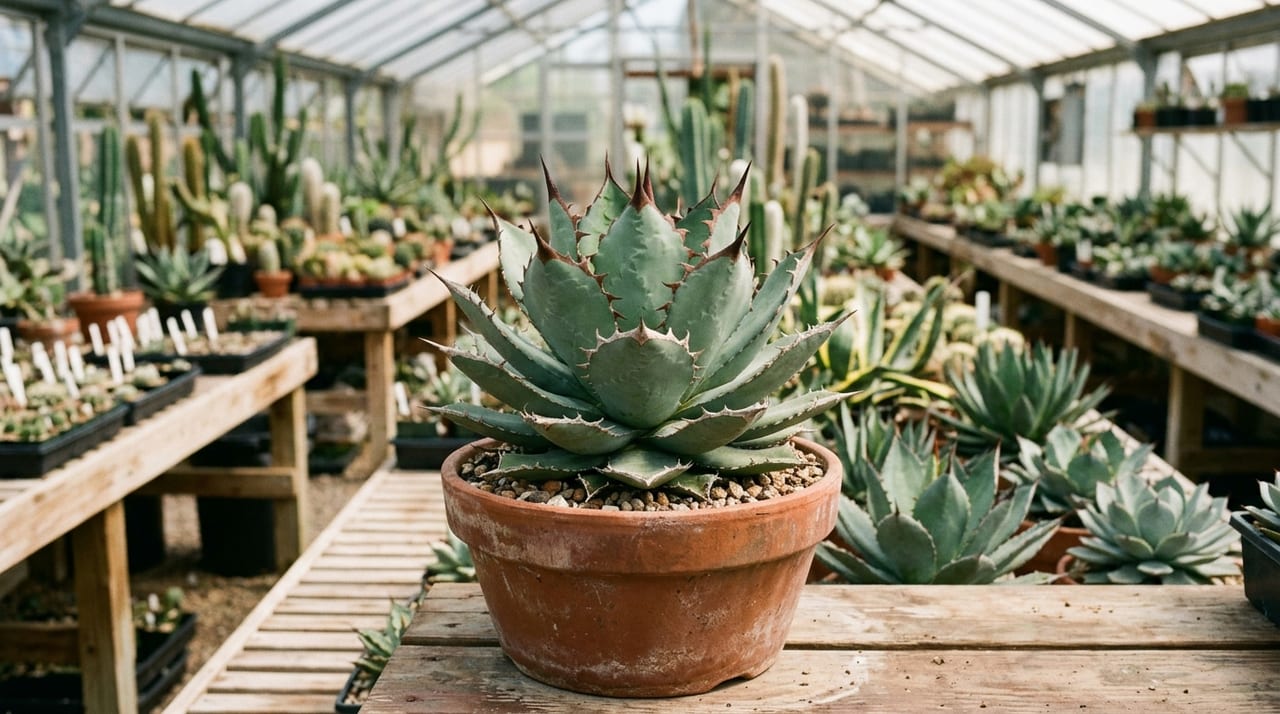
Key Takeaways
Complete guide to cultivating Agave macroacantha. Learn about this Mexican mid-sized agave with blue-green fine foliage and jet-black spines: optimal soil composition, watering timing, light management, fertilization, offset (pup) removal procedures, and root rot prevention.
Related Species
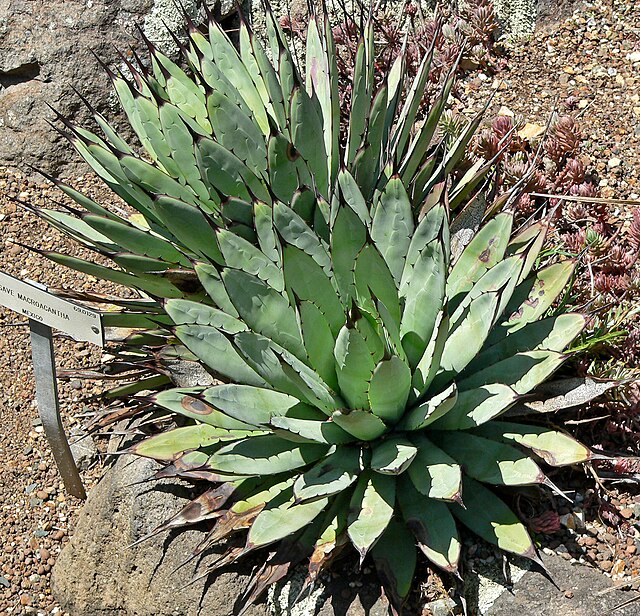
About Agave macroacantha
Agave macroacantha is a mid-sized agave species native to Oaxaca, Mexico, and represents one of the most distinctive varieties among narrow-leaf (fine-leaf) forms. Its key characteristics are pale gray to blue-green rosette leaves and jet-black spines at the leaf tips—the name "macro" (large) + "acantha" (spine) perfectly describes this feature.
The spines on the leaf tips can reach 3–5 cm, making this species notably prominent among agaves for its impressive spination. Growth is relatively slow, with mature rosettes reaching 40–80 cm in diameter. Both seed-grown (nursery) individuals and locally propagated plants are available in commerce, making this one of the more accessible agaves. Its compact size makes it ideal for balconies and indoor collections. Throughout 2026, domestic seed-grown stock has remained stable, and its popularity as an entry-level agave continues to grow.
Basic Growing Conditions
Recommended Growing Environment
| Factor | Recommended Value |
|---|---|
| Light | Direct sunlight 4–8+ hours daily (prioritize morning sun) |
| Temperature | Growth period: 20–35°C; Cold tolerance: approx. –5°C (short-term) |
| Watering (growing season) | Water thoroughly 2–3 days after pot base dries |
| Watering (dormancy) | 1–2 times per month, minimal amount (prevent root rot) |
| Location | Outdoor overhang or sheltered patio ideal (air circulation essential) |
| Pot | Terracotta or slotted pots (prioritize aeration) |
Soil Composition
Agave macroacantha requires highly draining soil. Use commercial cactus/succulent soil as a base, mixed according to the following formula.
Recommended Soil Mix (Basic Recipe)
- Small-grain red lava soil: 30%
- Hyuga pumice (light volcanic soil): 30%
- Coarse pumice (small grain): 30%
- Vermiculite or perlite: 10%
This combination balances drainage and moisture retention, preventing root rot while supplying adequate hydration. Keep organic matter (leaf mold, etc.) to a minimum. High organic content increases moisture retention and raises root rot risk significantly.
Choosing the Right Pot
Pot selection for agaves prioritizes drainage and air circulation.
| Pot Material | Characteristics |
|---|---|
| Terracotta (unglazed) | Excellent air circulation and drainage; dries quickly, requiring more frequent watering |
| Black plastic pot | Retains heat to warm roots; affordable and lightweight for easy management |
| Slotted pot | Prevents root circling; excellent air circulation |
Always ensure drainage holes are present, and never leave standing water in the saucer—this is the foundation of root rot prevention.
Watering Fundamentals
The golden rule for watering Agave macroacantha is "dry out completely, then water thoroughly."
Seasonal Watering Frequency Guide
| Season | Frequency | Volume |
|---|---|---|
| Spring (Mar–May) | 1–2 times per week | Until water drains from pot base |
| Summer (Jun–Aug) | 1–2 times per week (after dusk if temp >35°C) | Thoroughly |
| Autumn (Sep–Nov) | Approx. once per week | Until water drains from pot base |
| Winter (Dec–Feb) | 1–2 times per month (indoor) | Minimal |
Caution: Water pooling at the leaf base (crown) causes rot. Water the soil surface, avoiding the plant crown.
Light and Location Management
Macroacantha thrives in full sun. Insufficient light causes etiolation (leggy growth), leaves broaden, and compact form deteriorates.
- Minimum light requirement: 4+ hours direct sunlight daily
- Ideal location: South- or east-facing overhang sheltered from rain
- Indoor LED supplementation: Full-spectrum LED (5000–6000K) for 16 hours can sustain the plant indoors
- Summer shade: If temperatures consistently exceed 35°C, apply 30–50% shade cloth
Fertilizing Schedule
Fertilize agaves sparingly; excess nutrients cause leggy, weakened growth.
Recommended Fertilization Schedule
- Spring–autumn (growing season): Once monthly, low-dose balanced slow-release fertilizer (equal N-P-K ratio)
- Peak summer heat and winter dormancy: Discontinue fertilizing
- Liquid fertilizer option: Once every two weeks at half-recommended strength
If you want to track annual cultivation costs, see How Much Does Agave Cultivation Cost? for reference.
Removing and Propagating Offsets (Pups)
Mature macroacantha plants produce offsets (pups) from the base. Offset division is the standard agave propagation method.
Offset (Pup) Removal Steps
- Remove pups once they reach approximately half the parent plant's size
- Use a clean knife or blade to sever the connection to the parent
- Air-dry the cut surface for several days to form callus
- Insert into dry soil and withhold water while roots develop (3–4 weeks)
- Resume normal watering once new leaves appear
For detailed offset management, see Agave Offset (Pup) Management Guide. For seed-grown plants, rosette formation takes several years post-germination. Seed-grown individuals exhibit variation, offering collection appeal as unique specimens.
Common Problems and Solutions
| Symptom | Cause | Solution |
|---|---|---|
| Soft, discolored crown | Root rot | Inspect roots, remove rotted portions, dry thoroughly, and repot |
| Narrow, elongated leaves (etiolation) | Insufficient light | Move to brighter location; consider LED supplementation |
| Broken spine tips | Physical damage | Handle with care (use protective measures for spines) |
| Brown spots on leaves | Sunburn or mealybugs | Relocate and monitor; remove mealybugs with cotton swabs or pesticide |
| Yellowing foliage | Overwatering, excess fertilizer, or root-bound | Reassess watering, consider repotting |
Summary
Agave macroacantha is a mid-sized species cherished by agave collectors for its striking blue-green foliage and commanding spine presence. By observing three core principles—dry-side management, abundant light, and well-draining soil—even beginners can maintain attractive form long-term. Seed-grown specimens develop slowly, demanding patience, but mature plants are remarkably striking. Sourcing quality specimens from reputable growers and providing appropriate conditions is the surest path to success.
Agave macroacantha Variety Variations
Macroacantha exhibits several recognized variants based on origin and individual differences.
Leaf Color and Form Variations
- Blue-green type (standard): Most common; fine, sharp-looking foliage
- Gray type: Lighter gray-toned leaves; common in arid-origin specimens
- White-striped (variegated): Rare mutant with white striping; high market value
- Compact type: Rosette diameter under 30 cm; miniature form
Collectors enjoy building collections around these individual variations. Seed-grown plants display significant variation, allowing cultivation of truly unique specimens. For advice on displaying multiple specimens or companion plants, refer to Agave Display Techniques and Companion Plant Pairings.
Spine Safety Precautions
Macroacantha's leaf-tip spines reach 3–5 cm and can cause deep puncture wounds on contact. Safety precautions are essential in households with young children or pets.
Specific Safety Measures
- Fit cork plugs over spine tips (split cork lengthwise and insert into spine)
- Use silicone caps (shelf-edge protectors) as alternatives
- Position pots away from children's and pets' traffic patterns
- Wear thick leather gloves during repotting and maintenance work
Deep puncture wounds can occur during repotting; always wear protective gloves beforehand.
Sourcing and Price Range
Macroacantha ranks among the more accessible agaves commercially, though prices vary by quality and size.
- Seed-grown seedlings (3-inch pots): approx. ¥500–3,000
- Mid-sized plants (5–6 inch pots): approx. ¥3,000–15,000
- Mature specimens (large plants): approx. ¥10,000–50,000+
- Rare varieties (e.g., variegated): prices can exceed standard ranges significantly
Grower-direct sales typically document origin, seed-grown versus offset status, and detailed specimen information, offering more informed purchasing compared to retail outlets.