Tips for Cultivating White Variegated Agave Varieties
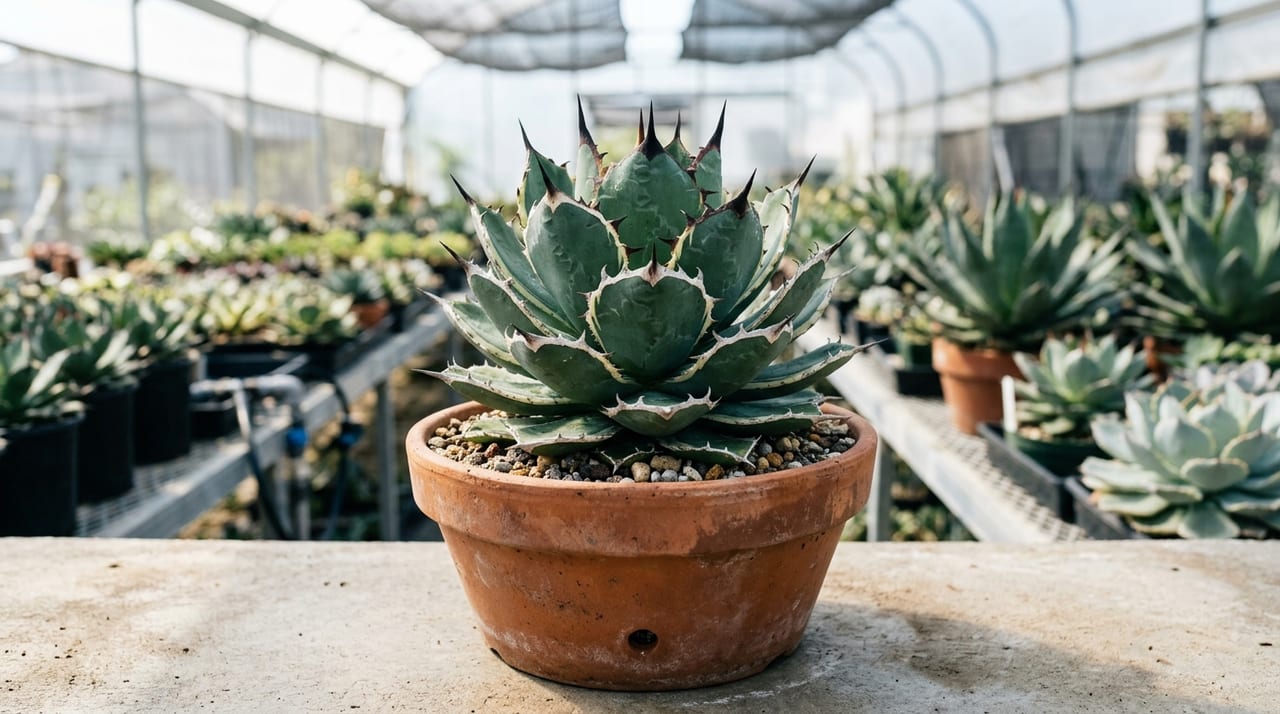
Tips for Cultivating White Variegated Agave Varieties。White variegated Agave varieties have captivated collectors with their striking contrast of crisp white…
Key Takeaways
Tips for Cultivating White Variegated Agave Varieties。White variegated Agave varieties have captivated collectors with their striking contrast of crisp white…
White variegated Agave varieties have captivated collectors with their striking contrast of crisp white against green leaves. However, such beauty demands commensurate cultivation knowledge. Since the white variegated portions lack chlorophyll partially, they require care different from standard green-leaved varieties. This article introduces practical tips for growing white variegated Agave healthily and beautifully.
Understanding the Characteristics of White Variegated Agave Correctly
The primary characteristic of white variegated varieties is the presence of white (or cream-colored) tissue lacking chlorophyll in portions of the leaves. Since these areas conduct little photosynthesis, the overall growth pace tends to be slower compared to green-leaved varieties. In exchange, plants raised slowly over time display more delicate and beautiful leaf forms.
Based on how the variegation appears, they are divided mainly into the following types.
- Marginal variegation (Marginata type): A type where white banding runs along the leaf edges. The leaf-tip spines often turn white as well, creating a sharp appearance.
- Central variegation (Mediopicta type): A type where white vertical stripes run down the leaf center. Since the core portions of leaves become white, the entire plant appears brighter.
- Scattered variegation: A type where white patches are irregularly distributed. Since each plant displays unique patterns, they are often highly valued for their rarity.
With any of these types, attention must be paid to the phenomenon called "reversion." This occurs when environmental changes or root deterioration cause the white variegation to fade and the leaves to resemble green ones. While reversion can recover if conditions improve, selecting plants with completely stable variegation is the first step to enjoying beautiful appearance long-term.
Light Management: The Art of Shading to Preserve Beautiful Variegation
In white variegated Agave cultivation, light management is one of the most critical issues. The cells in white variegated areas have low resistance to UV rays and strong light; prolonged direct sunlight causes leaf burn and browning. Once burned, these areas do not recover, so prevention is paramount.
The ideal light environment is "bright partial shade." The recommended shading rates by season are as follows.
| Season | Recommended Shading Rate |
|---|---|
| Spring (March–May) | 30–40% |
| Summer (June–September) | 50–70% |
| Fall (October–November) | 20–30% |
| Winter (December–February) | No shading or ~10% |
However, excessive shading can cause elongation, widening leaf spacing and compromising the plant's beautiful rosette form. Additionally, some varieties show weakened variegation color under insufficient light. To maximize the contrast between white variegation and green leaves, carefully adjusting light levels just before the threshold of leaf burn is most effective.
For indoor management, a south- to east-facing windowsill filtered through sheer curtains is appropriate. The soft morning light is ideal for variegated varieties, while afternoon western sun should be avoided. When using grow lights, set the distance slightly farther away and be careful to prevent leaf surface temperature from rising excessively.
Watering and Fertilizing: A Less-is-More Approach
Watering white variegated Agave must be more restrained than standard varieties. Since the white variegated portions have limited photosynthetic capacity, the plant's overall metabolic rate is slower and water consumption is lower. Excessive watering not only causes root rot but also leads to fading of the variegation in persistently wet conditions.
The watering timing guideline is to wait an additional 2–3 days after the pot soil is completely dry. During spring and fall growth periods, water approximately every 10 days; in summer, to avoid heat and humidity, water roughly every two weeks; in winter, reduce to 1–2 times monthly. When watering, provide plenty until water flows from the pot's drainage holes, and ensure no water accumulates in the saucer.
Fertilizing should also be restrained. Since nitrogen-rich fertilizers particularly cause variegation to fade, follow these points:
- Choose fertilizers with high phosphorus and potassium ratios.
- Dilute liquid fertilizers to one-third or less of the recommended concentration.
- Limit fertilizing to spring and fall growth periods, applying approximately once monthly.
- Keep the amount of solid fertilizers at minimal levels when placing in pot soil.
- Completely cease fertilizing during winter and peak summer (over 35°C).
By carefully controlling fertilization, not only is the variegation color maintained, but the entire plant develops into a compact, beautiful form.
Choosing Soil and Pots
For Agave, where root health directly determines plant beauty, soil and pot selection are extremely important. Since white variegated varieties grow slowly, they are prone to root damage in wet conditions, so prioritize drainage above all.
For the soil base, use red volcanic soil, akadama, and pumice as the primary components, adding vermiculite or river sand to ensure airflow. An easy and recommended alternative is to base commercial cactus and succulent mix with 20–30% pumice or akadama mixed in. Avoid soils high in organic matter, and prevent roots from becoming waterlogged.
Unglazed clay pots or terracotta pots with high breathability are optimal. If using plastic pots, be especially mindful of ensuring drainage holes and extending watering intervals. Keep pot size just one step larger than the plant to prevent excess soil from remaining wet long-term.
Repot when roots circle around the soil or approximately every 2–3 years. After repotting, hold off watering for about a week to allow roots to establish in the new soil.
Pests and Temperature Management: Protecting Delicate Variegation
White variegated Agave is susceptible to pests because the white variegated tissue is softer than usual. Pay special attention to the following pests:
- Scale insects: Covered in white cottony secretions, they easily hide in white variegated areas and delay detection. Monthly close observation is important.
- Aphids: They congregate on new growth and leaf bases, weakening the plant if left unchecked.
- Root mealybugs: They hide in soil and feed on roots; if the plant suddenly weakens, inspect the roots.
If pests are discovered, remove them directly using an ethanol-soaked cotton swab, or use appropriate insecticides (such as acetate or spinosad-based products). As prevention, ensuring adequate air circulation and avoiding excessively wet or hot conditions is most effective.
Regarding temperature, white variegated varieties are particularly sensitive to sudden temperature fluctuations. Ideal management temperature is around 15–28°C. In environments exceeding 35°C in summer, enforce shading and air circulation to minimize heat stress. In winter, maintain warmth to prevent temperatures from dropping below 5°C, and never expose to frost. In cold regions of Japan, indoor winter management is essential; place the plant where warm dry air does not blow directly.
Comprehensive Tips for Maintaining Beautiful Variegation Long-Term
To grow white variegated Agave beautifully long-term, maintaining the balance of "minimal water, moderate light, and good airflow" is essential. Observe the plant more closely than standard Agave, reading subtle changes in leaf vigor and color—this is the path to mastery.
Additionally, variegated varieties show large individual variation even within the same species, so it is important to understand the environment in which your plant was grown and gradually acclimate it to your care conditions. Sudden environmental changes easily trigger variegation disruption or reversion, so move the plant gradually and incrementally.
White variegated Agave cultivated with patience and time develops thicker, more lustrous leaves year after year, revealing a unique character all its own. Enjoy the cultivation challenges as part of the journey, and appreciate its beautiful form over many years.