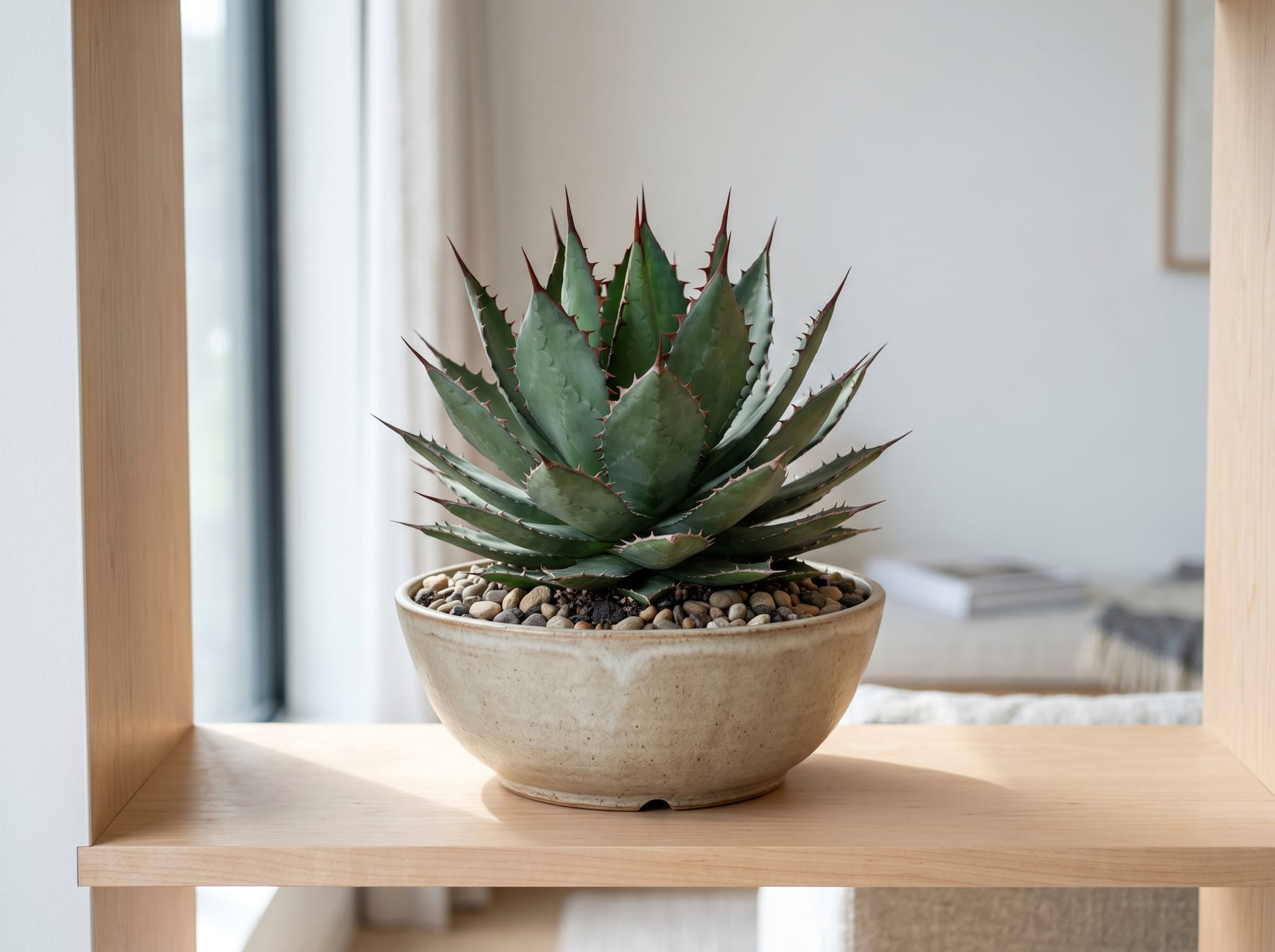
Horrida
Native to Mexico. Dark green fleshy leaves lined with sharp black teeth give a wild appearance. More cold-hardy than Titanota and adapts well to Japan's climate. Somewhat slow-growing.
View Horrida encyclopedia →Grower Wanted!
List your plants on GrowerDirect and sell directly to customers nationwide!
6 Transparency Commitments from GrowerDirect
Every Agave from our Grower includes full transparency: variety, origin, light requirements, and care difficulty.
- Variety Disclosed
- Real Plant Photos
- Color Details
- Origin Disclosed
- Light Requirements
- Care Difficulty
Browse all 141 varieties
Light Requirements
Difficulty Level
Verified growers wanted for Agave
Growers are signing up now ahead of launch. Subscribe to be notified when new listings go live.
Getting alerts is free with a member account. When new listings match your saved search, we'll notify you by email and in-app.
Browse other categories
Verified growers (preview)
Horrida key facts
- Growing Difficulty
- Intermediate
- Size
- 30-60cm rosette
- Temperature
- 0〜40℃
- Watering & Fertilizer
- Water: when dry in spring/fall / reduce in summer / monthly in winter
- Soil
- Mix of Akadama, Kanuma, and pumice. Prioritize drainage
- Light
- Direct sunlight ideal. Slightly more shade tolerant than Titanota
- Watering
- Water after the soil dries, and in winter cut back to about once a month. Avoiding excess moisture keeps the rosette compact.
- Temperature & Overwintering
- The ideal range is 10-35°C, and it tolerates down to about 5°C without trouble. In winter shield it from frost and keep it above 0°C.
- Notes
- Teeth are extremely sharp — thick gloves essential when repotting
About Horrida
Agave horrida is a succulent native mainly to Hidalgo in central Mexico that has captivated gardeners with its fierce beauty. Its thick dark-green leaves form a radial rosette adorned with neat rows of sharp black-brown marginal teeth, and a long, rigid terminal spine — an appearance that fully justifies the Latin epithet horrida, meaning "dreadful." Mature plants form rosettes of roughly 40–70 cm in diameter, and when they finally flower, the entire rosette dies — a monocarpic strategy that makes each bloom a once-in-a-lifetime spectacle. Sharing traits with titanota, horrida is somewhat more cold-tolerant, making outdoor cultivation in much of Japan more manageable. Its unhurried pace of growth only deepens the bond between grower and plant, and it remains a treasured long-term companion for agave collectors worldwide.
7 things to know before growing Horrida
1Loves Full Sun
Agave horrida thrives in bright, direct sunlight — an outdoor spot or south-facing windowsill works best. Insufficient light causes etiolation and dulls the characteristic dark serrations. Outdoor placement from spring through autumn is ideal.
2Water Sparingly
Its thick leaves store moisture, making overwatering the leading cause of root rot. Water only after the soil has dried out in spring and autumn, go lightly in summer, and reduce to about once a month in winter. Keeping it on the drier side helps the plant stay compact.
3Relatively Cold-Hardy
Among agaves, horrida is notably cold-tolerant and copes without trouble down to around 5°C. In winter, protect it from frost and keep it where temperatures do not fall below 0°C. In colder regions, bring plants under cover or indoors.
4Handle With Care
The terminal spine and marginal teeth are extremely sharp and can cause injury if handled carelessly. Always wear thick gloves when repotting or moving the plant, and place it out of reach of children and pets.
5Well-Draining Soil Essential
A mix of akadama, kanuma soil and pumice that puts drainage first works well. Avoid clay-heavy or moisture-retentive soils, which increase the risk of root rot. Always place drainage stones at the bottom of the pot.
6Slow Growth, Rare Repotting
Agave horrida grows slowly and does not need frequent repotting. Repot when roots begin to escape the drainage holes or when the soil has noticeably degraded. Spring, during the growing season, is the best time to repot with minimal stress to the plant.
7Minimal Fertilizing Needed
Agave horrida naturally thrives in low-nutrient conditions, and excess fertilizer can result in soft, weak growth. Apply a slow-release balanced fertilizer at half the recommended dose once or twice during the growing season (spring–summer). No fertilizer is needed in winter.
Frequently asked questions about Horrida
- Q.What is the difference between horrida and titanota?
- A.Both are highly popular agaves, but horrida generally offers greater cold hardiness and tends to have finer, more evenly spaced marginal teeth. Titanota often features thicker, whitish teeth and has an enormous number of named varieties and clones.
- Q.Can horrida be grown entirely indoors?
- A.It is possible to grow horrida entirely indoors, but low light often causes etiolation. Place it on the sunniest windowsill available, and move it outdoors in spring through autumn if possible. Supplemental grow lighting can also help maintain a compact form.
- Q.Does horrida produce offsets easily?
- A.Horrida tends to produce fewer offsets than many other agaves. When they do appear, they emerge near the base of the mother plant, and patience of several years is often required. Detach offsets once they have grown reasonably large for the best chance of successful establishment.
- Q.Will the plant die after it flowers?
- A.Yes, horrida is monocarpic — the mother plant dies after flowering. Flowering takes many years, making it a once-in-a-lifetime event. Preserving any offsets before the plant blooms allows you to continue the lineage.
- Q.What should I look for when buying a plant?
- A.Check that the leaves are symmetrically arranged and that the leaf color is even with no yellowing or soft rot. An unusually wobbly base may indicate root rot. Since tooth shape varies among clones, examine the form carefully and choose one that matches your aesthetic preference.
Handy Growing Tools for Horrida
Learn more about Horrida in the encyclopedia
View Horrida encyclopedia entry →
Care difficulty, size, origin and light needs — all basics covered.
Horrida related articles
Comprehensive Identification Guide to 100 Popular Agave Species | In-Depth Explanation of Titanota, Horrida, Parryi, and Geminiflora
Comprehensive explanation of characteristics and identification methods for 100 popular agave species. Detailed introduction to identification points and selection criteria from Titanota, Horrida, Parryi, and Geminiflora to rare species.
Agave Titanota vs. Horrida Complete Buyer's Guide | Comprehensive Price Comparison, Cultivation Difficulty, and Where to Buy
A comprehensive price comparison, cultivation difficulty analysis, size considerations, and sourcing guide for Agave titanota and horrida. This expert guide helps you decide which variety suits you best, with detailed explanations of each plant's characteristics and purchasing tips.
Agave Variety Catalog | Feature Comparison of Titanota, Horrida, Potatorum, Geminiflora and More
A comparative guide to the characteristics, difficulty level, size, and price range of popular agave varieties. Learn how to distinguish major varieties such as Titanota, Horrida, Potatorum, and Geminiflora, plus recommended varieties suited for beginners to advanced collectors.
Agave Titanota vs. Horrida Care Guide: Managing Two Popular Species Despite Their Similarities
Agave titanota and horrida species are hugely popular among collectors. Although they look similar, their origins, growing conditions, and care requirements differ significantly. This guide details the characteristics of both species and practical tips for managing each.
What is the Cold Hardiness Temperature of Agave? | Cold Hardiness Guide by Variety (Horrida, Titanota, etc.) and Winter Care
We've compiled agave cold hardiness temperatures by variety. This guide covers 13 varieties including Horrida (−5 to −7°C), Titanota (−2 to 0°C), and Parryi (−15 to −20°C), plus optimal growth temperatures, frost protection, and criteria for bringing plants indoors.
Agave Species Identification Guide | How to Tell Apart Titanota, Oteroi, and Horrida
A detailed guide to distinguishing agave species. We introduce the differences between titanota and oteroi, identification points for popular varieties, and tips for spotting counterfeits.
More in this category
Can't find the plant you're looking for?
Post your wishes for free and growers with matching plants will contact you with introductions.