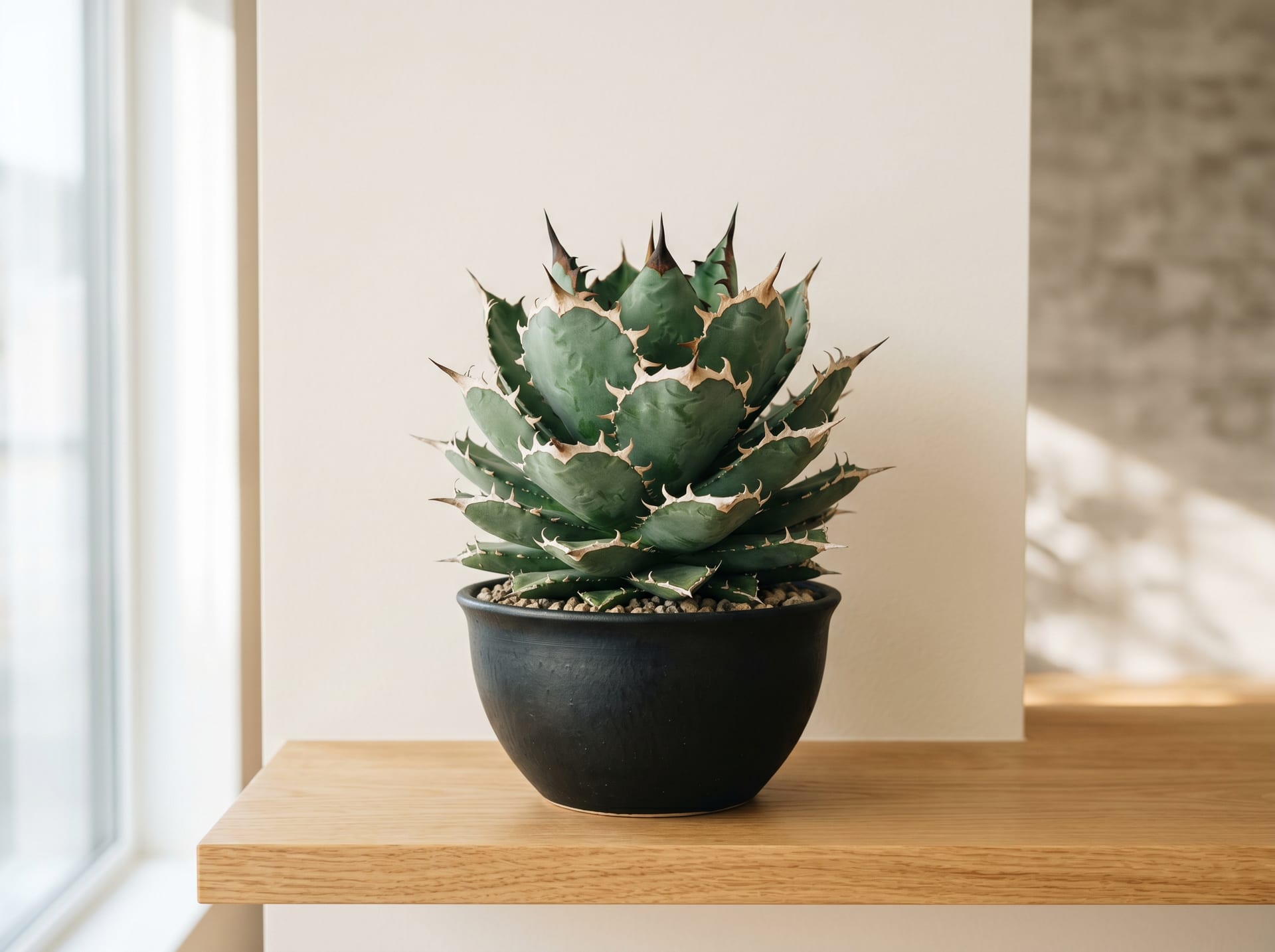
Titanota
The species that started the agave boom. Thick leaves with white teeth vary by origin: 'White Whale', 'Hime Ganryu', 'FO-076'.
View Titanota encyclopedia →Grower Wanted!
List your plants on GrowerDirect and sell directly to customers nationwide!
6 Transparency Commitments from GrowerDirect
Every Agave from our Grower includes full transparency: variety, origin, light requirements, and care difficulty.
- Variety Disclosed
- Real Plant Photos
- Color Details
- Origin Disclosed
- Light Requirements
- Care Difficulty
Browse all 141 varieties
Light Requirements
Difficulty Level
Verified growers wanted for Agave
Growers are signing up now ahead of launch. Subscribe to be notified when new listings go live.
Getting alerts is free with a member account. When new listings match your saved search, we'll notify you by email and in-app.
Browse other categories
Verified growers (preview)
Titanota key facts
- Growing Difficulty
- Intermediate
- Size
- 20-50cm rosette
- Temperature
- 5〜40℃
- Watering & Fertilizer
- Water: when dry in spring/fall / reduce in summer / monthly in winter
- Soil
- Akadama:Hyuga:Pumice 1:1:1. Prioritize drainage
- Light
- Direct sunlight recommended. Supplement with LED indoors
- Watering
- Water only after the soil has dried out completely, and in winter cut back to once or twice a month. Keep it out of prolonged rain.
- Temperature & Overwintering
- The ideal range is 15-35°C, and it tolerates around 5°C. In winter keep it out of frost and bring it indoors before it drops below 5°C.
- Rooting
- Bare root: water culture → soil planting in two stages
- Notes
- Susceptible to rot. Ensure airflow in rainy season. Bring indoors in winter
About Titanota
Agave titanota originates from Oaxaca, Mexico, where this medium-sized agave grows on dry, limestone rocky ground. The plant's signature feature — dense, bold white teeth lining the leaf margins — gives it a sculptural, almost architectural quality that captivates succulent enthusiasts worldwide. Leaves range from blue-grey to silvery white and intensify in color under strong light. Because leaf width, tooth shape, and overall silhouette vary considerably depending on collection site and selective breeding, dozens of named clones have emerged over the years, including Hakugei, Himeganryu, and FO-076, driving an active collector community. Titanota's manageable size and exceptional drought tolerance make it a rewarding agave to cultivate on a balcony or windowsill.
Featured Growers Selling Titanota
Browse all Titanota growers (1 total) →7 things to know before growing Titanota
1Loves Full Sun
Titanota thrives in intense, direct sunlight year-round. Outdoors, a south-facing spot with unobstructed sun is ideal. Indoors, place it at the brightest window available and always supplement with an LED grow light. Insufficient light causes etiolation, stretching the plant and diminishing its characteristic compact, sculptural shape.
2Water Sparingly
During the growing season (spring to autumn), water only after the soil has dried out completely, then wait a few extra days before watering again. In winter, reduce watering to roughly once a month to prevent root rot. Never leave water sitting in the saucer, and always ensure good drainage.
3Use Fast-Draining Soil
Use a mix of akadama, hyuga pumice and pumice in roughly equal parts (1:1:1), prioritizing drainage above all. General-purpose potting mix retains too much moisture and significantly increases the risk of root rot. Place a layer of pumice at the bottom of the pot to keep drainage channels clear.
4Moderately Cold-Hardy
Among agaves, titanota is relatively cold-tolerant and can withstand temperatures down to around 5°C, but frost and prolonged rain call for caution. Keep it out of frost in winter and bring it indoors before temperatures drop below 5°C. Note that potted plants are more vulnerable to cold than in-ground plants.
5Watch Out for the Teeth
The terminal spine at the leaf tip and the marginal teeth along the leaf edges are extremely sharp and can cause deep puncture wounds if handled bare-handed. Always wear thick gloves when repotting or moving the plant, and keep it out of reach of children and pets. If punctured, clean the wound thoroughly and seek medical attention if needed.
6Slow but Steady Growth
Titanota grows slowly, and it is not unusual for visible size increases to take several years after purchase. Over-fertilizing can soften the leaves and diminish their characteristic firm, rigid texture. During the growing season, a diluted liquid fertilizer applied once or twice a month is sufficient.
7Traits Vary by Lineage
Named selections such as "Hakugei," "FO-076," and "Himeganryu" differ considerably in tooth shape, leaf width, and overall silhouette depending on lineage and origin. Purchase from reputable breeders or specialist shops and ask about the plant's documented origin or lineage. Choose a healthy plant with a firm base, thick leaves, and well-developed teeth.
Frequently asked questions about Titanota
- Q.Can titanota be grown indoors?
- A.Titanota can be grown indoors if light levels are high enough, but insufficient sunlight will cause etiolation and loss of the plant's characteristic compact form. Place it at a south-facing window or use a grow light to supplement natural light.
- Q.What is the difference between named selections?
- A.Named selections like Hakugei and FO-076 differ in tooth thickness, leaf width, and color due to variations in collection site, parent plant, and breeder selection. Even within the same name, individual plants can vary, so checking the lineage before purchase is advisable.
- Q.When and how often should I repot?
- A.Repot when roots emerge from the drainage holes or the plant has grown to roughly the same size as its pot. Spring (April to May) is the best time. Gently trim old roots, move to a pot one size up, and avoid disturbing the roots excessively. Repotting every two to four years is typically sufficient given the plant's slow growth.
- Q.How do I propagate titanota?
- A.Titanota occasionally produces offsets (pups) at the base, which can be separated and potted once they have developed some size. Seed propagation is possible but very slow, and seedlings may not reliably express the traits of a named selection. Dividing offsets is the most reliable method for propagating a specific clone.
Handy Growing Tools for Titanota
Learn more about Titanota in the encyclopedia
View Titanota encyclopedia entry →
Care difficulty, size, origin and light needs — all basics covered.
Titanota related articles
Comprehensive Identification Guide to 100 Popular Agave Species | In-Depth Explanation of Titanota, Horrida, Parryi, and Geminiflora
Comprehensive explanation of characteristics and identification methods for 100 popular agave species. Detailed introduction to identification points and selection criteria from Titanota, Horrida, Parryi, and Geminiflora to rare species.
Agave Titanota vs. Horrida Complete Buyer's Guide | Comprehensive Price Comparison, Cultivation Difficulty, and Where to Buy
A comprehensive price comparison, cultivation difficulty analysis, size considerations, and sourcing guide for Agave titanota and horrida. This expert guide helps you decide which variety suits you best, with detailed explanations of each plant's characteristics and purchasing tips.
Agave Titanota Varieties & Cultivars Catalog | Distinguishing NO WAY, FJ, Black, and Dwarf: Characteristics Comparison
Comprehensive guide to the main Agave titanota cultivars (NO WAY, FJ, Black Titanota, Dwarf, White Ice, and others). Learn how to identify and compare spine shape, leaf color, size, and price range—perfect as a beginner's introduction to collecting Agave titanota.
Agave Variety Catalog | Feature Comparison of Titanota, Horrida, Potatorum, Geminiflora and More
A comparative guide to the characteristics, difficulty level, size, and price range of popular agave varieties. Learn how to distinguish major varieties such as Titanota, Horrida, Potatorum, and Geminiflora, plus recommended varieties suited for beginners to advanced collectors.
Agave Titanota vs. Horrida Care Guide: Managing Two Popular Species Despite Their Similarities
Agave titanota and horrida species are hugely popular among collectors. Although they look similar, their origins, growing conditions, and care requirements differ significantly. This guide details the characteristics of both species and practical tips for managing each.
What is the Cold Hardiness Temperature of Agave? | Cold Hardiness Guide by Variety (Horrida, Titanota, etc.) and Winter Care
We've compiled agave cold hardiness temperatures by variety. This guide covers 13 varieties including Horrida (−5 to −7°C), Titanota (−2 to 0°C), and Parryi (−15 to −20°C), plus optimal growth temperatures, frost protection, and criteria for bringing plants indoors.
More in this category
Can't find the plant you're looking for?
Post your wishes for free and growers with matching plants will contact you with introductions.