Agave Variety Catalog | Feature Comparison of Titanota, Horrida, Potatorum, Geminiflora and More
A comparative guide to the characteristics, difficulty level, size, and price range of popular agave varieties. Learn how to distinguish major varieties such as Titanota, Horrida, Potatorum, and Geminiflora, plus recommended varieties suited for beginners to advanced collectors.
Key Takeaways
A comparative guide to the characteristics, difficulty level, size, and price range of popular agave varieties. Learn how to distinguish major varieties such as Titanota, Horrida, Potatorum, and Geminiflora, plus recommended varieties suited for beginners to advanced collectors.
The World of Agave Varieties
The Agave genus is a succulent plant native to North America and Central America, with over 200 original species and countless cultivars, varieties, and hybrids found worldwide. The primary native region is Mexico, with specimens occurring naturally in arid zones from the southwestern United States through Guatemala. The agave boom in Japan accelerated around 2015, and many rare varieties are now distributed among domestic growers.
Agave has a unique ecology of "flowering only once." It is monocarpic—the parent plant dies after flowering—and blooming takes anywhere from years to decades, making it an ornamental plant enjoyable for long-term appreciation. Because characteristics such as leaf color, shape, spine morphology, size, and cultivation difficulty vary greatly by variety, understanding each variety's features before purchasing is the key to making a selection suited to your environment and goals.
Major Variety Catalog
Titanota Group (Agave titanota)
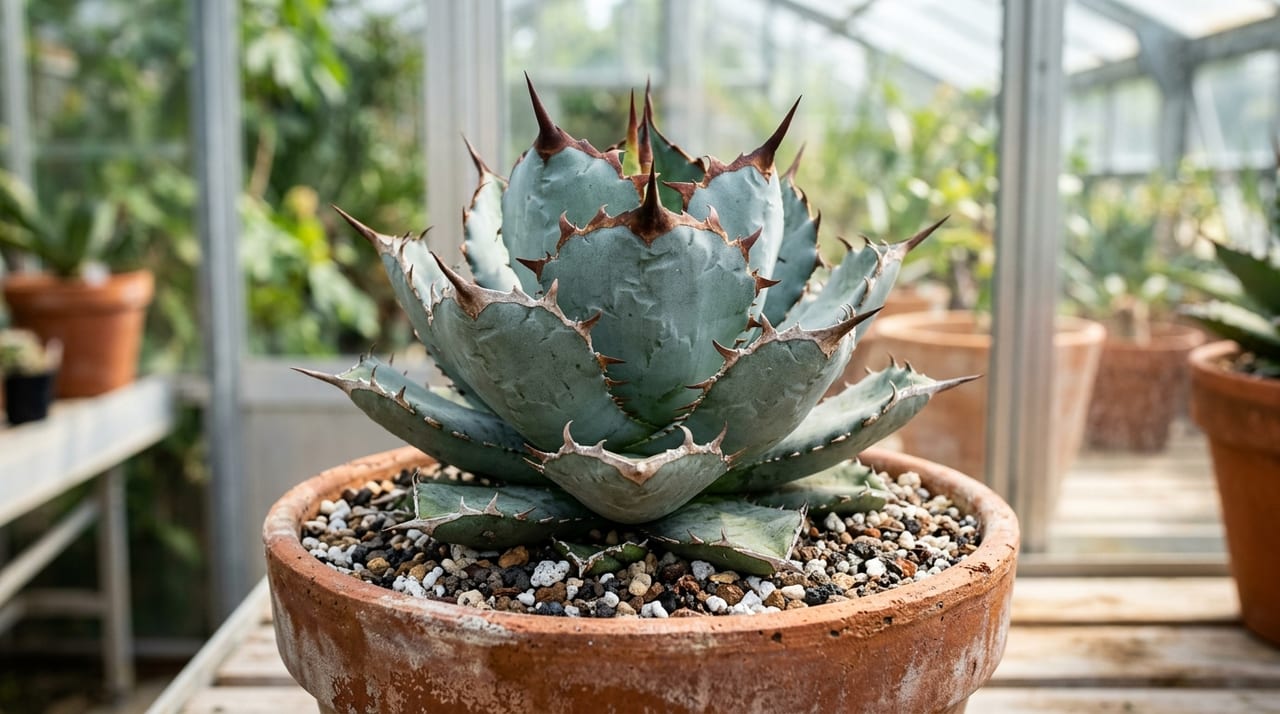
The most popular representative of agave. Native to Oaxaca, Mexico, it is characterized by white-to-gray leaves with regularly arranged serrated teeth. Recent breeding improvements and selection have created many variations both domestically and internationally.
- FO-076 (True Titanota): Prized for its strong white tone, neat serrations, and compact size. The most commonly distributed standard variety among growers. Even seedlings show significant individual variation, making selection enjoyable
- Black and Blue: Leaves have a bluish tone and black spines. The blue coloration tends to intensify under strong light, making it rare and expensive
- White Ice: A selected specimen with exceptionally strong white coloration on the leaves. Whitening intensifies with stronger direct sunlight
- Red Cat Whiskers: Selected strain with reddish-brown, fine spines with a distinctive texture
- Size: Generally 30–60 cm in diameter. Compact size makes it ideal for container growing
- Difficulty: Beginner to intermediate. Sensitive to excessive moisture; well-draining soil is essential
- Price range: Common varieties from ¥3,000; selected specimens from tens of thousands to over ¥100,000
Horrida Group (Agave horrida)
A compact agave native to Mexico. Alongside Titanota, it is highly popular in the Japanese market, with its sharp spines and sleek form attracting enthusiasts. The name horrida comes from the Latin word meaning "terrible," referring to its formidable spines.
- Leaf color ranges from green to gray-green
- Terminal spine (spine at leaf tip) is long and sharp, requiring careful handling
- Diameter approximately 20–50 cm, making it compact
- Relatively fast growth with pups appearing readily, facilitating easy propagation
- Difficulty: Beginner to intermediate
- Price range: From ¥2,000. Widely available due to relatively high distribution volume
Potatorum Group (Agave potatorum)
A small agave characterized by rounded leaves and complex serrated edges. Also known commercially as "Kissho-kan" (auspicious crown), it is popular as a gift due to its auspicious name.
- Leaves are short and broad, with the whole plant forming a well-balanced, compact rosette
- Serration patterns vary significantly among individuals, with randomly bent "wild-edged serrations" highly prized
- Prone to etiolation (stretching) in insufficient light, so ample sun exposure is necessary
- Selected specimens such as "Houou" (Phoenix) feature blue leaf coloration with especially pronounced serrations
- Difficulty: Intermediate. Light management is critical because the variety tends to stretch if etiolated
- Price range: Common varieties from ¥1,500; selected specimens tens of thousands of yen
Geminiflora (Agave geminiflora)
Distinctive in form with many fine, thread-like leaves creating a spherical, fluffy appearance unlike other agaves. Native to Jalisco and Nayarit prefectures in Mexico.
- Leaves are extremely narrow (less than 1 cm wide) with sharp tips
- Mature specimens develop white, thread-like fibers (filaments) along the leaf margins
- Possesses relative shade tolerance, making it easy to cultivate indoors on a bright windowsill
- Pups appear infrequently and are difficult to propagate, resulting in limited market availability
- Excellent cold hardiness allows outdoor winter survival in Kanto and westward
- Difficulty: Intermediate
- Price range: Approximately ¥2,000–¥5,000
Americana (Agave americana) and Large Varieties
A large variety with such hardiness that it has become naturalized along the Mediterranean coast and in South America. Armed with 20–30 cm spines at leaf tips, it serves as a specimen plant in gardens and public spaces. In Aztec civilization, it was also used as the source material for pulque, an alcoholic beverage, making it a botanically significant plant.
- Can exceed 200 cm in diameter at maximum. Container cultivation allows growth suppression
- "Variegata" (variegated) specimens are highly valued for ornamental appeal
- Extremely high cold and drought tolerance; a hardy choice suitable for beginners
- Price range: Small seedlings from ¥1,000 (mature plants are inexpensively available)
Choosing Varieties by Environment and Purpose
Selecting agave is not merely a matter of appearance—the "compatibility with your location and growing environment" is the key to long-term cultivation success.
| Environment | Recommended Variety |
|---|---|
| Balcony (excellent sunlight) | Titanota, Horrida, Potatorum |
| Indoor (bright windowsill) | Geminiflora, Small Americana |
| Garden planting, specimen plant | Americana, Xyslarana |
| Rare varieties, collections | Black and Blue, selected Potatorum |
By difficulty level, beginners are suited to Americana and common Titanota varieties, intermediate growers to selected Potatorum and Geminiflora, and advanced cultivators to rare selected specimens and hybrid varieties.
Basic Cultivation Tips
Overall, excessive moisture is agave's greatest enemy. Master the following fundamentals and most varieties will thrive.
Potting mix: Drainage is the priority. The standard approach is to blend commercial succulent potting soil with 30–50% pumice or perlite. Pot drainage stones are essential.
Watering: During the growing season (spring through autumn), water only after the soil surface has completely dried. In winter, reduce watering to once or twice per month. Water pooling in the rosette center causes rot, so avoid watering directly into the plant center.
Sunlight: Generally prefers direct sunlight, with at least 4 hours daily being ideal. However, sudden environmental changes in midsummer can cause sunscald, so acclimate plants gradually.
Repotting: Repot when growth slows or roots emerge from drainage holes. Typically repot into a pot one size larger every 2–3 years.
Recommended Beginner Varieties Summary
Because price variations among agave varieties are significant, starting with inexpensive common varieties to develop cultivation skills is a wise approach that minimizes failure.
- For ease of cultivation: Americana, common Titanota varieties, Horrida
- For compact size: Titanota FO-076, Potatorum, Horrida
- For rarity and collecting: Black and Blue, selected Geminiflora
- For garden planting and specimen use: Americana, Xyslarana
Purchasing directly from a grower provides detailed background information such as parent lineage and growing environment. Once you understand a variety's character, find your own special specimen.