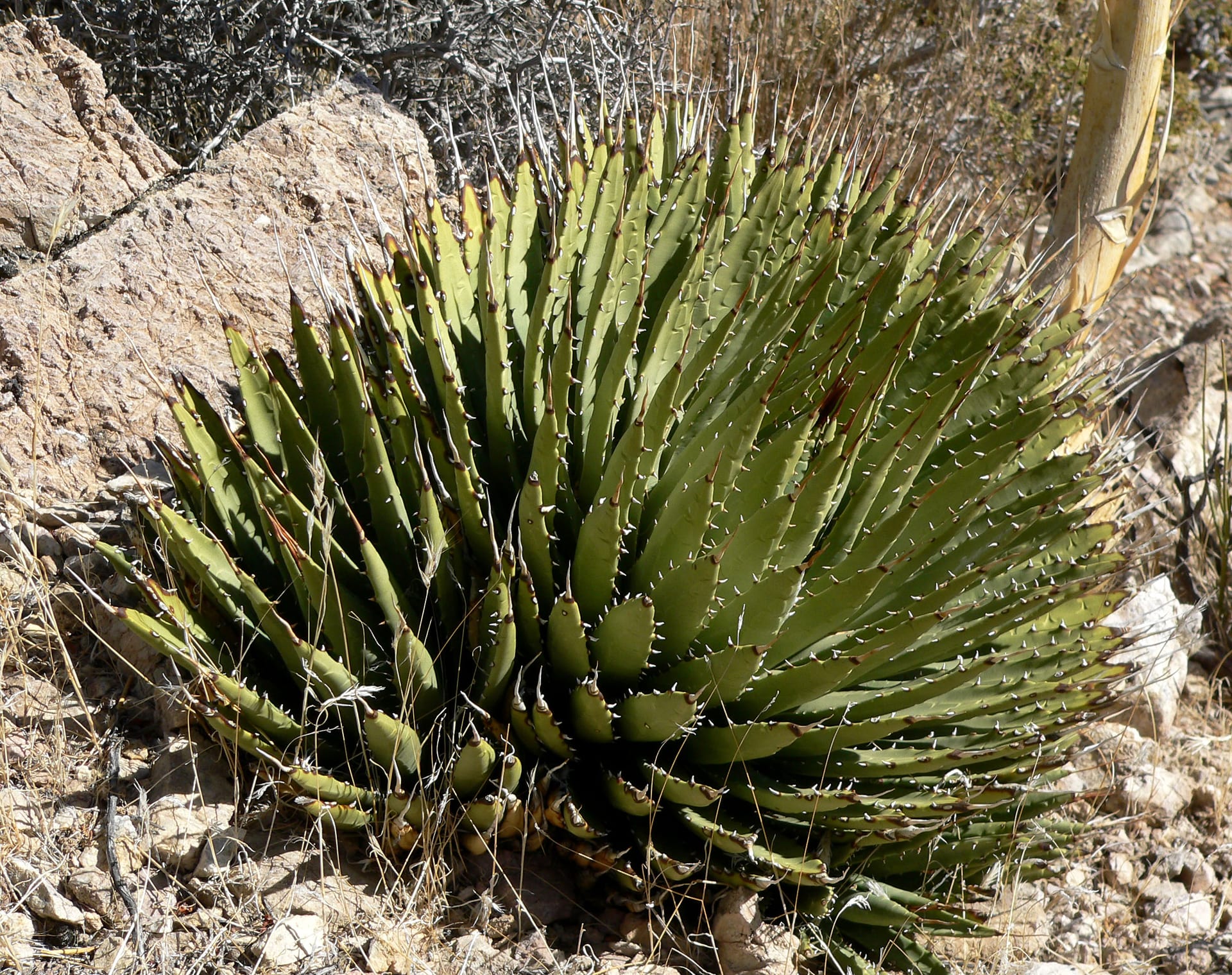
 © Stan Shebs / CC BY-SA 3.0
Agave utahensis var. nevadensis (Clark Mountain agave)
Agave utahensis var. nevadensis forms a compact rosette, typically 15 to 25 cm across, marked by slender, sharply pointed terminal spines 4 to 8 cm long. Compared to the closely related var. eborispina, its spines are thinner and shorter, and the leaves appear shorter and more tightly packed, giving the plant a neater, more compact silhouette. Growth is slow, rewarding patient growers as the spine pattern develops over the years. Like other agaves, a rosette dies back after flowering, but offsets continue to grow and carry the plant forward. This variety calls for an experienced hand and suits growers who enjoy a long-term project.
View Agave utahensis var. nevadensis (Clark Mountain agave) encyclopedia →0% commission on your first sales!Register by September 30, 2026 and your first 2 plants are commission-free!
Grower Wanted!
List your plants on GrowerDirect and sell directly to customers nationwide!
6 Transparency Commitments from GrowerDirect
Every Agave from our Grower includes full transparency: variety, origin, light requirements, and care difficulty.
- Variety Disclosed
- Real Plant Photos
- Color Details
- Origin Disclosed
- Light Requirements
- Care Difficulty
Browse all 142 varieties
Light Requirements
Difficulty Level
Verified growers wanted for Agave
Growers are signing up now ahead of launch. Subscribe to be notified when new listings go live.
Getting alerts is free with a member account. When new listings match your saved search, we'll notify you by email and in-app.
Browse other categories
Verified growers (preview)
Agave utahensis var. nevadensis (Clark Mountain agave) key facts
- Growing Difficulty
- Advanced
- Lifespan
- Perennial; the flowering rosette dies and offsets carry on
- Size
- Rosettes 15-25 cm; tip spine 4-8 cm
- Watering
- Light feeder; a little slow-release fertiliser in the growing season is enough
- Light & Placement
- Full sun and good airflow; keep it out of the rain from the rainy season through summer.
- Watering
- The utahensis group is far less tolerant of humid heat than most agaves; prioritise airflow in summer and water only when the mix is thoroughly dry.
- Temperature & Winter
- Native to limestone at roughly 1,200-1,900 m. Hardiness data are scarce, so winter it dry in a bright spot out of the rain and avoid hard freezes.
- Soil & Repotting
- A limestone plant: use a very free-draining gritty mix, and repot at the start of the growing season to spare the roots.
- Notes
- Tell it from eborispina by the thickness and length of the tip spine; 'Seijiro' names an even smaller type.
About Agave utahensis var. nevadensis (Clark Mountain agave)
Agave utahensis var. nevadensis is a small, slow-growing agave with compact 15-25 cm rosettes and slender, sharp terminal spines 4-8 cm long, best suited to experienced growers.
7 things to know before growing Agave utahensis var. nevadensis (Clark Mountain agave)
1Bright, Airy Placement
Give it as much sun and airflow as possible for a tight, compact rosette. Without enough light, the leaves tend to stretch and lose their form.
2Water Sparingly, When Dry
Let the soil dry out completely before watering again. This variety is sensitive to excess moisture, so err on the side of underwatering, especially in cooler weather.
3Well-Draining Mineral Soil
Use a gritty, fast-draining mix such as pumice blended with hard-fired akadama. Soil that holds too much organic matter raises the risk of root rot.
4Repot Only When Needed
Growth is slow, so frequent repotting isn't necessary. Move up to a slightly larger pot once roots fill the container, ideally during warm, stable growing weather.
5Shelter From Wet Seasons
Extended rainy spells can damage the plant if it stays wet too long, so move it somewhere covered during the rainy season and summer downpours. Keeping good airflow around the plant also helps.
6Keep Dry Through Winter
It tolerates cold reasonably well, but cold combined with wet soil is much harder on the plant. Space out watering further in winter and keep it on the dry side.
7Check Spines and Rosette Form
When choosing a plant, look for well-developed terminal spines and a tightly packed rosette. Since this variety grows slowly, it suits growers who enjoy watching a plant develop gradually over time.
Frequently asked questions about Agave utahensis var. nevadensis (Clark Mountain agave)
- Q.Is this a good agave for beginners?
- A.It's generally considered a variety for experienced growers, since it's sensitive to excess moisture and low light. If you can commit to well-draining soil and consistent sun, it's a rewarding plant to take on.
- Q.How does it differ from var. eborispina?
- A.Both are closely related forms of Agave utahensis, but nevadensis has thinner, shorter terminal spines and leaves that look shorter and more tightly packed. Overall, it reads as a more compact plant.
- Q.How big does it get?
- A.The rosette typically reaches about 15 to 25 cm across, with terminal spines 4 to 8 cm long. Because growth is slow, reaching that size can take several years.
- Q.What happens after the plant flowers?
- A.Like other agaves, a rosette dies back once it flowers. In this variety, offsets that form around the base carry the plant forward into the next generation.
- Q.Can it be grown indoors?
- A.It can be kept indoors if you can provide strong light and good airflow, though it tends to stretch more than it would in full outdoor sun. Where possible, a bright outdoor spot is preferable.
Handy Growing Tools for Agave utahensis var. nevadensis (Clark Mountain agave)
Learn more about Agave utahensis var. nevadensis (Clark Mountain agave) in the encyclopedia
View Agave utahensis var. nevadensis (Clark Mountain agave) encyclopedia entry →
Care difficulty, size, origin and light needs — all basics covered.
More in this category
Can't find the plant you're looking for?
Post your wishes for free and growers with matching plants will contact you with introductions.