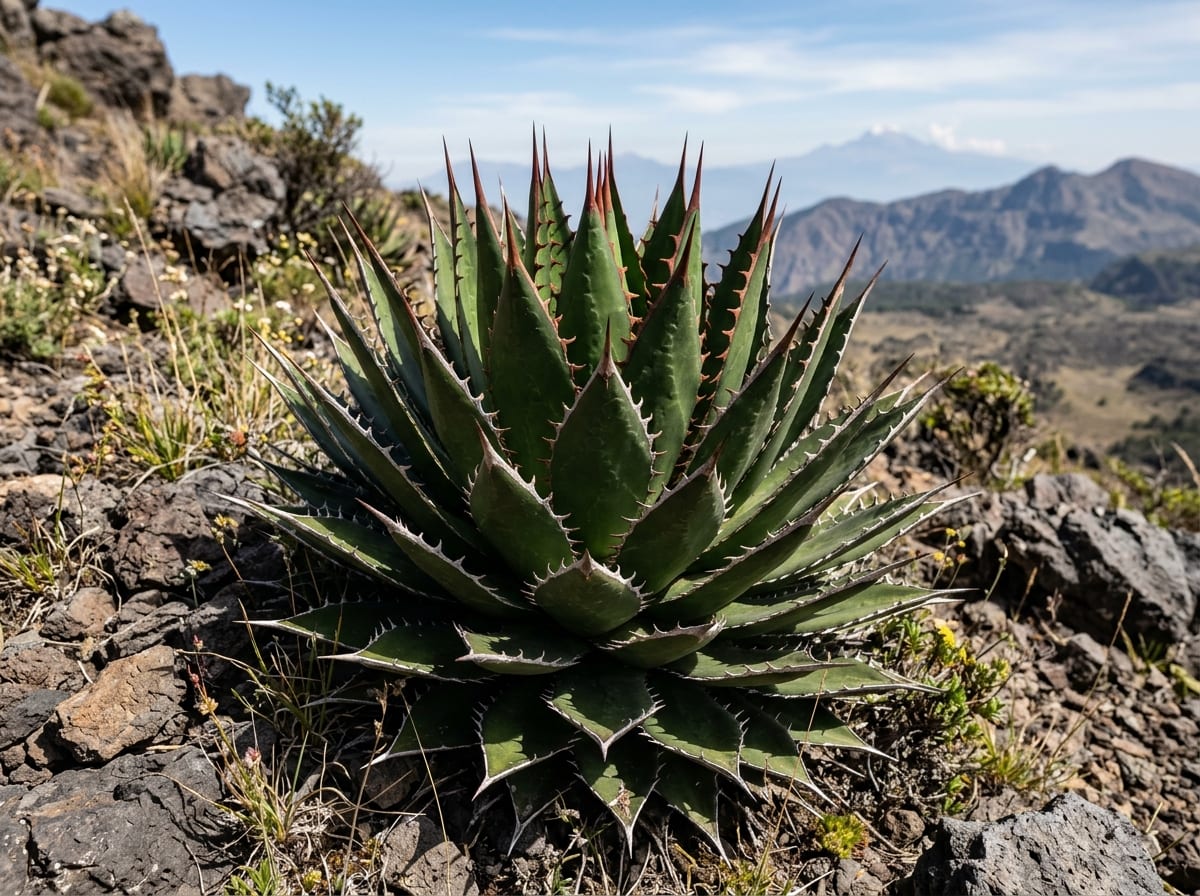
Agave horrida subsp. perotensis
Agave horrida subsp. perotensis is a subspecies of Agave horrida native to Mexico, valued for its small-to-medium rosette of densely layered, deep green leaves. Bold, dark brown teeth line each leaf margin, and as the plant matures, the edges of newer leaves take on a pale grayish hue. Compared with the species type, it grows slightly larger, with a denser rosette, more leaves, and darker foliage. Plants typically reach 40-60cm in height and spread to about 90cm wide. Like other agaves, it is monocarpic, meaning the rosette dies after flowering. It's generally considered a plant for intermediate growers and remains uncommon in cultivation within Japan, making it an appealing choice for anyone drawn to bold dentition and a dense rosette silhouette.
View Agave horrida subsp. perotensis encyclopedia →0% commission on your first sales!Register by September 30, 2026 and your first 2 plants are commission-free!
Grower Wanted!
List your plants on GrowerDirect and sell directly to customers nationwide!
6 Transparency Commitments from GrowerDirect
Every Agave from our Grower includes full transparency: variety, origin, light requirements, and care difficulty.
- Variety Disclosed
- Real Plant Photos
- Color Details
- Origin Disclosed
- Light Requirements
- Care Difficulty
Browse all 142 varieties
Light Requirements
Difficulty Level
Verified growers wanted for Agave
Growers are signing up now ahead of launch. Subscribe to be notified when new listings go live.
Getting alerts is free with a member account. When new listings match your saved search, we'll notify you by email and in-app.
Browse other categories
Verified growers (preview)
Agave horrida subsp. perotensis key facts
- Growing Difficulty
- Intermediate
- Lifespan
- Perennial; the rosette dies after flowering
- Size
- 40-60 cm tall, about 90 cm across
- Watering
- Light feeder; some summer water and feed speeds growth
- Light & Placement
- Full sun; good as a pot specimen or in the garden.
- Watering
- Quite drought tolerant; occasional summer water speeds growth. Keep dry in winter.
- Temperature & Winter
- A US grower rates it to about -7°C; where frosts persist grow it in a pot and shelter it in winter.
- Soil & Repotting
- Use a free-draining, gritty mix; it grows among rocks in the wild.
- Notes
- The large teeth are sharp; wear thick gloves when handling or repotting.
About Agave horrida subsp. perotensis
Agave horrida subsp. perotensis is a medium rosette variety with bold brown leaf teeth and pale gray-edged new growth. Denser-leaved than the species type, it grows 40-60cm tall and about 90cm wide, suited to intermediate growers.
7 things to know before growing Agave horrida subsp. perotensis
1Give It Sun and Airflow
Agave horrida subsp. perotensis thrives in strong light, so place it outdoors in full sun or, indoors, near a bright south-facing window. Poor air circulation encourages rot and can loosen the tight rosette form, so good airflow matters.
2Water Deeply, Then Let It Dry
Water thoroughly only once the soil has dried out completely. During the active growing season from spring through fall, check the soil regularly and water as needed; in the depths of winter, when growth slows, space out watering considerably to avoid root rot from excess moisture.
3Use a Fast-Draining Mix
A commercial succulent or cactus soil, or a blend of akadama with pumice or perlite, works well for good drainage. Avoid soils high in organic matter, since they tend to hold too much moisture.
4Repot Before Roots Crowd
Repot roughly every one to two years during the active spring-to-early-summer growth period to prevent the roots from becoming pot-bound. Gently remove the old soil, trim away any damaged roots, and settle the plant into fresh, well-draining mix.
5Protect It From Winter Cold
Cold tolerance drops outside the growing season, so move the plant to a bright indoor spot or a frost-free sheltered area as temperatures fall. Freezing conditions or prolonged cold can damage the rosette.
6What to Look for in a Plant
A healthy specimen has tightly layered leaves with little gapping and teeth that show strong, well-developed brown coloring. Also check for any scarring, discoloration, or wobbling at the base before choosing a plant.
7Flowering Ends the Rosette's Life
Like other agaves, this subspecies is monocarpic — once the mature rosette flowers, it completes its life cycle and dies back. Flowering typically takes many years to occur, so part of the appeal is watching the rosette's slow, steady growth in the meantime.
Frequently asked questions about Agave horrida subsp. perotensis
- Q.How does it differ from the species type, Agave horrida?
- A.Agave horrida subsp. perotensis is a subspecies of the species type. It grows slightly larger, with a denser rosette, more leaves, and darker leaf color. Another identifying trait is that the edges of newer leaves turn pale gray as the plant matures.
- Q.Is it difficult to grow?
- A.It's generally considered a plant for intermediate growers. With the right light and well-draining soil, it isn't especially demanding, but first-time agave growers may want to build up experience with basic succulent care before taking it on.
- Q.How large does it grow?
- A.It forms a small-to-medium rosette reaching about 40-60cm in height and roughly 90cm across. Compared with the species type, it is slightly larger, with a denser rosette, more leaves, and darker foliage.
- Q.Can it be grown indoors?
- A.Yes, as long as it gets enough light, such as from a bright south-facing window. Because poor airflow can lead to rot, it helps to ventilate the room regularly or use a fan to keep air moving around the plant.
- Q.What happens after it flowers?
- A.As with other agaves, the parent rosette dies after flowering — it's a one-time bloom that completes the plant's life cycle. Because it can take many years to reach that point, this is a species to enjoy for its slow, steady growth along the way.
Handy Growing Tools for Agave horrida subsp. perotensis
Learn more about Agave horrida subsp. perotensis in the encyclopedia
View Agave horrida subsp. perotensis encyclopedia entry →
Care difficulty, size, origin and light needs — all basics covered.
More in this category
Can't find the plant you're looking for?
Post your wishes for free and growers with matching plants will contact you with introductions.