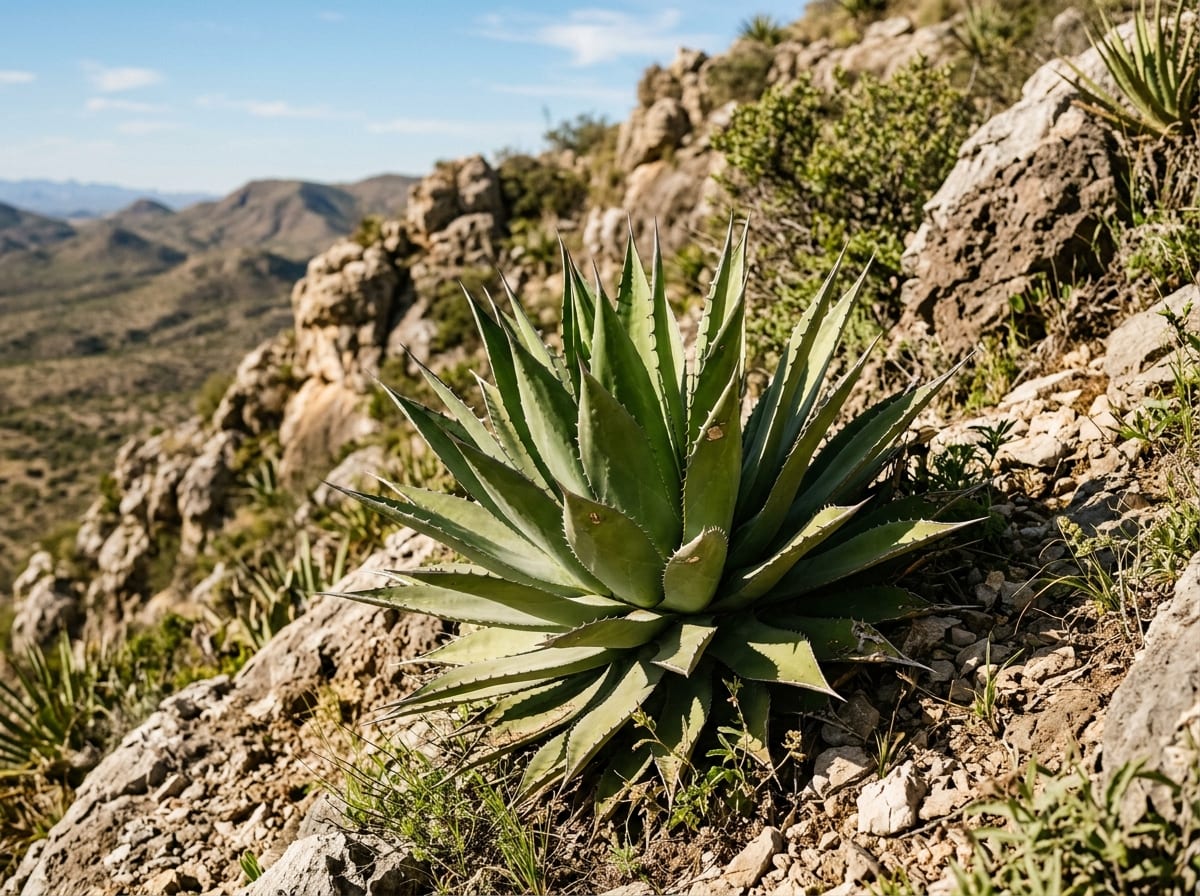
Agave obscura
Agave obscura is a medium-sized agave that forms a rigid, radiating rosette of pale green to green leaves, reaching roughly one meter across. Each leaf is lined with neat rows of gray teeth along its margins, giving the plant a bold, sculptural look. Its species name, meaning "inconspicuous" in Latin, actually refers to the dark reddish-purple flowers it produces when mature. Many plants sold as obscura are actually a different plant, Agave horrida subsp. perotensis, so it's worth checking identifying features closely before you buy. Like most agaves, it's monocarpic — the rosette that flowers eventually dies back — but the plant carries on through offsets that form around the base. It's generally considered a good pick for growers who already have some agave experience.
View Agave obscura encyclopedia →0% commission on your first sales!Register by September 30, 2026 and your first 2 plants are commission-free!
Grower Wanted!
List your plants on GrowerDirect and sell directly to customers nationwide!
6 Transparency Commitments from GrowerDirect
Every Agave from our Grower includes full transparency: variety, origin, light requirements, and care difficulty.
- Variety Disclosed
- Real Plant Photos
- Color Details
- Origin Disclosed
- Light Requirements
- Care Difficulty
Browse all 141 varieties
Light Requirements
Difficulty Level
Verified growers wanted for Agave
Growers are signing up now ahead of launch. Subscribe to be notified when new listings go live.
Getting alerts is free with a member account. When new listings match your saved search, we'll notify you by email and in-app.
Browse other categories
Verified growers (preview)
Agave obscura key facts
- Growing Difficulty
- Intermediate
- Lifespan
- Perennial; the flowering rosette dies and offsets carry on
- Size
- Rosette about 1 m across; leaves 25-40 cm long
- Watering
- Light feeder; a little slow-release fertiliser in the growing season is enough
- Light & Placement
- Sun and good airflow; it spreads widely, so allow room.
- Watering
- Water after the mix dries; sparingly in winter.
- Temperature & Winter
- Hardiness data are scarce; protect from frost and cold rain in winter.
- Soil & Repotting
- Free-draining mix; repot pot-bound plants at the start of the growing season.
- Notes
- A. horrida subsp. perotensis is often sold under this name: dark green leaves with white teeth mean perotensis, pale green leaves with grey teeth mean obscura.
About Agave obscura
Agave obscura is a medium agave with rigid, gray-toothed leaves and a roughly one-meter rosette. Here's what to know about growing this intermediate-level species and choosing a good specimen.
7 things to know before growing Agave obscura
1Give It Plenty of Sun
Agave obscura thrives with strong light, so outdoors it does best in a spot that gets sun all year round. Newly acquired plants that haven't been hardened off can scorch if placed straight into peak summer sun, so ease them in with partial shade before gradually increasing their light exposure.
2Water Deeply, Then Wait
Let the soil dry out completely before watering thoroughly, then hold off until it dries again. Prolonged dampness invites root rot, so stretch out the interval between waterings even further once temperatures drop.
3Use Fast-Draining Soil
Despite its thick, rigid leaves, Agave obscura's roots dislike sitting in moisture. A commercial succulent or cactus mix, or a blend with pumice and akadama, drains well and makes day-to-day care easier.
4Repot Before Roots Crowd
As the plant grows, its roots will eventually fill the pot, so plan to move it into a slightly larger one every few years. Spring through early summer, when temperatures are stable, is the best time to repot and trim back the roots before replanting.
5Protect It From Winter Cold
As an intermediate-level species, it shows some cold tolerance during active growth, but frost and prolonged cold can damage the rosette. Bringing it indoors to a bright window or greenhouse for winter, and cutting back on watering, keeps it safer through the season.
6Watch Out for the Teeth
The leaf margins carry neat rows of gray teeth, and the tips are sharp as well. Wear thick gloves or wrap the leaves in newspaper when repotting or moving the plant to avoid scratches.
7Watch for Mislabeled Plants
Plants sold as obscura are often actually a different plant, Agave horrida subsp. perotensis. Dark green leaves with conspicuous white teeth point to perotensis, while pale green leaves with gray teeth indicate obscura, so check leaf and tooth color closely in photos before buying. If you're growing on an offset, pale green leaves and gray teeth are also the features to look for.
Frequently asked questions about Agave obscura
- Q.Is Agave obscura suitable for beginners?
- A.It's generally considered an intermediate-level species, so some prior experience with succulents makes it easier to manage. As long as you provide well-draining soil, good sun exposure, and a clear dry-then-water rhythm, it's not particularly prone to problems.
- Q.How large does this agave get?
- A.The rosette typically reaches about one meter across, with leaves running 25 to 40 cm long. Since it takes several years to reach that size, it helps to plan for a pot and a spot with room to grow.
- Q.What happens to the plant after it flowers?
- A.Agave obscura is a perennial, but the individual rosette that flowers will die back afterward. Offsets that form around the base carry the plant forward, so keeping and growing on those pups maintains the planting over time.
- Q.Where does the name "obscura" come from?
- A.The species name means "inconspicuous" in Latin, referring to the dark reddish-purple flowers it produces when it blooms. It's an understated contrast to the plant's otherwise bold, architectural appearance.
- Q.Are plants labeled horrida or perotensis the same thing?
- A.No, they're a different plant. Agave horrida subsp. perotensis, a subspecies of horrida, is often sold under the name obscura. Dark green leaves with white teeth indicate perotensis, while pale green leaves with gray teeth indicate obscura, so compare leaf and tooth color in photos before buying.
Handy Growing Tools for Agave obscura
Learn more about Agave obscura in the encyclopedia
View Agave obscura encyclopedia entry →
Care difficulty, size, origin and light needs — all basics covered.
More in this category
Can't find the plant you're looking for?
Post your wishes for free and growers with matching plants will contact you with introductions.