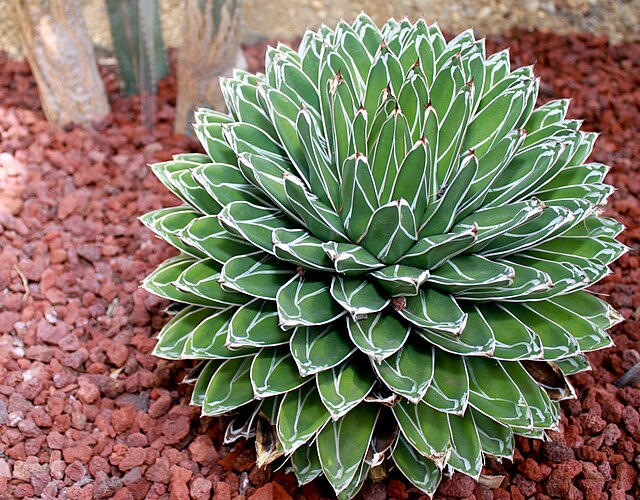
Source: Wikimedia Commons
Agave Victoriae-Reginae
IntermediateAgave victoriae-reginae
A beautiful compact agave with white markings, slow-growing but artistically perfect.
Overview
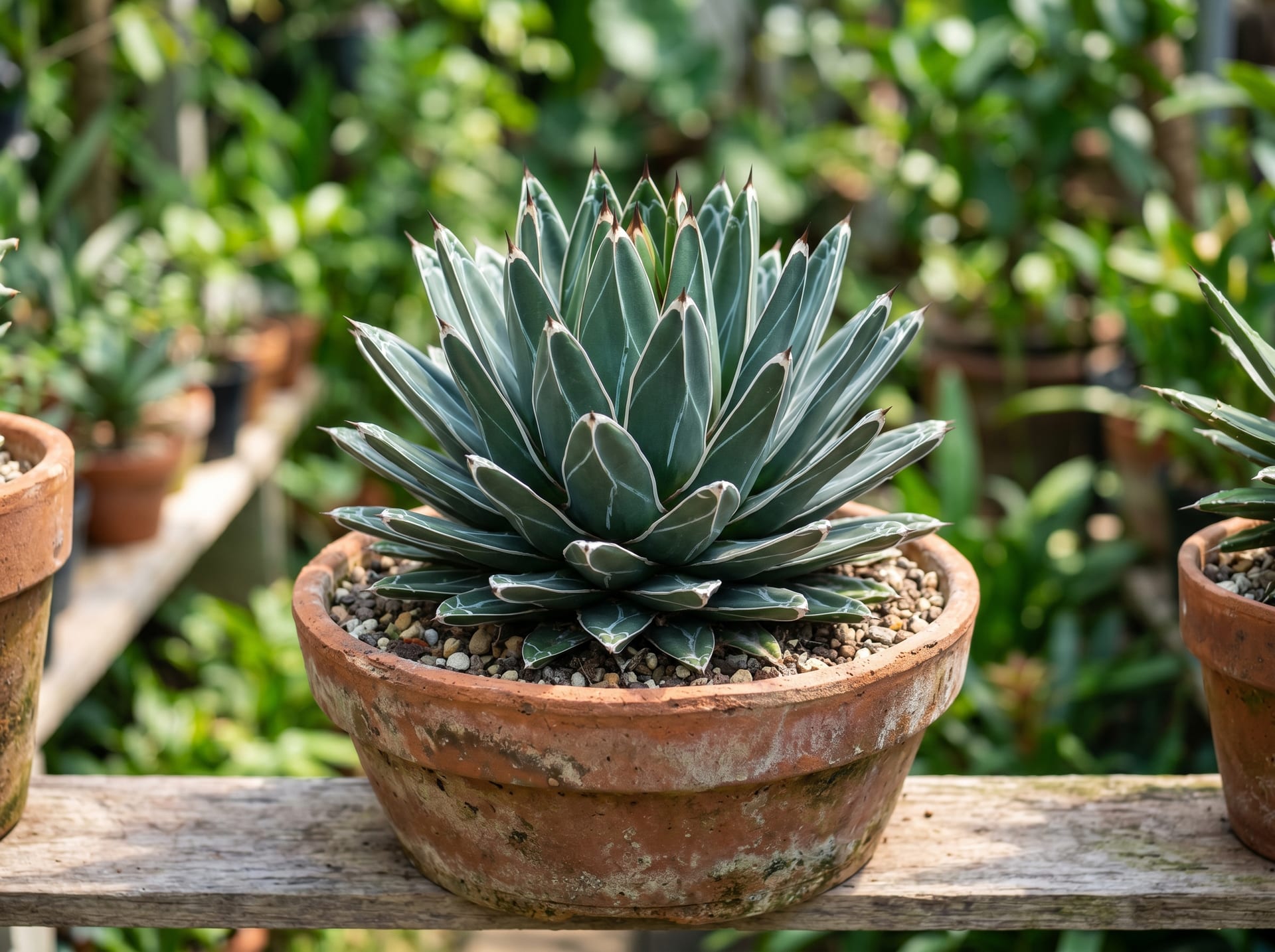
Agave victoriae-reginae, the queen agave or Sasa-no-Yuki (笹の雪), is a small to medium species native to steep limestone cliffs in Coahuila, Nuevo León, and Durango, Mexico. Named in honor of Queen Victoria, it is one of the most celebrated species in the genus for its refined beauty. The stiff, dark green leaves are marked on both surfaces with bright white lines—bud imprints left by neighboring leaves during development—forming precise, geometric patterns of exceptional ornamental quality. Unlike most agaves, the leaf margins are entirely spineless; only the leaf tip bears a small spine, making it relatively safe to handle. Mature rosettes form a hemispherical shape 20–50 cm tall and 30–50 cm wide. Growth is extremely slow; cultivating a large specimen takes 10–20 years or more. Provide bright sunlight with some protection from harsh afternoon sun in summer. Water sparingly; reduce to near-drought in winter with excellent drainage. One of the most widely grown and beloved agaves in Japan, it remains the quintessential introduction for new collectors and a lifelong pursuit for advanced enthusiasts.
Lifespan of the Agave Victoriae-Reginae
The Agave Victoriae-Reginae lives 20-30 years.
Size of the Agave Victoriae-Reginae
The Agave Victoriae-Reginae grows to 20-40cm.
Temperature & humidity for the Agave Victoriae-Reginae
The Agave Victoriae-Reginae tolerates temperatures of -9〜40℃.
Basic Info
Origin
Coahuila, Nuevo León, and Durango, Mexico
Lifespan
20-30 years
Size
20-40cm
Temperature
-9〜40℃
Growing Tips
Light & Placement
It prefers bright direct sun, but it is safest to avoid intense summer sun. In midsummer place it in bright partial shade or under shade cloth.
Watering
Water sparingly, only after the soil dries. In winter keep it almost completely dry.
Temperature & Overwintering
In winter keep it out of frost and never let it freeze. Keeping it dry improves its tolerance of low temperatures.
Soil & Repotting
Use a fast-draining mix. Growth is very slow and the plant stays around 30-50 cm across, so repot only once the roots fill the pot.
Pests & Cautions
Watch for leaf scorch from strong summer sun and root rot from excess moisture. With spines only at the leaf tips, it is relatively safe to handle.
Agave Victoriae-Reginae FAQ
QWhat is the growing difficulty level for Agave Victoriae-Reginae?
Intermediate. A variety suitable for intermediate growers. Requires some cultivation experience and knowledge of environment management. Pay careful attention to temperature and humidity control.
QWhat temperatures can Agave Victoriae-Reginae tolerate?
Agave Victoriae-Reginae tolerates temperatures of -9〜40℃. This is the tolerated range, not the ideal growing temperature. Keep conditions well inside it and avoid sudden temperature changes.
QWhat is the lifespan of Agave Victoriae-Reginae?
The average lifespan of Agave Victoriae-Reginae is 20-30 years. With proper cultivation environment and nutrient management, you can keep it healthy for a long time.
QHow large does Agave Victoriae-Reginae get?
The mature size of Agave Victoriae-Reginae is 20-40cm. This may vary slightly depending on cultivation environment and individual differences.
QWhat is the typical price for Agave Victoriae-Reginae?
The price of Agave Victoriae-Reginae varies significantly by variety, characteristics, size, and lineage. Please check GrowerDirect's price guide for the latest market information.
Last updated: October 2, 2026
Growing Specifications
- USDA Zone
- 8–10
References & Sources
Edited & verified by: GrowerDirect Editorial Team
The classifications, regulations, and growing data on this page are created and verified based on the primary information database below.
Taxonomy & Authority
Regulations & Conservation Status
The species is listed in CITES Appendix II (not as a blanket listing at the genus or family level). Cultivars and varieties are also subject to regulation.
Sources: CITES Appendix II - Agave victoriae-reginae / IUCN Red List - Agave victoriae-reginae (Least Concern)
Regulations may change. Always verify the latest information with the relevant authorities.
Related Species
Find listings for this species
Related Articles
Preventing Leaf Burn in Agave and Light Management | Transition Strategy from Indoor to Outdoor Cultivation
Light management strategy to prevent agave leaf burn completely while successfully transitioning from indoor to outdoor environments. This article explains practical methods including gradual light intensity adjustment, seasonal placement changes, and UV protection measures.
Tips for Cultivating White Variegated Agave Varieties
Tips for Cultivating White Variegated Agave Varieties
Complete Care Guide for Agave oteroi | Tips for Training Beautiful Large Rosettes
We explain the characteristics and cultivation of Agave oteroi, a large agave native to Oaxaca, Mexico. From placement location and soil to watering and overwintering—a practical guide for those beginning to cultivate this species.
The Deep Connection Between Agave and Tequila | The Secret of a Distilled Spirit Born from Century Plant
Tequila is made from only Agave tequilana among the Agave genus. This essay explains the ecology of century plants, the Jalisco region as a production area, and the differences from ornamental agaves.
🩺 Common diseases
Can't find the plant you're looking for?
Post your wishes for free and growers with matching plants will contact you with introductions.