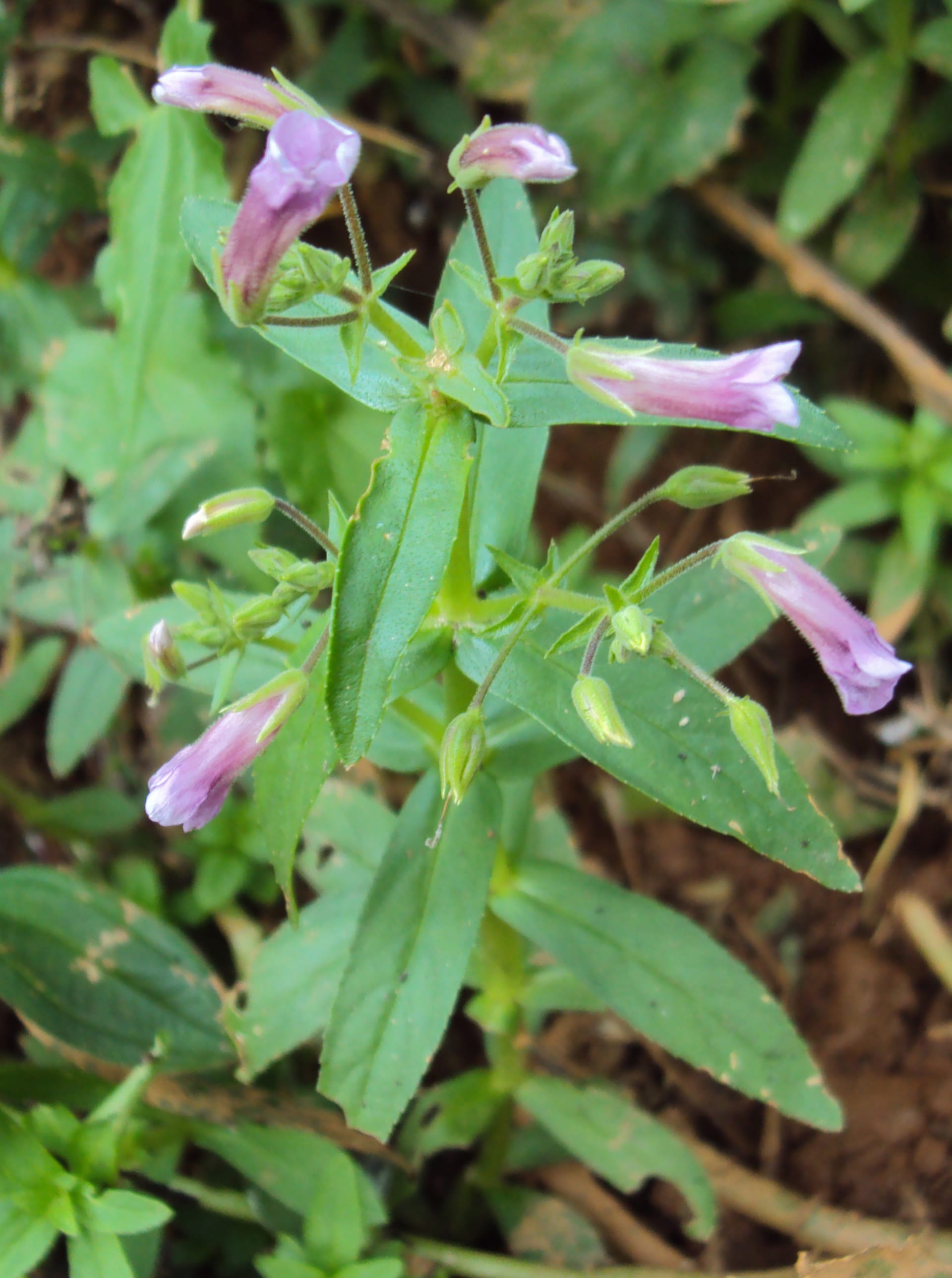
Source: Wikimedia Commons
Rice paddy herb
IntermediateLimnophila aromatica
A stem plant native to Japan (Japanese name Shisokusa) whose crushed leaves smell of citrus. Under water it has two or three leaves per node, in green or reddish forms. A deep red species with more leaves per whorl is often sold under this name.
About
Rice paddy herb (Limnophila aromatica, Plantaginaceae), called Shisokusa in Japan, is a perennial of marshes and shallow water from north-east India through South-East Asia, southern China, Japan and Korea to northern Australia, also occurring as a rice-field weed. Its leaves contain essential oils and smell of citrus when crushed, and it is cultivated as a herb in flooded fields in South-East Asia. In aquaria the name is confused: much of what is sold as 'aromatica' is reportedly L. hippuridoides from the Malay Peninsula, which has six to eight or more leaves per whorl and turns deep red-purple with pink undersides in strong light. True L. aromatica has two or three (rarely four) leaves per node under water and ranges from green to reddish. A bright green form from Taiwan has three to eight leaves per node. Counting leaves per node is the way to tell them apart when buying. Both need strong light, CO2 and good nitrate, phosphate and trace-element fertilisation, and benefit from substrate feeding. It is sold by specialist shops in Japan, though names and plants do not always match.
Temperature & humidity for the Rice paddy herb
The ideal temperature for the Rice paddy herb is 22〜27℃.
Basic Info
Origin
South and South-East Asia, southern China, Japan, Korea, northern Australia
Lifespan
Perennial; maintained by replanting cuttings
Size
Stem plant that grows to the surface
Temperature
22〜27℃
Watering & Fertilizer
Needs CO2 plus liquid and substrate fertiliser
Growing Tips
Lighting
Needs strong light.
CO2 & Fertilizer
CO2 is needed; dose nitrate, phosphate and trace elements generously and feed the substrate too.
Water Temperature & Quality
Optimum 22–27°C at pH 6–7.5 and KH 2–12°dKH.
Substrate & Attachment
Plant in a nutrient-rich substrate in the mid- or background.
Trimming & Propagation
Propagate by replanting tops. Emersed, it grows and flowers in rich wet soil under strong light.
Cautions
A different species with more leaves per whorl is often sold as 'aromatica', so check leaves per node. Never release plants into the wild.
Rice paddy herb FAQ
QWhat is the growing difficulty level for Rice paddy herb?
Intermediate. A variety suitable for intermediate growers. Requires some cultivation experience and knowledge of environment management. Pay careful attention to temperature and humidity control.
QWhat is the ideal temperature for Rice paddy herb?
The ideal temperature for Rice paddy herb is 22〜27℃. Avoid sudden temperature changes and maintain a stable environment.
QHow should I water and fertilize Rice paddy herb?
Rice paddy herb: watering & fertilizer — Needs CO2 plus liquid and substrate fertiliser. Aim for appropriate frequency and amount.
QWhat is the typical price for Rice paddy herb?
The price of Rice paddy herb varies significantly by variety, characteristics, size, and lineage. Please check GrowerDirect's price guide for the latest market information.
Last updated: September 23, 2026
References & Sources
Edited & verified by: GrowerDirect Editorial Team
The classifications, regulations, and growing data on this page are created and verified based on the primary information database below.
Taxonomy & Authority
Regulations & Conservation Status
Not listed in CITES (no match in Species+). Not regulated under Japan's Invasive Alien Species Act or Species Conservation Act. Never dump aquatic plants into rivers, ponds or ditches, or flush them away with tank water. Drain unwanted plants and trimmings and dispose of them as household waste.
Sources: Species+ (CITES listing check) / Ministry of the Environment: list of Invasive Alien Species (Invasive Alien Species Act)
Regulations may change. Always verify the latest information with the relevant authorities.
Related Species
Find listings for this species
Related Articles
Aquatic Plant Tank Used Soil and Substrate Disposal and Recycling Methods | Correct Disposal Methods and Reuse Tips
Explains the correct disposal methods for used substrate in aquatic plant tanks. Introduces the proper disposal procedures according to local municipal rules and the concept of reuse for short-term usage.
Beginner-Friendly Aquatic Plants Without CO2 Supplementation | Cultivation Conditions and Tank Layout Strategies
You can create a beautiful aquarium without expensive CO2 equipment. This guide explains practical methods for selecting CO2-free aquatic plants that beginners can successfully grow, from cultivation conditions to tank layout strategies.
How to Cultivate Rotala and Bring Out Beautiful Red Color | Lighting, CO2, and Trimming Techniques to Achieve Vibrant Red
This guide explains the Rotala genus, popular in aquatic plant layouts, covering light intensity, CO2, and fertilizer management to bring out red coloration, as well as trimming techniques for maintaining beautiful, dense growth.
Rare Attachment-Type Aquatic Plants Beyond Anubias, Bucephalandra, and Willow Moss | The Charm of Distinctive Varieties like Bolbitis
Beyond the standard attachment-type aquatic plants—Anubias, Bucephalandra, and Willow Moss—there are distinctive attachment-type aquatic plants like Bolbitis. This article introduces their charm, cultivation tips, and how to incorporate them into aquascaping layouts.
🩺 Common diseases
Can't find the plant you're looking for?
Post your wishes for free and growers with matching plants will contact you with introductions.