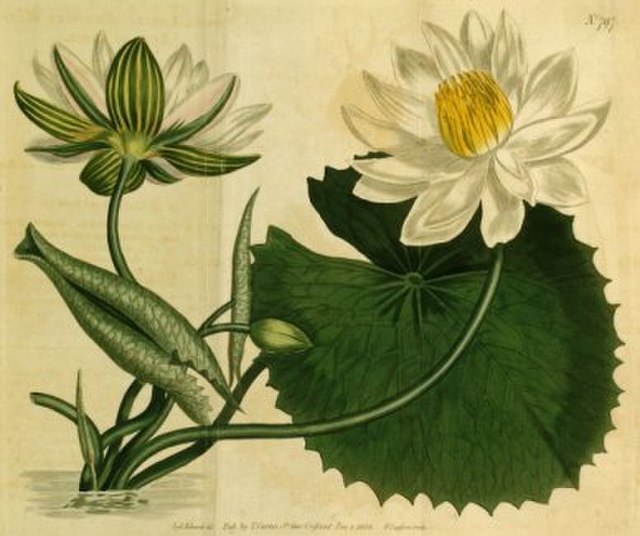
Source: Wikimedia Commons
Tiger Lotus
BeginnerNymphaea lotus
A water lily relative with beautiful round leaves featuring red-brown spots. Creates accent in tank midground.
About
Nymphaea lotus — known in the hobby as tiger lotus or Egyptian water lily — is a bulbous aquatic plant in the family Nymphaeaceae, native to East Africa (including Egypt) and distributed across Southeast Asia. Two primary forms are cultivated: the red tiger lotus with distinctive red-spotted foliage, and the green-leaved variety. Plants grow from a bulb, initially producing small submerged leaves that progressively enlarge. To preserve the attractive underwater leaf phase, emerging floating leaves should be promptly removed before they divert the plant's energy to surface growth. Submerged leaves in vivid red to bronze tones create a striking focal point in mid to background positions. CO2 supplementation is not required, but vigorous root uptake means that root-tab fertilization delivers substantial benefits. Due to its potential size, it is best suited to larger aquaria where its dramatic presence can be fully appreciated.
Source: Wikipedia (CC BY-SA 4.0)
Size of the Tiger Lotus
The Tiger Lotus grows to 15-40cm.
Basic Info
Origin
East Africa (including Egypt) and Southeast Asia
Lifespan
Bulb plant
Size
15-40cm
Temperature
22〜30℃
Watering & Fertilizer
Root tabs
Growing Tips
Lighting
Moderate lighting is enough. To enjoy the red-to-brown submersed leaves, place it in a prominent mid- to background spot that light reaches.
CO2 & Fertilizer
It can be grown without CO2, but since the roots absorb nutrients vigorously, substrate fertilizer is especially effective.
Substrate & Attachment
Grown from a bulb; small leaves appear first and gradually enlarge. Plant the bulb in the substrate without burying it too deeply.
Trimming & Propagation
Fast-growing and needs regular trimming. Cut floating leaves as soon as they start to appear to keep enjoying the submersed leaves.
Cautions
It grows large, so it suits a roomy tank. Left alone, floating leaves cover the surface and shade the plants below.
Tiger Lotus FAQ
QWhat is the growing difficulty level for Tiger Lotus?
Beginner. A variety suitable for beginners. No special equipment or experience is required—you can grow it without problems by setting up a basic cultivation environment.
QHow large does Tiger Lotus get?
The mature size of Tiger Lotus is 15-40cm. This may vary slightly depending on cultivation environment and individual differences.
QHow should I water and fertilize Tiger Lotus?
Tiger Lotus: watering & fertilizer — Root tabs. Aim for appropriate frequency and amount.
QWhat is the typical price for Tiger Lotus?
The price of Tiger Lotus varies significantly by variety, characteristics, size, and lineage. Please check GrowerDirect's price guide for the latest market information.
Last updated: August 31, 2026
References & Sources
Edited & verified by: GrowerDirect Editorial Team
The classifications, regulations, and growing data on this page are created and verified based on the primary information database below.
Taxonomy & Authority
Regulations & Conservation Status
Sources: Ministry of the Environment Designated Invasive Species List (Invasive Species Act) / CITES Appendix II listed plant taxa (family and genus level)
Regulations may change. Always verify the latest information with the relevant authorities.
Related Species
Find listings for this species
Related Articles
How to Grow Lotus | Guide to Growing Flowering Lotus in Pots as Aquatic Plants
This guide explains the tips for growing lotus in containers—planting season, soil, sunlight, water depth, fertilization, and division—along with the differences between lotus and water lilies.
Complete Guide to Growing Cephalotus | Cultivating Beautiful Pitcher Traps
Explains the basics of growing Cephalotus (fringed water violet), temperature and humidity management, soil and watering, and tips for cultivating large pitchers.
Complete Guide to Aquatic Plant CO2 Systems | Practical Manual from Setup to Daily Maintenance
CO2 is an essential element for aquatic plants to perform photosynthesis. This article covers everything needed to cultivate fast-growing stem plants and red-tinted aquatic plants, from selecting CO2 injection systems, installing solenoid valve regulators, positioning diffusers, to daily maintenance.
Aquatic Plant Tank Used Soil and Substrate Disposal and Recycling Methods | Correct Disposal Methods and Reuse Tips
Explains the correct disposal methods for used substrate in aquatic plant tanks. Introduces the proper disposal procedures according to local municipal rules and the concept of reuse for short-term usage.
🩺 Common diseases
Can't find the plant you're looking for?
Post your wishes for free and growers with matching plants will contact you with introductions.