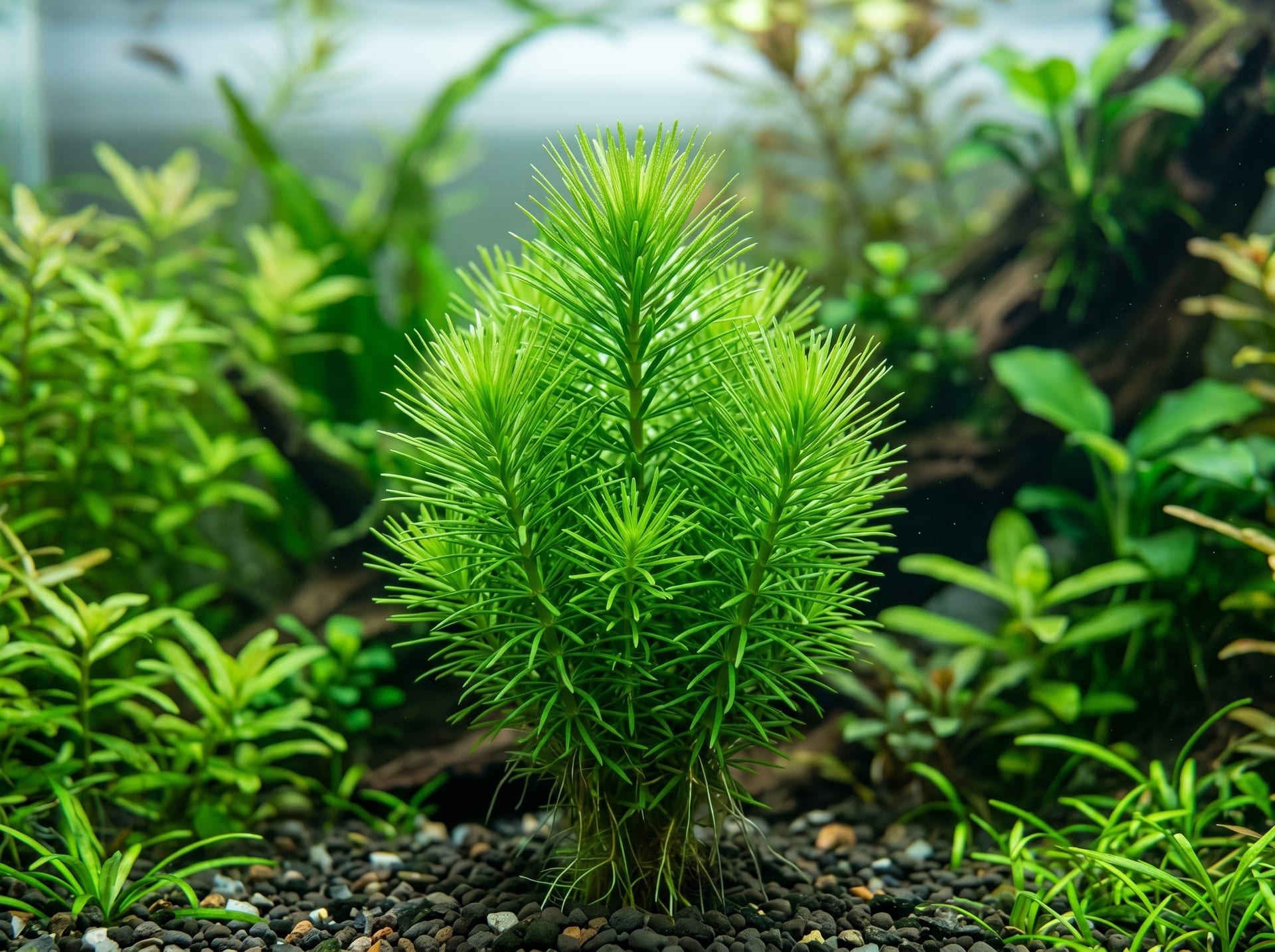
AI-generated image
Pogostemon Erectus
IntermediatePogostemon erectus
Stem plant with a unique conifer-like silhouette. Beautiful lime-green foliage makes it a popular layout accent. Somewhat slow-growing but hardy.
About
Pogostemon erectus is a stem plant in the family Lamiaceae, native to South Asia including India. It grows upright with fine, densely packed bright-green leaves resembling conifer needles, and grown in groups it creates a distinctive pine-forest-like texture. Planted in rows in the mid to background it forms a neat wall-like effect, making it a popular layout accent. Strong lighting, CO2 injection, and abundant nutrients (especially substrate fertilizer) are important for healthy growth, under which it grows straight and vigorous. When light or nutrients are lacking, it grows leggy and lower leaves drop. Growth is relatively fast, and it propagates by trimming and replanting, suiting intermediate hobbyists. It prefers soft, slightly acidic to neutral water.
Size of the Pogostemon Erectus
The Pogostemon Erectus grows to 15-40cm.
Temperature & humidity for the Pogostemon Erectus
The ideal temperature for the Pogostemon Erectus is 22〜28℃.
Basic Info
Origin
South Asia (India, etc.)
Size
15-40cm
Temperature
22〜28℃
Watering & Fertilizer
CO2 recommended + liquid fertilizer
Growing Tips
Lighting
Medium-high light. Stretches under low light
CO2 & Fertilizer
CO2 injection and plentiful nutrients, especially substrate fertilizer, are important. Add liquid fertilizer too to prevent lower leaves dropping from deficiency.
Water Temperature & Quality
Aim for 22–28°C and slightly acidic to neutral soft water. When conditions are right it grows straight and strong.
Substrate & Attachment
Planted densely in rows in a nutrient-rich substrate, it forms a wall like a conifer thicket. Suited to the mid- to background.
Trimming
Top cutting promotes side shoots. Replanting trimmings works
Notes
Lower leaves shed easily; periodic replanting recommended
Pogostemon Erectus FAQ
QWhat is the growing difficulty level for Pogostemon Erectus?
Intermediate. A variety suitable for intermediate growers. Requires some cultivation experience and knowledge of environment management. Pay careful attention to temperature and humidity control.
QWhat is the ideal temperature for Pogostemon Erectus?
The ideal temperature for Pogostemon Erectus is 22〜28℃. Avoid sudden temperature changes and maintain a stable environment.
QHow large does Pogostemon Erectus get?
The mature size of Pogostemon Erectus is 15-40cm. This may vary slightly depending on cultivation environment and individual differences.
QHow should I water and fertilize Pogostemon Erectus?
Pogostemon Erectus: watering & fertilizer — CO2 recommended + liquid fertilizer. Aim for appropriate frequency and amount.
QWhat is the typical price for Pogostemon Erectus?
The price of Pogostemon Erectus varies significantly by variety, characteristics, size, and lineage. Please check GrowerDirect's price guide for the latest market information.
Last updated: June 24, 2026
References & Sources
Edited & verified by: GrowerDirect Editorial Team
The classifications, regulations, and growing data on this page are created and verified based on the primary information database below.
Taxonomy & Authority
Regulations & Conservation Status
Sources: Ministry of the Environment Designated Invasive Species List (Invasive Species Act) / CITES Appendix II listed plant taxa (family and genus level)
Regulations may change. Always verify the latest information with the relevant authorities.
Related Species
Find listings for this species
Related Articles
Complete Guide to Aquatic Plant CO2 Systems | Practical Manual from Setup to Daily Maintenance
CO2 is an essential element for aquatic plants to perform photosynthesis. This article covers everything needed to cultivate fast-growing stem plants and red-tinted aquatic plants, from selecting CO2 injection systems, installing solenoid valve regulators, positioning diffusers, to daily maintenance.
Aquatic Plant Tank Used Soil and Substrate Disposal and Recycling Methods | Correct Disposal Methods and Reuse Tips
Explains the correct disposal methods for used substrate in aquatic plant tanks. Introduces the proper disposal procedures according to local municipal rules and the concept of reuse for short-term usage.
Beginner-Friendly Aquatic Plants Without CO2 Supplementation | Cultivation Conditions and Tank Layout Strategies
You can create a beautiful aquarium without expensive CO2 equipment. This guide explains practical methods for selecting CO2-free aquatic plants that beginners can successfully grow, from cultivation conditions to tank layout strategies.
How to Care for Rotala and Bring Out Beautiful Red Color | Methods to Achieve Vibrant Red Through Light Intensity, CO₂, and Trimming
This guide explains the light intensity, CO₂, and fertilizer management needed to bring out red coloration in the popular Rotala genus used in aquatic plant layouts, as well as trimming techniques to maintain beautiful, lush growth.
🩺 Common diseases
Can't find the plant you're looking for?
Post your wishes for free and growers with matching plants will contact you with introductions.