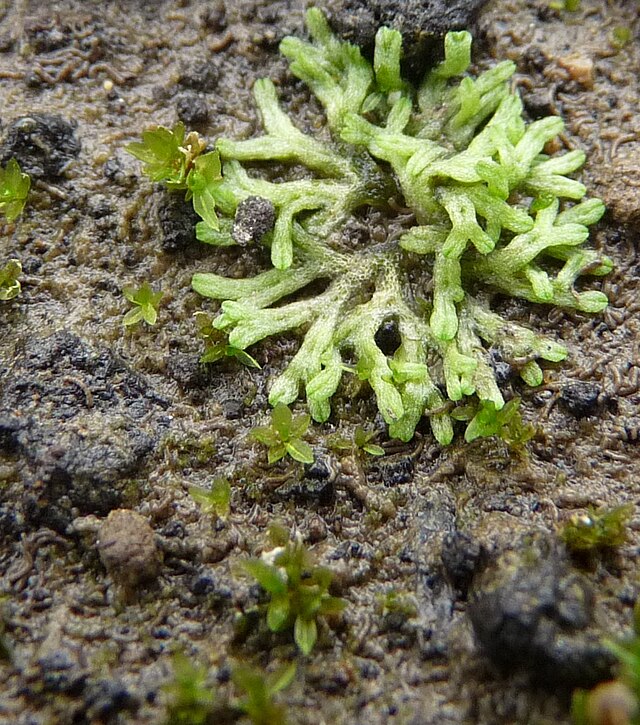
Source: Wikimedia Commons
Riccia
IntermediateRiccia fluitans
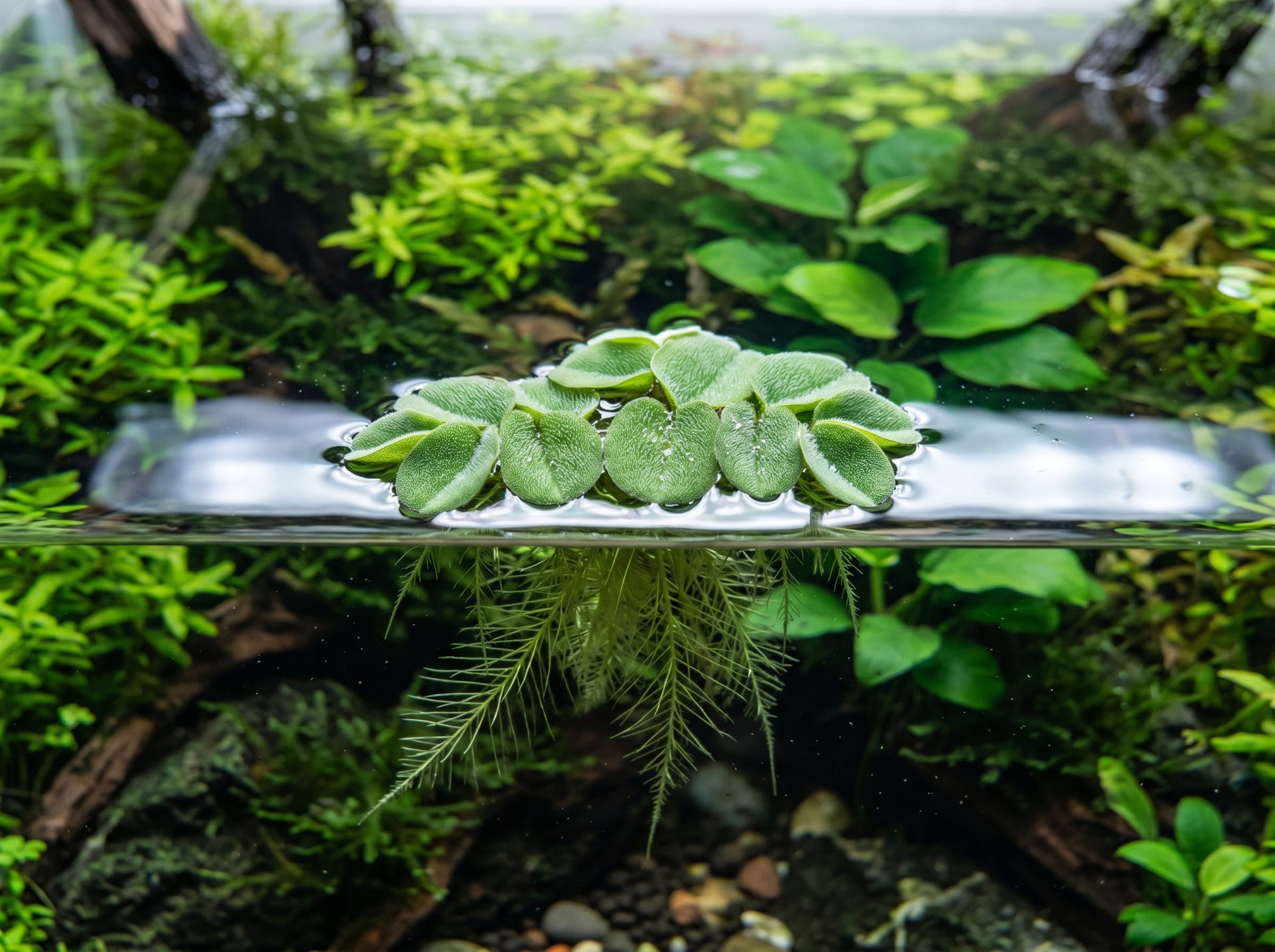
Floating liverwort often used submerged. Stunning appearance with oxygen bubbles attached. Can be the star of an aquascape.
Overview
Riccia fluitans is a liverwort in the order Marchantiales, naturally distributed as a free-floating plant across temperate to tropical water bodies worldwide. Its use as a submerged foreground carpet plant was pioneered by Takashi Amano, who popularized the technique of tying it over rocks with fine mesh nets to keep it submerged. Under high light and pressurized CO2, photosynthesis generates spectacular pearl-like oxygen bubbles across the entire mat — one of the most iconic sights in the Nature Aquarium aesthetic. Fast-growing but challenging to maintain, the thallus tends to detach from netting and requires regular intervention. Stable water parameters and consistent algae management are prerequisites for long-term success. Its combination of breathtaking beauty and technical difficulty places it firmly in advanced aquascaping territory.
Source: Wikipedia (CC BY-SA 4.0)
Size of the Riccia
The Riccia grows to 1-3cm (thickness).
Temperature & humidity for the Riccia
The ideal temperature for the Riccia is 20〜28℃.
Basic Info
Origin
Worldwide, in temperate to tropical aquatic habitats
Size
1-3cm (thickness)
Temperature
20〜28℃
Growing Tips
Lighting
High light is essential; with enough light it pearls heavily during photosynthesis. In weak light it grows leggy and detaches easily.
CO2 & Fertilizer
CO2 injection is essential. Only combined with high light does it grow dense enough to work as a foreground carpet.
Water Temperature & Quality
Aim for 20–28°C. Management in stable water conditions is important, and algae control is indispensable.
Substrate & Attachment
Naturally a floating plant, so wrap it onto rock or wood with netting or fishing line to sink it. It attaches poorly and detaches easily.
Trimming
Floats up — needs regular maintenance
Cautions
Once algae gets tangled in it, removal is difficult, so stable water and early algae control are essential. A plant for advanced aquarists.
Riccia FAQ
QWhat is the growing difficulty level for Riccia?
Intermediate. A variety suitable for intermediate growers. Requires some cultivation experience and knowledge of environment management. Pay careful attention to temperature and humidity control.
QWhat is the ideal temperature for Riccia?
The ideal temperature for Riccia is 20〜28℃. Avoid sudden temperature changes and maintain a stable environment.
QHow large does Riccia get?
The mature size of Riccia is 1-3cm (thickness). This may vary slightly depending on cultivation environment and individual differences.
QWhat is the typical price for Riccia?
The price of Riccia varies significantly by variety, characteristics, size, and lineage. Please check GrowerDirect's price guide for the latest market information.
Last updated: September 17, 2026
References & Sources
Edited & verified by: GrowerDirect Editorial Team
The classifications, regulations, and growing data on this page are created and verified based on the primary information database below.
Taxonomy & Authority
Accepted name: Riccia fluitans L.
Authority databases: GBIF
Nomenclature follows global taxonomic authority databases.
Regulations & Conservation Status
Sources: Ministry of the Environment Designated Invasive Species List (Invasive Species Act) / CITES Appendix II listed plant taxa (family and genus level)
Regulations may change. Always verify the latest information with the relevant authorities.
Related Species
Find listings for this species
Related Articles
Complete Guide to Aquatic Plant CO2 Systems | Practical Manual from Setup to Daily Maintenance
CO2 is an essential element for aquatic plants to perform photosynthesis. This article covers everything needed to cultivate fast-growing stem plants and red-tinted aquatic plants, from selecting CO2 injection systems, installing solenoid valve regulators, positioning diffusers, to daily maintenance.
Disposal and Recycling Methods for Used Soil and Substrate in Aquatic Plant Tanks | Proper Disposal Methods and Reuse Tips
Explains the correct disposal methods for used substrate in aquatic plant tanks. Introduces the steps for disposal following local government rules and considerations for reuse when the substrate has been used for a short period.
Beginner-Friendly Aquatic Plants That Grow Without CO2 Addition | Growing Conditions and Tank Layout Application
You can create a beautiful aquarium without expensive CO2 equipment. This guide covers everything from selecting aquatic plants that don't require CO2—which beginners can succeed with—to growing conditions and practical tank layout applications.
How to Care for Rotala and Bring Out Beautiful Red Color | Methods to Achieve Vibrant Red Through Light Intensity, CO₂, and Trimming
This guide explains the light intensity, CO₂, and fertilizer management needed to bring out red coloration in the popular Rotala genus used in aquatic plant layouts, as well as trimming techniques to maintain beautiful, lush growth.
🩺 Common diseases
Can't find the plant you're looking for?
Post your wishes for free and growers with matching plants will contact you with introductions.