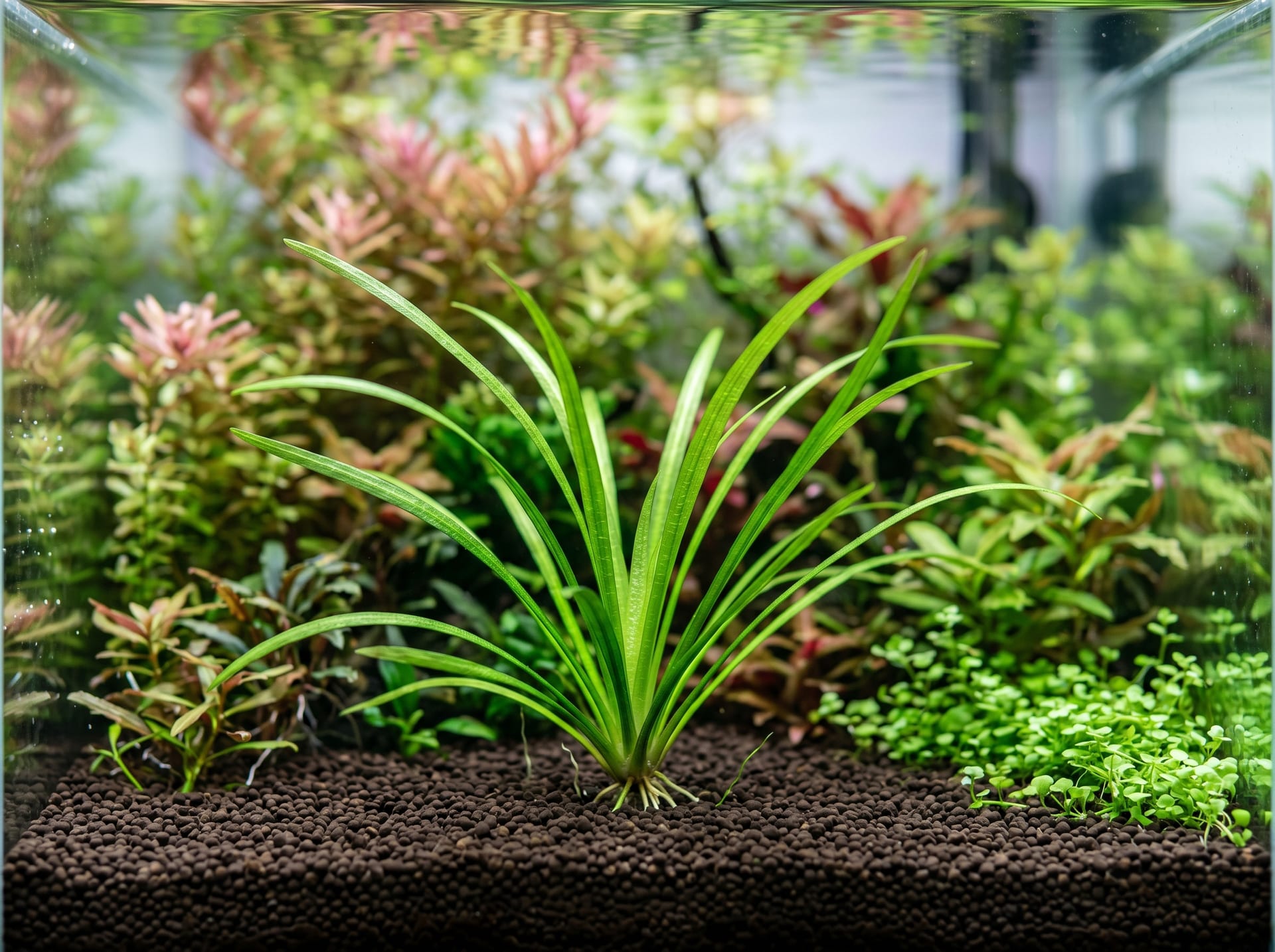
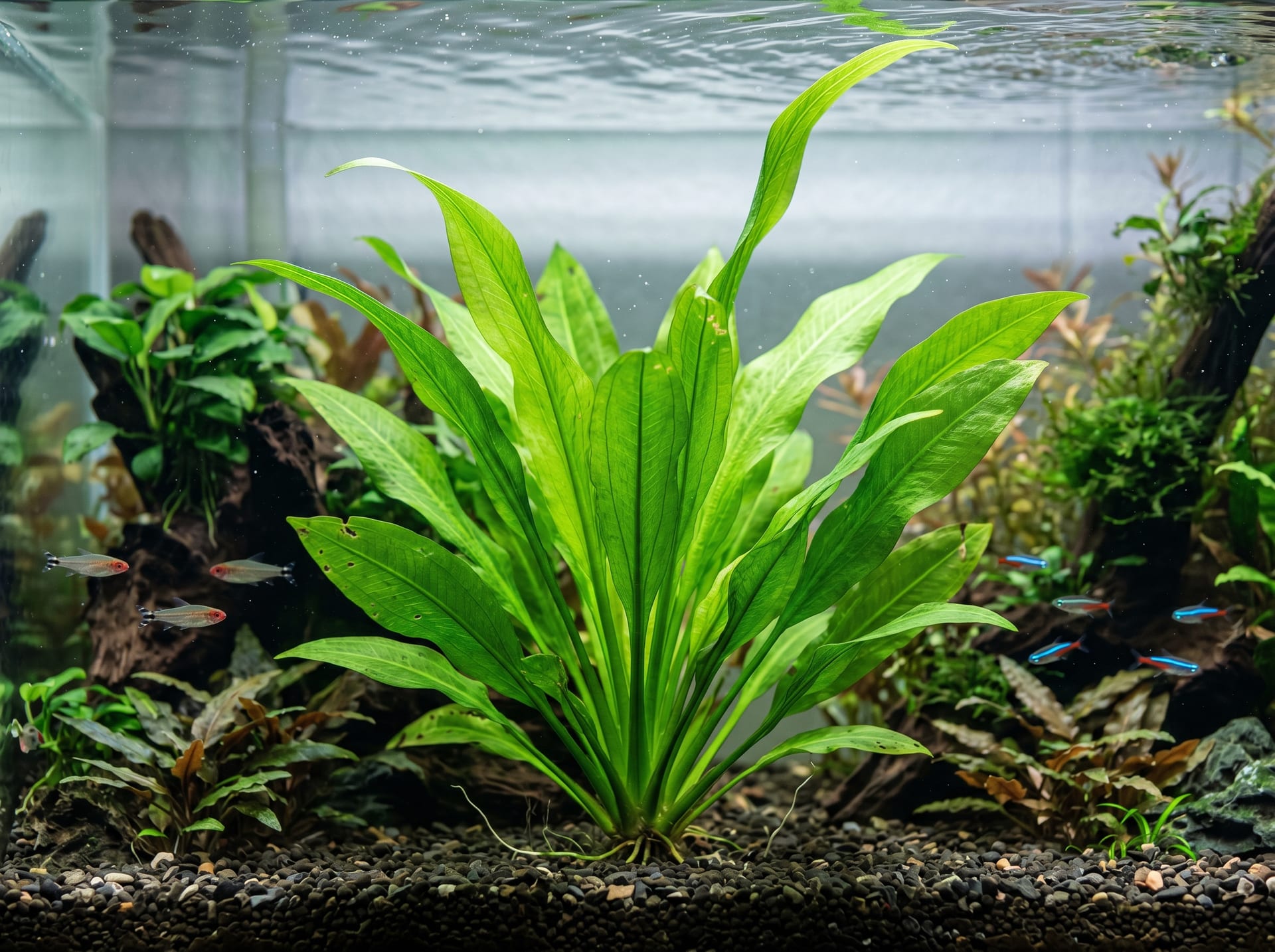
AI-generated image
Dwarf Sagittaria
BeginnerSagittaria subulata
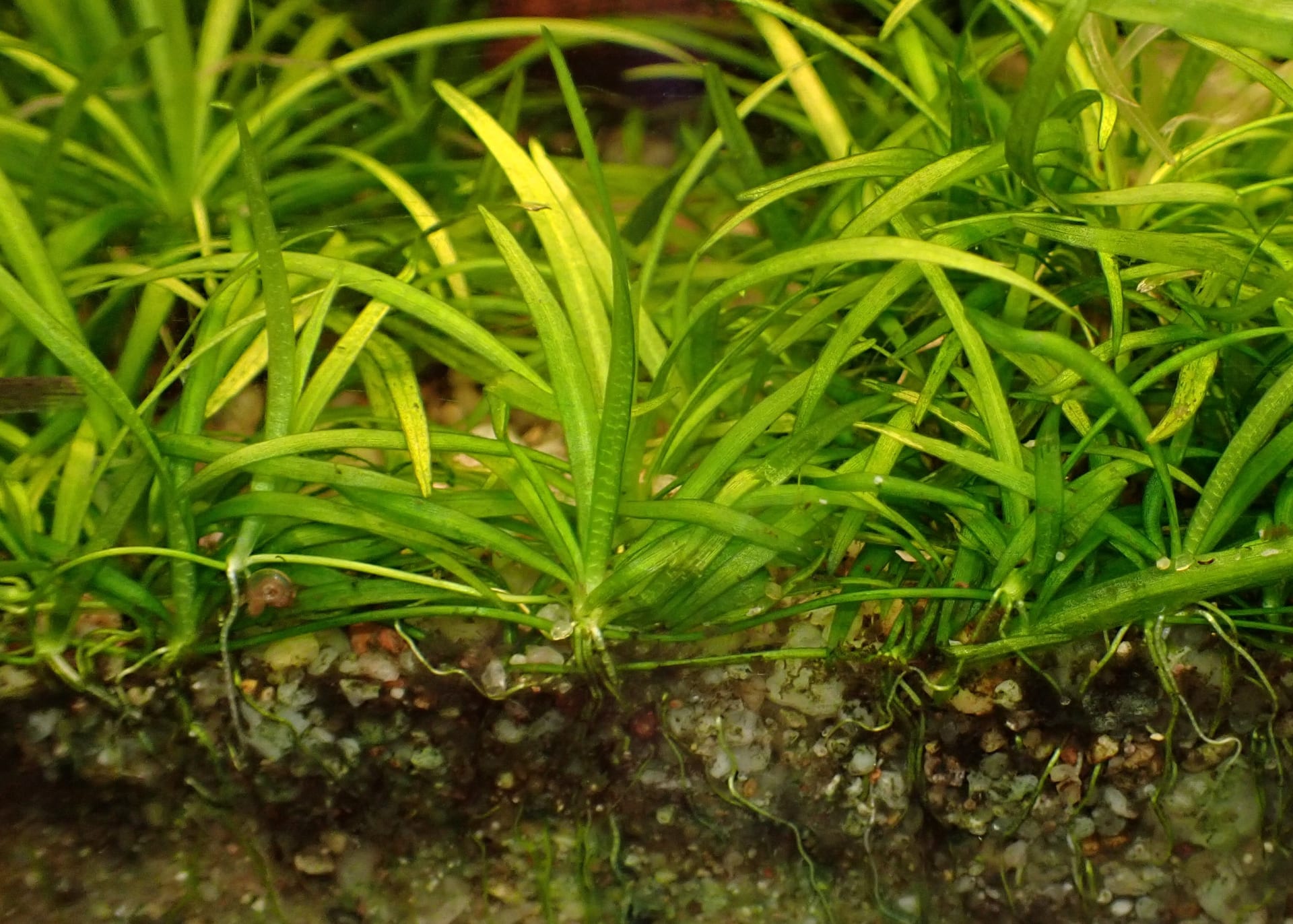
A foreground-midground plant growing densely like lawn. Very hardy, spreads quickly by runners.
About
Sagittaria subulata is an aquatic plant in the family Alismataceae, native from eastern North America to northern South America. As a foreground-to-midground plant, its narrow leaves spread densely like a lawn, and its vigorous propagation by runners naturally carpets the entire tank over time. Extremely hardy, growing without CO2 even in low light, making it one of the best plants for beginner aquarists. It adapts to a wide range of water chemistry, preferring slightly acidic to neutral conditions but tolerating moderate pH fluctuations. Higher light produces shorter, more compact leaves, while low light causes leaves to grow longer and slender. It is also notably resistant to grazing in goldfish and large-fish aquariums.
Size of the Dwarf Sagittaria
The Dwarf Sagittaria grows to 5-30cm.
Basic Info
Origin
Eastern North America to northern South America
Lifespan
Perennial
Size
5-30cm
Temperature
18〜28℃
Watering & Fertilizer
Root tabs
Growing Tips
Lighting
Grows even in low light. Under high light the leaves stay short and compact, under low light they grow long and thin, so adjust light to the height you want.
CO2 & Fertilizer
A very hardy plant that grows without CO2. It feeds through its roots, so substrate fertilizer improves growth.
Water Temperature & Quality
Prefers slightly acidic to neutral water but tolerates a wide range, coping well with modest pH swings.
Trimming & Propagation
It multiplies vigorously by runners and before long carpets the whole tank in green. Cut off runner plantlets and replant them.
Notes
Thin if overgrown. Creates lawn-like aquascape
Dwarf Sagittaria FAQ
QWhat is the growing difficulty level for Dwarf Sagittaria?
Beginner. A variety suitable for beginners. No special equipment or experience is required—you can grow it without problems by setting up a basic cultivation environment.
QHow large does Dwarf Sagittaria get?
The mature size of Dwarf Sagittaria is 5-30cm. This may vary slightly depending on cultivation environment and individual differences.
QHow should I water and fertilize Dwarf Sagittaria?
Dwarf Sagittaria: watering & fertilizer — Root tabs. Aim for appropriate frequency and amount.
QWhat is the typical price for Dwarf Sagittaria?
The price of Dwarf Sagittaria varies significantly by variety, characteristics, size, and lineage. Please check GrowerDirect's price guide for the latest market information.
Last updated: September 25, 2026
References & Sources
Edited & verified by: GrowerDirect Editorial Team
The classifications, regulations, and growing data on this page are created and verified based on the primary information database below.
Taxonomy & Authority
Regulations & Conservation Status
Domestic law: The second edition of the Ministry of the Environment / MAFF Invasive Alien Species List for ecosystem damage prevention (published 11 September 2026) lists awl-leaf arrowhead (Sagittaria subulata) as No. 125, a "control consideration" alien species (防除検討外来種). It is not a designated Invasive Alien Species, and growing or selling it is not legally restricted. Plants in cultivation are not subject to control, but do not discard them outdoors or let them escape with aquarium waste water or stem and leaf fragments (the list asks that listed species are never released into the wild).
Sources: Ministry of the Environment Designated Invasive Species List (Invasive Species Act) / CITES Appendix II listed plant taxa (family and genus level)
Regulations may change. Always verify the latest information with the relevant authorities.
Related Species
Find listings for this species
Related Articles
Complete Guide to Aquatic Plant CO2 Systems | Practical Manual from Setup to Daily Maintenance
CO2 is an essential element for aquatic plants to perform photosynthesis. This article covers everything needed to cultivate fast-growing stem plants and red-tinted aquatic plants, from selecting CO2 injection systems, installing solenoid valve regulators, positioning diffusers, to daily maintenance.
Aquatic Plant Tank Used Soil and Substrate Disposal and Recycling Methods | Correct Disposal Methods and Reuse Tips
Explains the correct disposal methods for used substrate in aquatic plant tanks. Introduces the proper disposal procedures according to local municipal rules and the concept of reuse for short-term usage.
Beginner-Friendly Aquatic Plants Without CO2 Supplementation | Cultivation Conditions and Tank Layout Strategies
You can create a beautiful aquarium without expensive CO2 equipment. This guide explains practical methods for selecting CO2-free aquatic plants that beginners can successfully grow, from cultivation conditions to tank layout strategies.
How to Care for Rotala and Bring Out Beautiful Red Color | Methods to Achieve Vibrant Red Through Light Intensity, CO₂, and Trimming
This guide explains the light intensity, CO₂, and fertilizer management needed to bring out red coloration in the popular Rotala genus used in aquatic plant layouts, as well as trimming techniques to maintain beautiful, lush growth.
🩺 Common diseases
Can't find the plant you're looking for?
Post your wishes for free and growers with matching plants will contact you with introductions.