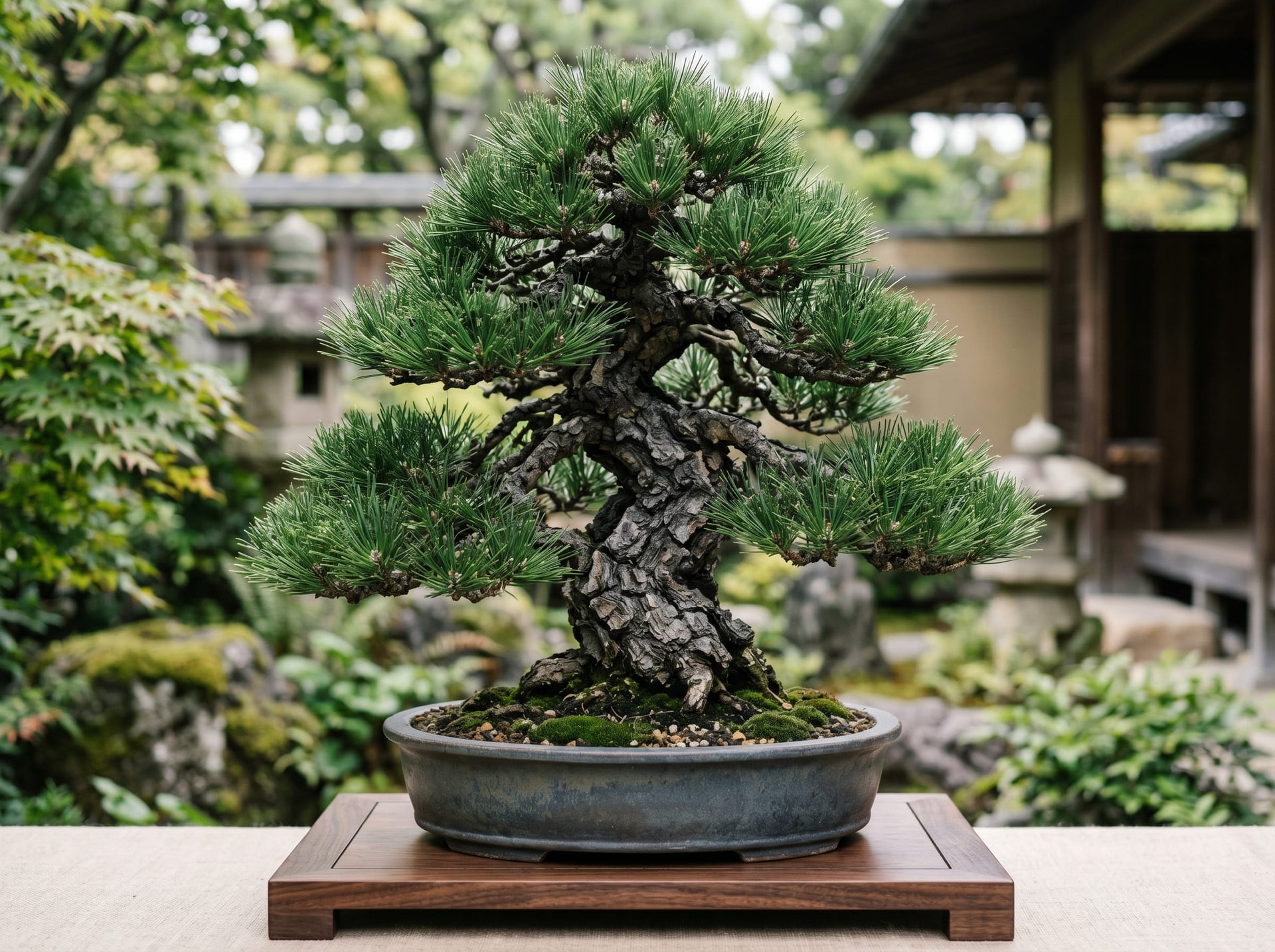
AI-generated image
Cork Bark Japanese White Pine
AdvancedPinus parviflora
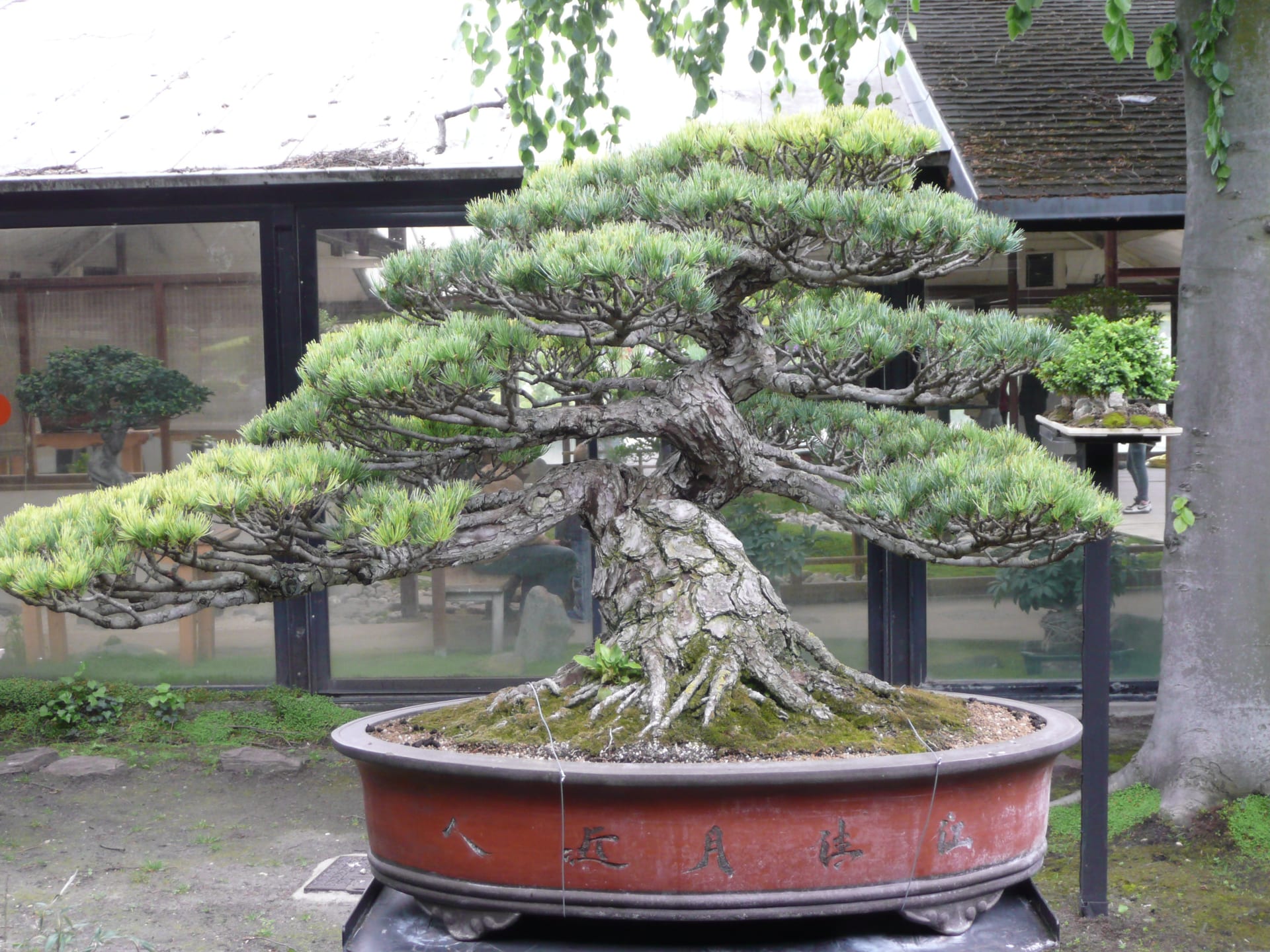
A variety of white pine with bark that develops cork-like texture. Striking contrast between rugged bark and delicate five-needle foliage. Bark deepens with age, gaining dignity.
About
Cork bark pine refers to a naturally occurring variant of Pinus parviflora (Japanese white pine) characterized by an exceptionally thick, deeply fissured, corky bark that develops on the trunk and branches even in relatively young specimens. This remarkable bark texture sets it apart from standard Goyo matsu, adding a dramatic visual contrast between the rough, sculptural trunk and the delicate five-needle clusters above. The corky quality begins to appear on some individuals at a young age and intensifies with maturity. Collectors prize cork-bark specimens highly, often valuing them above standard white pines of equivalent age due to this distinctive characteristic. Care requirements are identical to standard Pinus parviflora.
Lifespan of the Cork Bark Japanese White Pine
The Cork Bark Japanese White Pine lives Centuries.
Size of the Cork Bark Japanese White Pine
The Cork Bark Japanese White Pine grows to 15-60cm (bonsai size).
Basic Info
Origin
Japan (variant of Japanese white pine)
Lifespan
Centuries
Size
15-60cm (bonsai size)
Temperature
-5〜35℃
Watering & Fertilizer
Fertilizer (regular)
Growing Tips
Placement
Full sun outdoors. Keep outside year-round
Watering
Keep slightly dry. Avoid overwatering
Styling
Wire carefully to avoid damaging cork bark
Notes
Slow growing. Apply fertilizer sparingly
Cork Bark Japanese White Pine FAQ
QWhat is the growing difficulty level for Cork Bark Japanese White Pine?
Advanced. A variety suitable for advanced growers. Requires advanced cultivation techniques and specialized equipment, with careful environmental adjustments needed.
QWhat is the lifespan of Cork Bark Japanese White Pine?
The average lifespan of Cork Bark Japanese White Pine is Centuries. With proper cultivation environment and nutrient management, you can keep it healthy for a long time.
QHow large does Cork Bark Japanese White Pine get?
The mature size of Cork Bark Japanese White Pine is 15-60cm (bonsai size). This may vary slightly depending on cultivation environment and individual differences.
QHow should I water and fertilize Cork Bark Japanese White Pine?
Cork Bark Japanese White Pine: watering & fertilizer — Fertilizer (regular). Aim for appropriate frequency and amount.
QWhat is the typical price for Cork Bark Japanese White Pine?
The price of Cork Bark Japanese White Pine varies significantly by variety, characteristics, size, and lineage. Please check GrowerDirect's price guide for the latest market information.
Last updated: September 25, 2026
Growing Specifications
- USDA Zone
- 5–7
Sources: Oregon State Univ. Landscape Plants: Pinus parviflora
References & Sources
Edited & verified by: GrowerDirect Editorial Team
The classifications, regulations, and growing data on this page are created and verified based on the primary information database below.
Taxonomy & Authority
Regulations & Conservation Status
Sources: CITES Checklist of CITES Species
Regulations may change. Always verify the latest information with the relevant authorities.
Related Species
Find listings for this species
Related Articles
The Aesthetics of Bonsai Bark Expression and Shari Trunk | Techniques for Creating an Ancient Tree Appearance
The weathering of bark and shari trunk expression techniques that determine a bonsai's aesthetic value. We explain practical maintenance methods for developing thick, deeply furrowed bark and naturally expressing shari trunks.
Pine and Cypress Bonsai Care Calendar | Monthly Work Guide
Monthly management schedule for pine and cypress bonsai (black pine, five-needle pine, Shinpaku, etc.). Explains the annual plan for bud pinching, leaf thinning, wiring, and fertilization.
Complete Manual for Pine Bonsai Bud Removal (Green Pruning) — Care of Black Pine and Japanese Five-Needle Pine
A detailed explanation of the timing and methods for bud removal (green pruning) on pine bonsai. Introduces different bud-cutting schedules for black pine and Japanese five-needle pine, second-bud adjustment, old-leaf removal techniques, and short-leaf styling methods.
Black Pine Bud Pinching and Annual Canopy Management | Timing of Bud Pinching, Style-Specific Management (Formal Upright, Slanting, Cascade), and Tree Age & Cultivation Years
An explanation of the timing and technique for black pine bonsai bud pinching (green pinching), style-specific management for formal upright, slanting, and cascade forms, and cultivation principles according to tree age, all presented with an annual management schedule.
🩺 Common diseases
Can't find the plant you're looking for?
Post your wishes for free and growers with matching plants will contact you with introductions.