Bonsai Bark Expression and Shari (Deadwood) Aesthetics | Techniques for Creating Aged Tree Character
The weathering of bark and shari expression techniques that define bonsai quality. We will share practical maintenance methods for developing thick, deeply furrowed bark and expressing deadwood naturally.
Key Takeaways
The weathering of bark and shari expression techniques that define bonsai quality. We will share practical maintenance methods for developing thick, deeply furrowed bark and expressing deadwood naturally.
The true appeal of bonsai lies not in flowers or leaves, but in the tree trunk. In particular, the texture of bark and the expression of shari are the supreme techniques for compressing decades of time progression into the small world of bonsai. The wrinkles of annual rings engraved in weathered bark, the whiteness of dead wood, and the "antiquity" and "severity" they emanate are symbolic of the depth of bonsai's profound beauty. This article will share practical knowledge for cultivating beautiful bark and naturally expressing deadwood.
How to Develop Weathered and Thick Bark
The bark of a bonsai is not merely a protective tissue, but the center of appreciation. When bark is thick and rough, viewers feel "this bonsai is old." This is not an illusion—there is actually a correlation between bark thickness and tree age.
To thicken bark, "moderate drought stress" is essential. Rather than watering daily, establish a practice of waiting 2–3 days after the surface soil dries before watering. This creates tension in the tree trunk's cell membranes, causing the bark's cell layers to thicken. Simultaneously, for deciduous trees in autumn, minimize nitrogen as an autumn fertilizer and emphasize phosphorus and potassium instead. High nitrogen fertilization should be avoided because new bark becomes soft and thin.
The depth of bark color and texture are also elements of expression. If bark remains pale and new, a "young tree" impression persists. To avoid this, in spring make many small wounds on the tree trunk with a needle, allowing exudate to seep out and dirt to adhere to the bark. This "artificial weathering" may appear unnatural at first, but over years of wind and rain it blends into a natural color. Alternatively, applying a thin lime-sulfur mixture to the trunk and allowing ultraviolet light to gradually brown the bark is also effective.
The depth of surface wrinkles and cracks in the bark also affect bonsai quality. This utilizes the difference in shrinkage between the outer bark (cork layer) and inner bark (cambium). With winter cold and dryness, bark begins to shrink from the outer layer, creating stress between layers and automatically producing cracks. To accelerate this cracking, combine winter outdoor exposure (without freezing) with summer high-temperature drying.
Particularly in conifers like black pine, "suberization" of bark progresses, forming coarse, deep wrinkles. It typically takes over 10 years for bark to thicken and cracks to deepen, but this passage of time determines the value of the bonsai. Many bonsai enthusiasts continue management for decades, aiming for this deep bark expression.
Deadwood Expression Techniques and Protection Methods
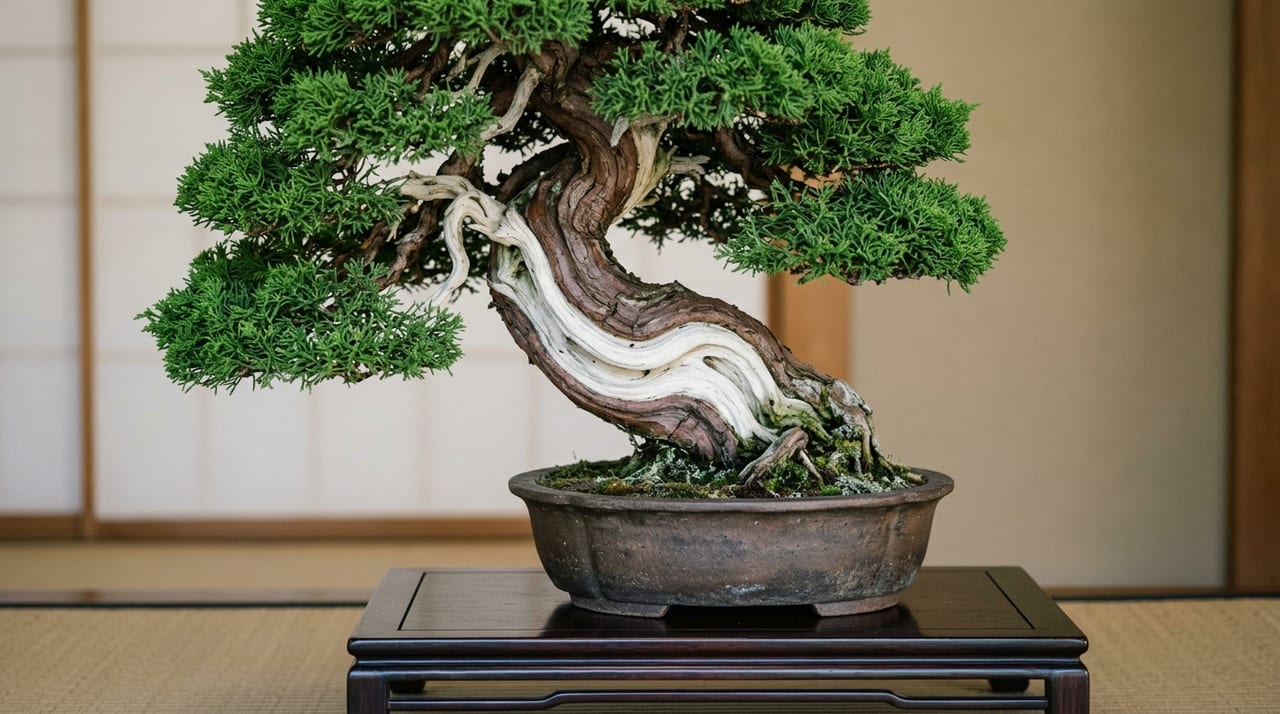
Shari refers to a state in which a portion of the tree trunk dies and turns white—a bonsai term. This is created by spirally peeling bark, damaging the cambium, and intentionally causing death. When shari is present, bonsai expresses "struggle" and "severity," leaving a strong impression on viewers.
The steps for creating shari are as follows: First, during spring through early summer when sap is abundant, peel a section of bark 1–2 cm wide and 10–20 cm long in a spiral pattern. Timing is critical—only peel when sap is flowing. If bark is peeled in autumn or winter when sap has stopped, the dead trunk quickly rots. Peel the bark carefully without damaging the cambium, exposing the sapwood below.
After that, leave the exposed sapwood as is. It begins to turn brown within a few days, gradually becoming white over 1–2 weeks. This whiteness is somewhat yellowish, but after exposure to ultraviolet light for several months, it gradually turns pure white. However, to prevent the sapwood from rotting, periodically apply a thin lime-sulfur mixture to suppress decay fungi.
For shari to appear natural, balance with the overall tree form is important. If shari comprises more than one-third of the trunk, it creates an unnatural sense of "artificiality." Shari comprising 10–30% of the trunk creates the most natural and powerful impression. Also, the placement of shari requires thought; positioning shari at the section rising from the tree's base creates a narrative of "the tree struggled."
Some bonsai have multiple areas of shari. For example, placing shari on the north and south sides of the trunk creates three-dimensionality and expresses more complex tree history. However, if there is too much shari, the overall vitality of the tree declines and vigor weakens, requiring careful management.
Coexistence and Maintenance of Bark and Deadwood
Trees with developed bark more easily express shari. This is because thicker bark creates more complex trunk structure beneath, providing more flexibility in shari placement. Once shari is created, apply lime-sulfur mixture from autumn through winter each year to prevent decay fungi. Simultaneously, maintain vitality in the bark surrounding the shari, ensuring good sap flow there. The stronger the contrast between bark and shari, the higher the quality of the bonsai.
Shari protection requires review every three years. The effectiveness of lime-sulfur mixture diminishes over time, and shari exposed to rain begins to weather again. In such cases, reapply to maintain whiteness. Moss may also grow around the shari, but this is actually natural and can enhance the bonsai's beauty. Only when moss grows excessively and impedes tree growth should it be lightly removed.
A bonsai where beautiful bark and shari expression are in harmony conveys to viewers both the passage of time and nature's harshness. This is precisely where the art of bonsai, using plants as material, creates beauty that rivals sculpture.