Complete Manual for Pine Bonsai Bud Removal (Green Pruning) — Care of Black Pine and Japanese Five-Needle Pine
A detailed explanation of the timing and methods for bud removal (green pruning) on pine bonsai. Introduces different bud-cutting schedules for black pine and Japanese five-needle pine, second-bud adjustment, old-leaf removal techniques, and short-leaf styling methods.
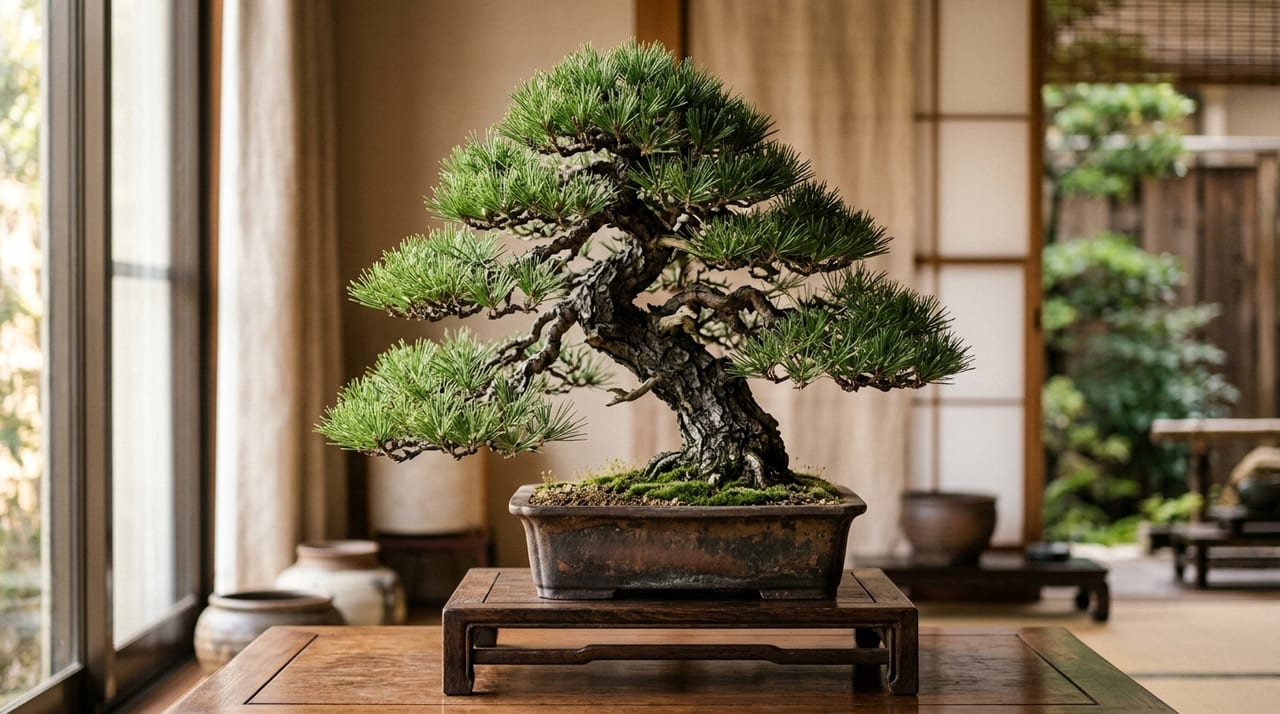
Key Takeaways
A detailed explanation of the timing and methods for bud removal (green pruning) on pine bonsai. Introduces different bud-cutting schedules for black pine and Japanese five-needle pine, second-bud adjustment, old-leaf removal techniques, and short-leaf styling methods.
Related Species
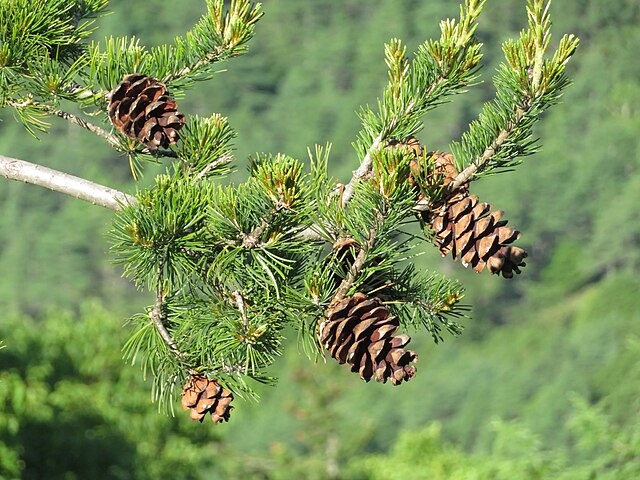
What is Bud Removal (Green Pruning)?
In pine bonsai care, bud removal and green pruning are often confused, but strictly speaking they are different operations. Green pruning is the work of pinching the tips of new growth (green shoots) in spring when they begin to elongate—performed mainly on black pine. Bud removal refers to cutting back new growth that has been allowed to extend, removing it at the base in summer (late June to mid-July) to force the emergence of second buds. Five-needle pine receives only green pruning; bud removal is not normally performed on it.
Without understanding this distinction, branch shape can become irregular, or in the worst case, weaken the tree. Selecting the appropriate method suited to each pine's nature is the first step to growing beautiful pine bonsai. Those wanting to review the basic task system first should also check Basic Bonsai Pruning and Wiring Techniques.
Black Pine: Green Pruning and Bud Removal
Green Pruning (Spring: April–May)
Black pine's new growth (green shoots) begins to elongate uniformly in spring. The right time to pinch them is when the buds have reached 2–5 cm in length, while the leaves are still in tubular form before opening.
The purpose of the work is to equalize the vigor across branches. Pine naturally grows strongly at the top (upper branches), so if left alone, the upper portion becomes dense while the lower branches weaken. Strong buds (thick and long) are pinched short, while weak buds (thin and short) are left longer or not pinched at all. The fundamental principle is "restrain the strong, encourage the weak."
Specifically:
- Strong buds: pinch leaving 1/3 to 1/2 of the length
- Medium buds: leave about half
- Weak buds: do not pinch, or pinch only the very tip lightly
Use your fingers to twist and remove the buds rather than scissors. Scissors make too-uniform cuts, from which many unwanted small buds often emerge.
Bud Removal (Summer: Late June to Mid-July)
After allowing spring growth to fully extend without green pruning, summer bud removal cuts the growth back at the base. This shock stimulates the pine, and by autumn, several second buds (autumn buds) emerge. These second buds become next year's branches, increasing the number of fine branches and filling out the tree form.
The ideal time for bud removal varies by region, but late June to early July is a guideline for the Kanto area. If too late, second buds don't develop adequately before winter sets in, weakening the tree.
Bud removal is a task that greatly depletes the tree's vitality, so do not perform it on weak trees (thin trunk, declining tree). After bud removal, hold back on fertilizing and manage the tree in partial shade to avoid strong direct sun after the rainy season ends.
Japanese Five-Needle Pine: Green Pruning
Japanese five-needle pine differs from black pine—it grows slowly and is delicate. If bud removal is performed, the tree suffers major damage, so management relies on green pruning alone.
The right period is late April to early May, when green shoots reach 3–5 cm. Like black pine, adjust pinching according to strength, but with five-needle pine, care must be taken more cautiously.
A characteristic of five-needle pine is that multiple green shoots often emerge from one point (arranged radially in 3–5 stems). Of these, the central strong bud should be removed at the base, leaving two balanced buds on either side—this is the basic approach. The two remaining buds are also pinched at the tip according to their length.
If left unpruned, only the central strong bud remains and the tree form degrades; recovery can take several years. By repeating careful green pruning every year, the five-needle pine develops into a beautiful tree with short, compact foliage. Differences in technique from other species such as Juniperus procumbens and Juniperus rigida are explained in Japanese Five-Needle Pine and Juniper Bonsai Care Guide.
Bud Removal Timing Chart—Adjusted by Region, Tree Size, and Branch Vigor
Black pine bud removal success depends on "the number of days from cutting until second buds extend before autumn." Earlier cutting produces longer second buds; later cutting produces shorter, more compact ones. From this principle, timing is adjusted as follows:
| Condition | Bud Removal Guideline |
|---|---|
| Kanto Plain / Standard tree | Late June to early July |
| Cold regions (Northeast / High altitude) | Early to mid-July (later) |
| Warm regions (West Japan coast / Kyushu) | Mid to late June (earlier) |
| Large tree / Vigorous tree | Earlier. Allow longer period for second-bud growth |
| Small specimen / Mini bonsai | Later. Produce shorter second buds |
| Weak branches or lower branches on same tree | Cut first |
| Strong branches or apex on same tree | Cut 4–7 days after weak branches |
Even within the same tree, "staggered bud removal"—cutting weak branches first and strong branches later—makes the length of second buds uniform across branches, evening out vigor throughout the tree. This takes more effort than cutting everything at once, but tree form completion is noticeably superior. The monthly workflow is summarized in Pine and Juniper Bonsai Care Calendar.
Japanese Five-Needle Pine Year-Round Work—Beyond Green Pruning
Five-needle pine, instead of bud removal, is shaped by old-leaf removal in autumn and pruning in winter.
| Season | Work |
|---|---|
| March–April | Repotting (once every 2–3 years), begin fertilizing before growth breaks |
| Late April to early May | Green pruning (method in this article) |
| June–August | Do not perform bud removal. Manage carefully, watching for drying and leaf scorch |
| September–October | Apply autumn fertilizer to restore vitality |
| October–November | Old-leaf removal (defoliation). Strip previous year's leaves to ensure light and air circulation |
| December–February | Pruning (cutback) and wiring. Perform during periods of low sap flow |
"Five-needle pine pruning" commonly refers to this winter cutback. Branches that have extended too far are cut back to branch points, and crowded buds are thinned. Heavy summer pruning weakens vigor, so aggressive five-needle pine pruning is limited to the dormant season.
Management and Feeding After Bud Removal
After bud removal, black pine has depleted its reserves, making management during this period crucial to next year's results.
Watering: During the rainy season, rely on natural rainfall and avoid overwatering. After the rainy season ends and through midsummer, water twice daily (morning and evening), and mist foliage on clear days to prevent leaf scorch. For those interested in water quality, Bonsai Watering and Water Quality Management Guide is also useful.
Location: Until the rainy season ends, maintain the tree outdoors where rain reaches it; after the rainy season, move it to a well-ventilated spot that avoids strong west sun. Once second buds begin emerging (late July–August), provide full sunlight to develop vigorous buds.
Fertilizing: Hold back on fertilizer immediately after bud removal. From August, when second buds emerge, apply solid fertilizer rich in phosphorus and potassium (bone meal and oil cake, etc.) once or twice monthly. Avoid excess nitrogen and aim for compact, sturdy new leaves. Detailed fertilizer selection is covered in Bonsai Fertilizers Explained in Depth.
Leaf thinning: Perform this in autumn (October–November). After second buds have developed, strip old leaves (previous year's foliage) to adjust leaf density. Excess foliage reduces internal light and causes lower branches to die back.
Common Mistakes and How to Handle Them
Mistake 1: Bud removal timing is delayed Bud removal after late July lacks sufficient time for second-bud development. If the delay is a week or so, it may still be worth doing; after August, skip it and shift to management preparing for next year.
Mistake 2: Bud removal performed on a weak tree Performing bud removal on a tree without reserves can cause die-back. Judge tree health by "leaf color, foliage density, and root system vigor." If uncertain, skip bud removal and observe using only green pruning.
Mistake 3: Neglecting strength-and-weakness adjustment in green pruning Pinching all green shoots uniformly to the same length locks in the existing difference between naturally strong and weak branches. This difference accumulates year after year, degrading tree form, so always vary your pinching to account for branch vigor.
Mistake 4: Bud removal accidentally performed on five-needle pine If bud removal is mistakenly done on five-needle pine, pay close attention to summer watering and shade management, then support recovery through fertilizing from autumn onward. In the following year, carefully assess the tree's condition before returning to normal management.
Summary
Success with pine bonsai bud removal and green pruning depends on accurately understanding three factors: species, tree vitality, and timing. Black pine responds to aggressive bud removal with increased fine branching; five-needle pine maintains form through careful green pruning. For both pines, the principle of strength-and-weakness adjustment—restraining the strong to encourage the weak—remains constant. The yearly workflow is reviewed in Bonsai Year-Round Care Calendar.
Beautiful tree form is completed through year-to-year accumulation. This year's bud removal work determines the beauty of your pine five and ten years hence. Without rushing, dialoguing with your tree and continuing care is the only path to growing superior pine bonsai.
Find Pine Bonsai on GrowerDirect
Both black pine and five-needle pine can be purchased directly from specialist bonsai growers on GrowerDirect. Stock ranges from fully trained trees with bud removal already completed to young trees you can enjoy shaping yourself. Browse the bonsai category to explore what's available.