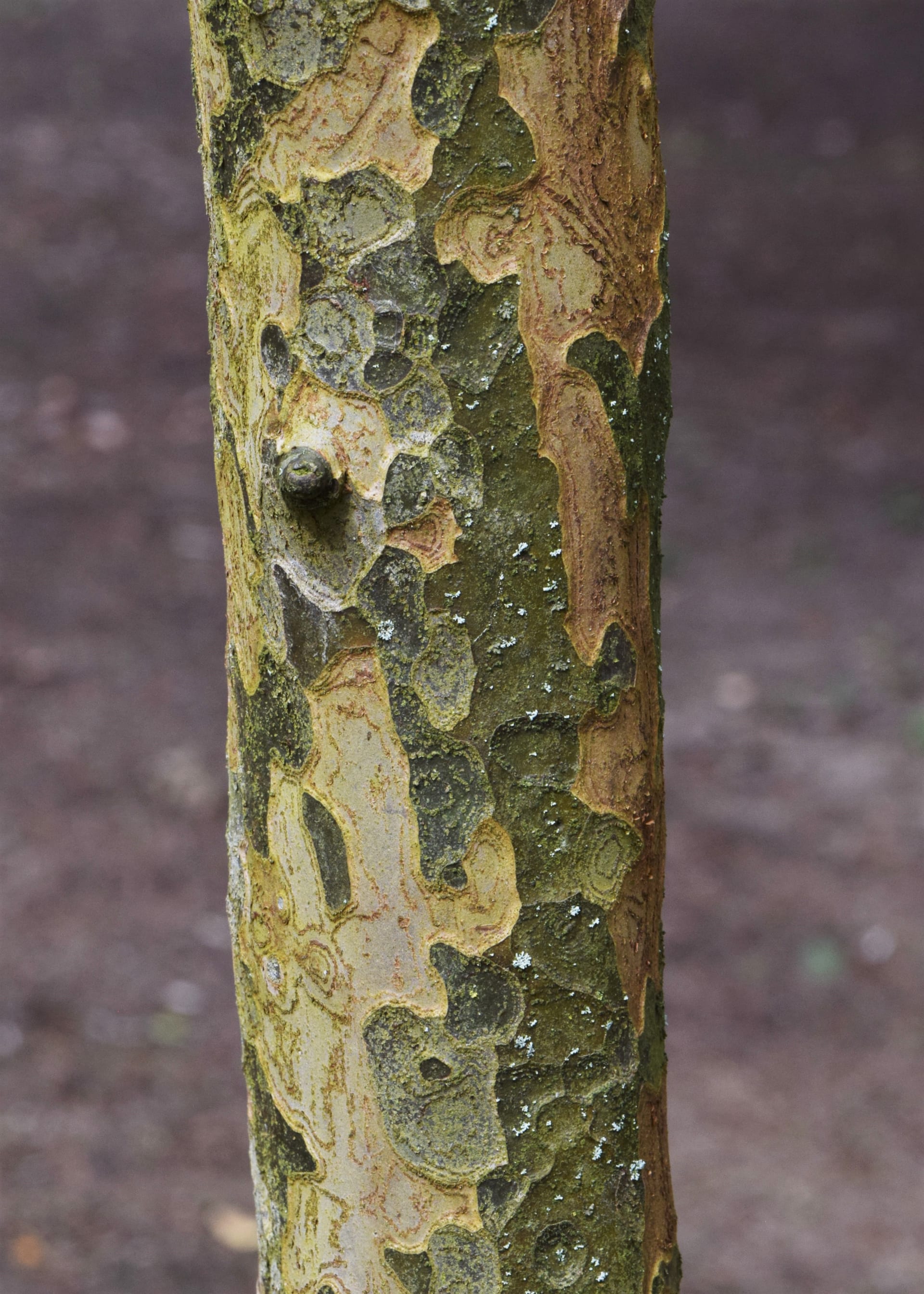
Source: Wikimedia Commons
Chinese quince
IntermediatePseudocydonia sinensis
A deciduous rose-family tree from China whose bark flakes into a mottled greenish-brown pattern. Pale pink flowers in spring are followed by large yellow fruits 10–15 cm long; it has been called the king of fruiting bonsai.
About
Chinese quince (Pseudocydonia sinensis) is a deciduous rose-family tree native to China; records show it reached Nagasaki around 1634. From March to May it opens pale pink five-petalled flowers 2–3 cm across as the leaves unfold, and around October bumpy yellow fruits 10–15 cm long ripen. Hard, sour and astringent, the fruit is not eaten raw but valued for its fragrance. In bonsai the trunk is the highlight: smooth bark flakes with age into a mottled greenish-brown pattern, and with its distinctive branching the tree is called the king of fruiting bonsai. Because the fruit is so large, small bonsai are exhausted by fruiting, and even strong, larger trees are best limited to three to five fruits. It differs from quince (Cydonia) in its flaking bark; quince fruit is nearly round and downy. Related trees such as hime-karin, issai-karin and kara-karin are sold under their own names, so check the label. Tough, cold-hardy, quick to thicken and free-budding, it is widely sold by bonsai shops from seedling and grafted material upward.
Size of the Chinese quince
The Chinese quince grows to 5–10 m tall (as bonsai often grown medium to large to balance the fruit).
Basic Info
Origin
China
Lifespan
Little data on lifespan
Size
5–10 m tall (as bonsai often grown medium to large to balance the fruit)
Temperature
-5〜35℃
Watering & Fertilizer
Fertilizer (late April–July and Sept–Nov; none in August)
Growing Tips
Light & placement
Sun-tolerant: keep in a sunny, airy spot, but give afternoon shade in summer. Protect flowers and new shoots from late spring frosts in the evening
Watering
Likes water: 1–2 times daily in spring, 2–3 in summer, every 2–3 days in winter. Never let it dry out from flowering to early fruit set, and keep water off the flowers
Temperature & overwintering
Cold-hardy, but in winter shelter it from cold wind and keep the pot from freezing
Soil & repotting
Repot every 1–2 years around February before budbreak (autumn also possible). Roots are vigorous and can be pruned boldly
Fertilizer
Feed well from late April to July as fruit develops, stop in August to help colouring, then feed again Sept–Nov, with extra phosphorus
Pruning & styling
Let new shoots grow until mid-June to early July, then cut back to 2–3 nodes to form short flowering spurs. Branches snap easily—do not wire mature trees
Pests & cautions
Watch for fruit borers, aphids, scale and cedar-quince rust. It is largely self-fertile, but pollen from another plant improves fruit set. Do not let it carry too many fruits
Chinese quince FAQ
QWhat is the growing difficulty level for Chinese quince?
Intermediate. A variety suitable for intermediate growers. Requires some cultivation experience and knowledge of environment management. Pay careful attention to temperature and humidity control.
QHow large does Chinese quince get?
The mature size of Chinese quince is 5–10 m tall (as bonsai often grown medium to large to balance the fruit). This may vary slightly depending on cultivation environment and individual differences.
QHow should I water and fertilize Chinese quince?
Chinese quince: watering & fertilizer — Fertilizer (late April–July and Sept–Nov; none in August). Aim for appropriate frequency and amount.
QWhat is the typical price for Chinese quince?
The price of Chinese quince varies significantly by variety, characteristics, size, and lineage. Please check GrowerDirect's price guide for the latest market information.
Last updated: September 23, 2026
References & Sources
Edited & verified by: GrowerDirect Editorial Team
The classifications, regulations, and growing data on this page are created and verified based on the primary information database below.
Taxonomy & Authority
Regulations & Conservation Status
Not listed by CITES and not regulated for domestic sale.
Sources: Species+ (CITES listing search)
Regulations may change. Always verify the latest information with the relevant authorities.
Related Species
Find listings for this species
Related Articles
Bonsai Aged Wood Techniques | Creating Branch Aging Expression and Tree Age Aesthetics
Explains techniques for creating bonsai that appear aged from young stock. Introduces practical methods for expressing tree age aesthetics, from bark texture and branch structure to root development expression and changes over time.
How to Prevent Fertilizer Burn in Bonsai | Determining the Right Fertilizer Amount and Concentration
Why does fertilizer burn occur in bonsai? This explains the mechanism of osmotic pressure, how to identify early symptoms such as browning of leaf tips, why it occurs easily in midsummer and right after repotting, and emergency measures and preventive strategies.
A Guide to Giving Bonsai as Gifts | Appropriate Species and Etiquette for Longevity Celebrations and Business Opening Celebrations
This guide explains how to choose bonsai species and proper etiquette when giving bonsai as gifts for celebrations. It introduces recommended species for different occasions such as longevity celebrations and business opening celebrations, as well as how to choose species while considering management requirements.
Bringing Out the Artistry of Bonsai: Fundamental Techniques in Pruning and Shaping Trees
Master the fundamentals of pruning and shape forming to unveil bonsai artistry. Learn the principles of heavy and light pruning, wiring techniques, how to select bonsai styles and determine the front view, seasonal care schedules, and solutions to common mistakes—all explained step by step.
🩺 Common diseases
Can't find the plant you're looking for?
Post your wishes for free and growers with matching plants will contact you with introductions.