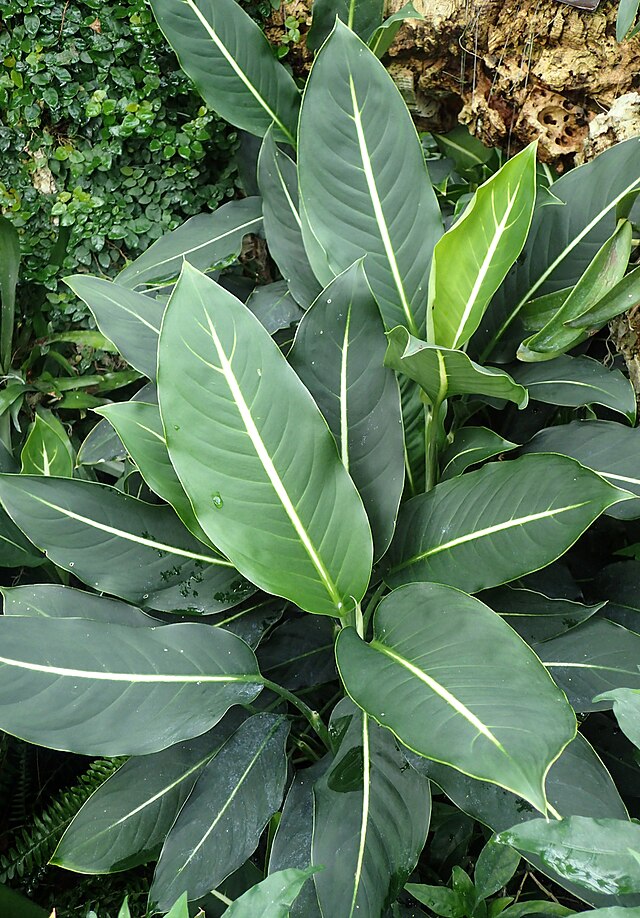
Source: Wikimedia Commons
Dieffenbachia
BeginnerDieffenbachia
A tropical plant with large leaves featuring cream variegation. High shade tolerance, grows in dark indoor spots.
About
Dieffenbachia, commonly known as dumb cane or leopard lily, is a genus of tropical perennials in the family Araceae, native to the New World Tropics from Mexico and the West Indies south to Argentina. It is widely cultivated for its large, attractive leaves patterned with green, white, and cream markings. The English common name 'dumb cane' refers to the temporary speechlessness caused by the calcium oxalate crystals present in the sap, which cause severe oral irritation if ingested — making all parts of the plant toxic to humans and pets, and requiring careful handling. Despite this, it is among the most popular indoor foliage plants due to its striking appearance and adaptability. It thrives in bright indirect light but tolerates lower light well. Water when the top of the soil dries; avoid waterlogging.
Source: Wikipedia (CC BY-SA 4.0)
Size of the Dieffenbachia
The Dieffenbachia grows to 50-150cm.
Temperature & humidity for the Dieffenbachia
Prefers warm temperatures (above 15°C) and humidity, away from cold draughts.
Basic Info
Origin
New World Tropics from Mexico and the West Indies to Argentina
Lifespan
Perennial
Size
50-150cm
Temperature
15〜30℃
Humidity
50〜70%
Watering & Fertilizer
Watering, Liquid fertilizer
Growing Tips
Lighting
High shade tolerance, bright indoor location
Watering
Water thoroughly once the surface dries; overwatering leads to root rot. Empty the saucer and check the soil before each watering.
Temperature & Overwintering
It likes warmth and humidity; avoid temperatures below 15°C and cold drafts. Keep it in a warm room in winter.
Soil & Repotting
Plant in a well-draining mix and repot one size up once roots fill the pot. Wear gloves so the sap does not touch your skin.
Toxicity
Contains calcium oxalate in sap, toxic
Notes
Place carefully in homes with children or pets
Dieffenbachia FAQ
QWhat is the growing difficulty level for Dieffenbachia?
Beginner. A variety suitable for beginners. No special equipment or experience is required—you can grow it without problems by setting up a basic cultivation environment.
QHow large does Dieffenbachia get?
The mature size of Dieffenbachia is 50-150cm. This may vary slightly depending on cultivation environment and individual differences.
QHow should I water and fertilize Dieffenbachia?
Dieffenbachia: watering & fertilizer — Watering, Liquid fertilizer. Aim for appropriate frequency and amount.
QWhat is the typical price for Dieffenbachia?
The price of Dieffenbachia varies significantly by variety, characteristics, size, and lineage. Please check GrowerDirect's price guide for the latest market information.
Last updated: June 13, 2026
References & Sources
Edited & verified by: GrowerDirect Editorial Team
The classifications, regulations, and growing data on this page are created and verified based on the primary information database below.
Primary sources
Related Species

Find listings for this species
Related Articles
Optimizing Foliage Plant Leaf Shine | Humidity Management to Achieve Gloss and Plant Health
Environmental management techniques to bring out glossy shine on foliage plant leaves. Techniques to achieve healthy and beautiful leaf expression through optimizing light, humidity, and water quality.
Why New Leaves on Foliage Plants Are Smaller — Practical Solutions for Light, Humidity, and Nutrition
We analyze the causes behind stunted growth and smaller new leaves on foliage plants. From light environment and humidity management to fertilization strategy and root health, we explain each factor based on empirical data and introduce methods to restore new leaf size.
Spider Mite and Scale Insect Control: Practical Pest Prevention
Learn to identify spider mites and scale insects on houseplants and recognize damage signs, master practical spider mite control methods, discover effective scale insect elimination techniques, create pest-resistant environments with seasonal management, understand pesticide safety precautions, and discover early detection and prevention strategies.
Root Rot Prevention and Root Zone Regeneration Management in Foliage Plants | Soil Selection, Watering, and Early Diagnosis & Recovery Techniques
Root rot is the greatest threat to foliage plants. This article covers practical knowledge from the mechanisms of root rot development to prevention, early-stage diagnosis and treatment methods, and ensuring long-term plant health through soil and watering management.
🩺 Common diseases
Can't find the plant you're looking for?
Post your wishes for free and growers with matching plants will contact you with introductions.