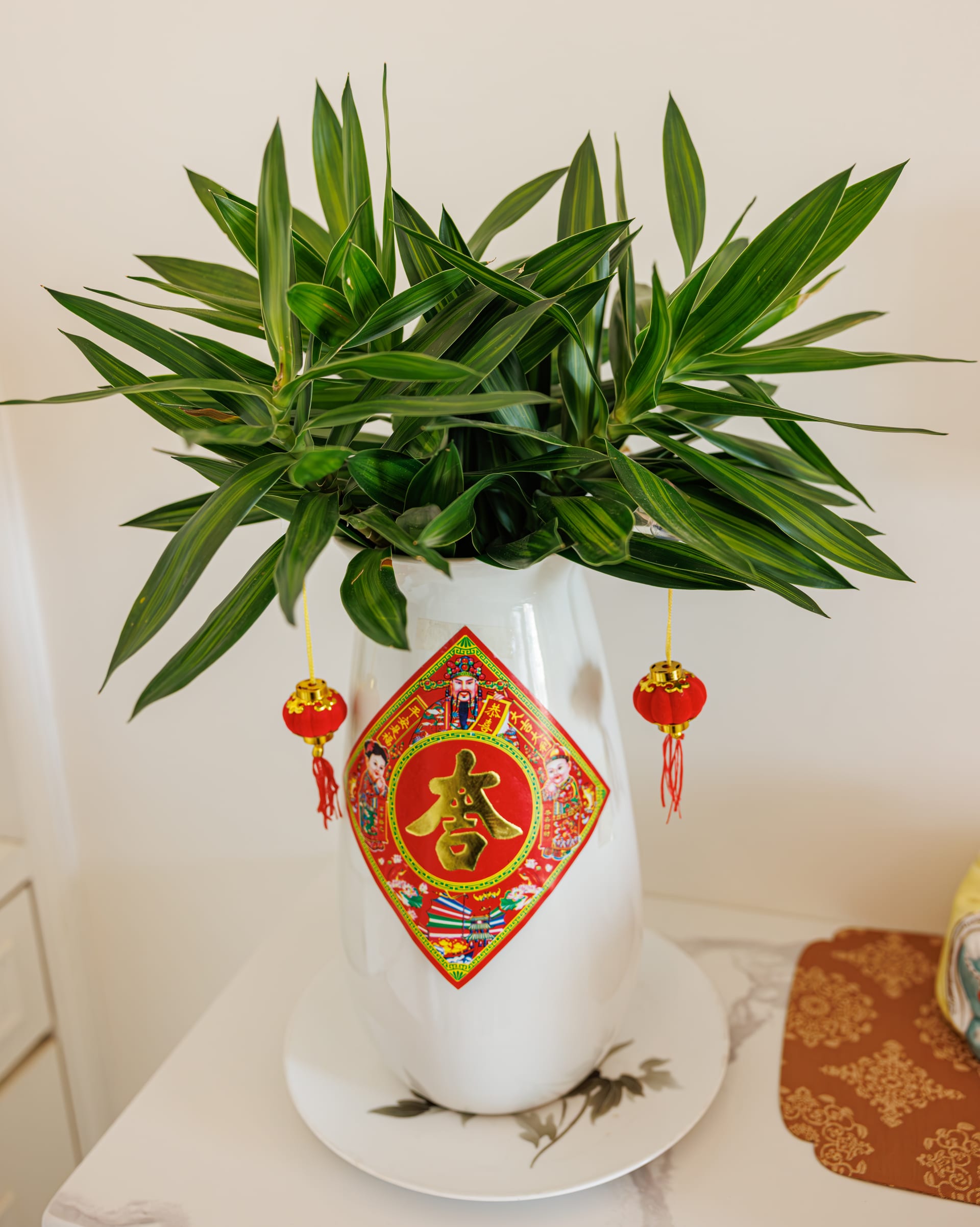
Source: Wikimedia Commons
Lucky Bamboo
BeginnerDracaena sanderiana
A dracaena with bamboo-like jointed green stems and narrow leaves that can grow in water alone. Sold as 'lucky bamboo', it is not related to true bamboo.
About
Dracaena sanderiana is a perennial in the asparagus family (Asparagaceae), native to central Africa, including Cameroon, Gabon, the Congo region and northeastern Angola. It is named after the German-born English nurseryman Henry Frederick Conrad Sander. Its fleshy, jointed stems look like bamboo, but true bamboos are grasses and belong to an entirely different order. Despite trade names such as 'lucky bamboo' and 'Chinese water bamboo', it is African. It grows to about 1 m, with slightly twisted grey-green leaves about 23 cm long. Stems are often trained into spirals, braids or tiers, and because it can be grown in water or hydroculture without soil it is popular as a gift. It is sometimes confused with the coastal West African D. braunii, which has much smaller flowers. It is sold in very large numbers in Japanese garden centres, homeware shops and online. It is an African species despite names suggesting China or Belgium.
Source: Wikipedia (CC BY-SA 4.0)
Size of the Lucky Bamboo
The Lucky Bamboo grows to About 1 m tall; leaves about 23 cm long.
Temperature & humidity for the Lucky Bamboo
The ideal temperature for the Lucky Bamboo is 16〜27℃.
Basic Info
Origin
Central Africa (Cameroon to northeastern Angola)
Lifespan
Perennial (long-lived)
Size
About 1 m tall; leaves about 23 cm long
Temperature
16〜27℃
Humidity
50〜70%
Watering & Fertilizer
A very weak liquid fertiliser
Growing Tips
Light & Placement
Bright indirect light to part shade. Direct sun burns or yellows the leaves.
Watering
In water, use chlorine-free water and change it weekly to prevent mosquitoes. In soil, keep it moist but allow brief dry periods.
Temperature & Overwintering
Ideal range about 16-27°C. It dislikes cold, so keep it in a warm room away from chilly windows in winter.
Soil & Repotting
In water, a layer of pebbles gives roots something to grip and steadies the container. In soil, use a moisture-retentive houseplant mix.
Propagation
Cut a stem just above a node and root it.
Pests & Cautions
Overwatering yellows the leaves and rots the stems; low humidity browns the tips. Dracaenas contain saponins; if eaten by dogs or cats they can cause vomiting, drooling and loss of appetite. Keep out of reach of pets.
Lucky Bamboo FAQ
QWhat is the growing difficulty level for Lucky Bamboo?
Beginner. A variety suitable for beginners. No special equipment or experience is required—you can grow it without problems by setting up a basic cultivation environment.
QWhat is the ideal temperature for Lucky Bamboo?
The ideal temperature for Lucky Bamboo is 16〜27℃. Avoid sudden temperature changes and maintain a stable environment.
QHow large does Lucky Bamboo get?
The mature size of Lucky Bamboo is About 1 m tall; leaves about 23 cm long. This may vary slightly depending on cultivation environment and individual differences.
QHow should I water and fertilize Lucky Bamboo?
Lucky Bamboo: watering & fertilizer — A very weak liquid fertiliser. Aim for appropriate frequency and amount.
QWhat is the typical price for Lucky Bamboo?
The price of Lucky Bamboo varies significantly by variety, characteristics, size, and lineage. Please check GrowerDirect's price guide for the latest market information.
Last updated: September 23, 2026
References & Sources
Edited & verified by: GrowerDirect Editorial Team
The classifications, regulations, and growing data on this page are created and verified based on the primary information database below.
Taxonomy & Authority
Regulations & Conservation Status
Not listed in the CITES Appendices. Not a designated invasive alien species in Japan, nor a nationally rare species under the Act on Conservation of Endangered Species.
Sources: Species+ (CITES listing check) / Ministry of the Environment: List of Invasive Alien Species
Regulations may change. Always verify the latest information with the relevant authorities.
Related Species
Find listings for this species
Related Articles
Complete Dracaena Care Guide | Variety-Specific Management from Massangeana to Marginata
Comprehensive guide to caring for popular Dracaena varieties including Massangeana (the lucky tree), Marginata, and Warneckii. Covers variety-specific cultivation methods, watering, lighting, pruning, and upright training techniques, as well as causes and solutions for leaf tip browning issues.
Why New Leaves on Foliage Plants Are Smaller — Practical Solutions for Light, Humidity, and Nutrition
We analyze the causes behind stunted growth and smaller new leaves on foliage plants. From light environment and humidity management to fertilization strategy and root health, we explain each factor based on empirical data and introduce methods to restore new leaf size.
Spider Mite and Scale Insect Control: Practical Pest Prevention
Learn to identify spider mites and scale insects on houseplants and recognize damage signs, master practical spider mite control methods, discover effective scale insect elimination techniques, create pest-resistant environments with seasonal management, understand pesticide safety precautions, and discover early detection and prevention strategies.
Root Rot Prevention and Root Zone Regeneration Management in Foliage Plants | Soil Selection, Watering, and Early Diagnosis & Recovery Techniques
Root rot is the greatest threat to foliage plants. This article covers practical knowledge from the mechanisms of root rot development to prevention, early-stage diagnosis and treatment methods, and ensuring long-term plant health through soil and watering management.
🩺 Common diseases
Can't find the plant you're looking for?
Post your wishes for free and growers with matching plants will contact you with introductions.