Complete Dracaena Care Guide | Variety-Specific Management from Massangeana to Marginata
Comprehensive guide to caring for popular Dracaena varieties including Massangeana (the lucky tree), Marginata, and Warneckii. Covers variety-specific cultivation methods, watering, lighting, pruning, and upright training techniques, as well as causes and solutions for leaf tip browning issues.
Key Takeaways
Comprehensive guide to caring for popular Dracaena varieties including Massangeana (the lucky tree), Marginata, and Warneckii. Covers variety-specific cultivation methods, watering, lighting, pruning, and upright training techniques, as well as causes and solutions for leaf tip browning issues.
Related Species
Dracaena (Dracaena spp.) is a group of foliage plants beloved for their association with the "lucky tree" common name, represented by Massangeana, and they are extraordinarily popular as interior greenery. With numerous varieties available, they display diverse forms ranging from slim, upright shapes to dramatic, wild trunk configurations.
This article provides a detailed explanation of the main Dracaena species, their characteristics, variety-specific cultivation methods, and troubleshooting guides for common problems that often challenge beginners.
What is Dracaena—Classification and Characteristics
Dracaena is classified in the family Asparagaceae (formerly Agavaceae), with approximately 120 species native to the tropical and subtropical regions of Africa, South Asia, and Central America.
Appeal as a Foliage Plant
- Beautiful form: Clean, upright growth makes it ideal as a "statement tree" in living rooms
- Diverse varieties: Fine-leaved, broad-leaved, variegated, and colorful foliage options offer plenty of choice
- Ease of care: Relatively shade-tolerant and manageable even for beginners
- Air-purifying effects: Some varieties have been recognized by NASA's Clean Air Study for formaldehyde removal
- Auspicious symbolism: Known as the "lucky tree" and "million bamboo," making it popular as a gift
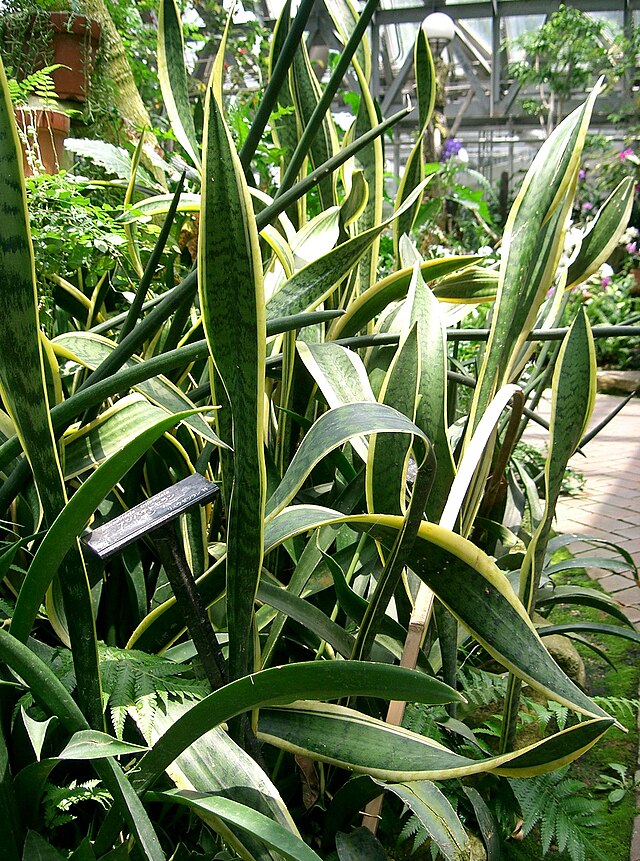
Relationship with Sansevieria
Following a 2017 taxonomic revision, the former Sansevieria genus was integrated into Dracaena (scientific name: Dracaena trifasciata, etc.). However, in horticultural circles, these plants are still commonly called "Sansevieria." This article focuses on varieties traditionally available as Dracaena.
Main Varieties and Selection Guide
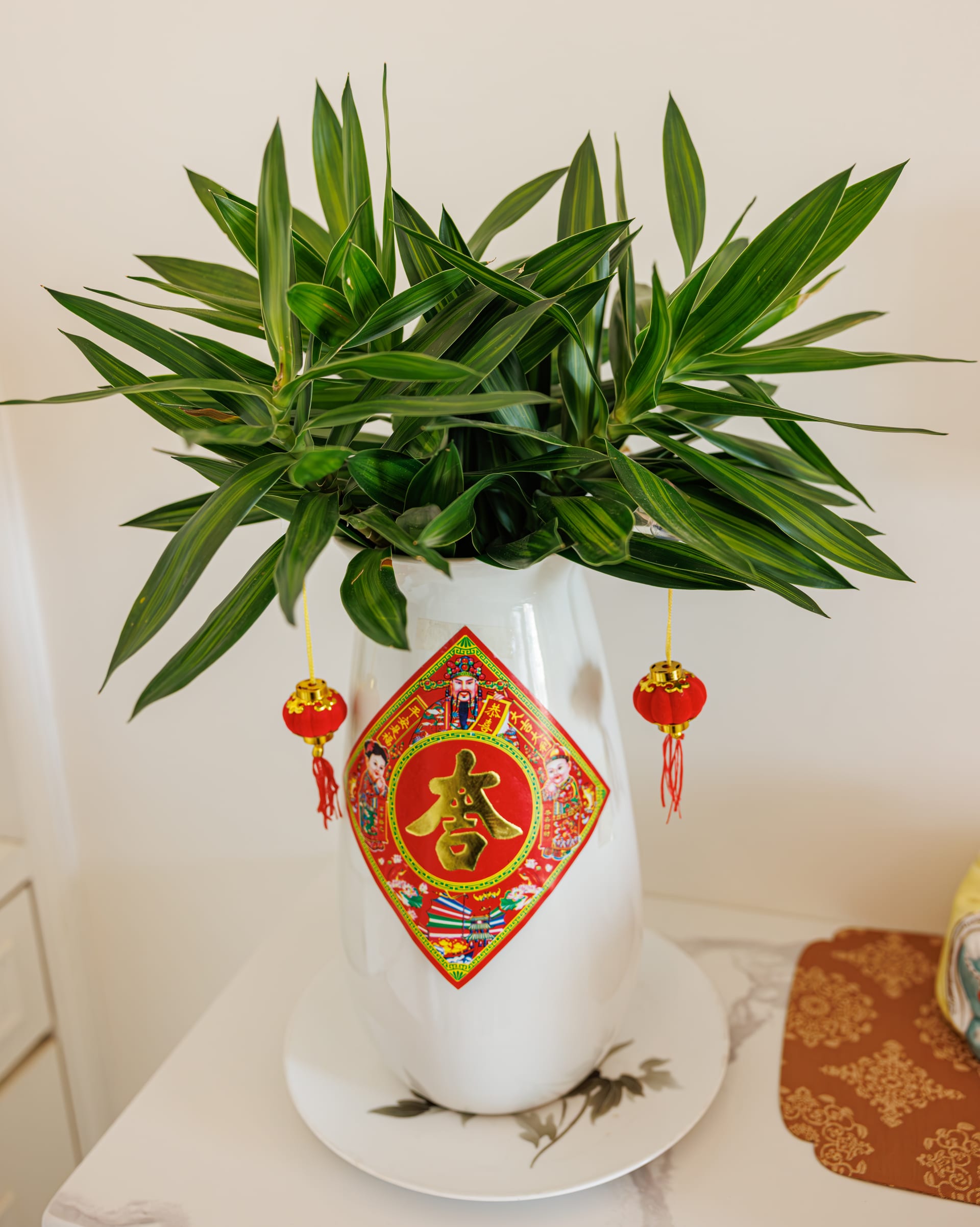
Dracaena Massangeana (Lucky Tree)
Scientific name: Dracaena fragrans 'Massangeana'
The most famous Dracaena variety, featuring large leaves spreading from a thick trunk with distinctive yellow-green vertical stripes down the center. The "wood-log style" (bokusashiki)—created by cutting and propagating cylindrical trunk sections—is the standard form, commonly seen at shopping mall entrances and hotel lobbies.
- Size: 50 cm to over 2 m
- Light preference: Bright indirect light is ideal. Direct sunlight causes leaf scorch
- Cold tolerance: Maintain minimum of 10°C or above
- Special notes: Wood-log style trunks may weaken over time without rooting. For long-term cultivation, consider removing branches that emerge from the trunk and propagating them separately as a renewal strategy
Dracaena Marginata (Marginata)
Scientific name: Dracaena marginata
A variety with fine leaves edged in red to pink lines, offering a sharp, stylish appearance. The "curved marginata" style—trained with a curved trunk—complements both modern and traditional aesthetics.
- Size: 30 cm to 2.5 m
- Light preference: Prefers somewhat bright conditions, but grows well in bright shade
- Cold tolerance: Withstands temperatures around 5°C, though 10°C and above is recommended
- Variations: 'Tricolor' (three-color leaves), 'Colorama' (deep red coloring), 'Bicolor' (green and red)
Dracaena Warneckii
Scientific name: Dracaena fragrans 'Warneckii'
Features cool-toned leaves with white vertical stripes. A cultivar of the same Dracaena fragrans species as Massangeana, but with a more refined appearance.
- Size: 40 cm to 1.5 m
- Light preference: Bright indirect light to semi-shade
- Cold tolerance: Maintain minimum of 10°C or above
- Characteristics: The white variegation is striking and pairs beautifully with monochromatic interiors
Dracaena Compacta
Scientific name: Dracaena fragrans 'Compacta'
A slow-growing variety with thick, dark green leaves that cluster densely at the crown. Its compact form and minimal space requirements make it appealing.
- Size: 20 cm to 1 m
- Light preference: High shade tolerance; thrives even in semi-shade
- Cold tolerance: Maintain minimum of 10°C or above
- Characteristics: Maintains a compact shape long-term. Requires infrequent watering and minimal care
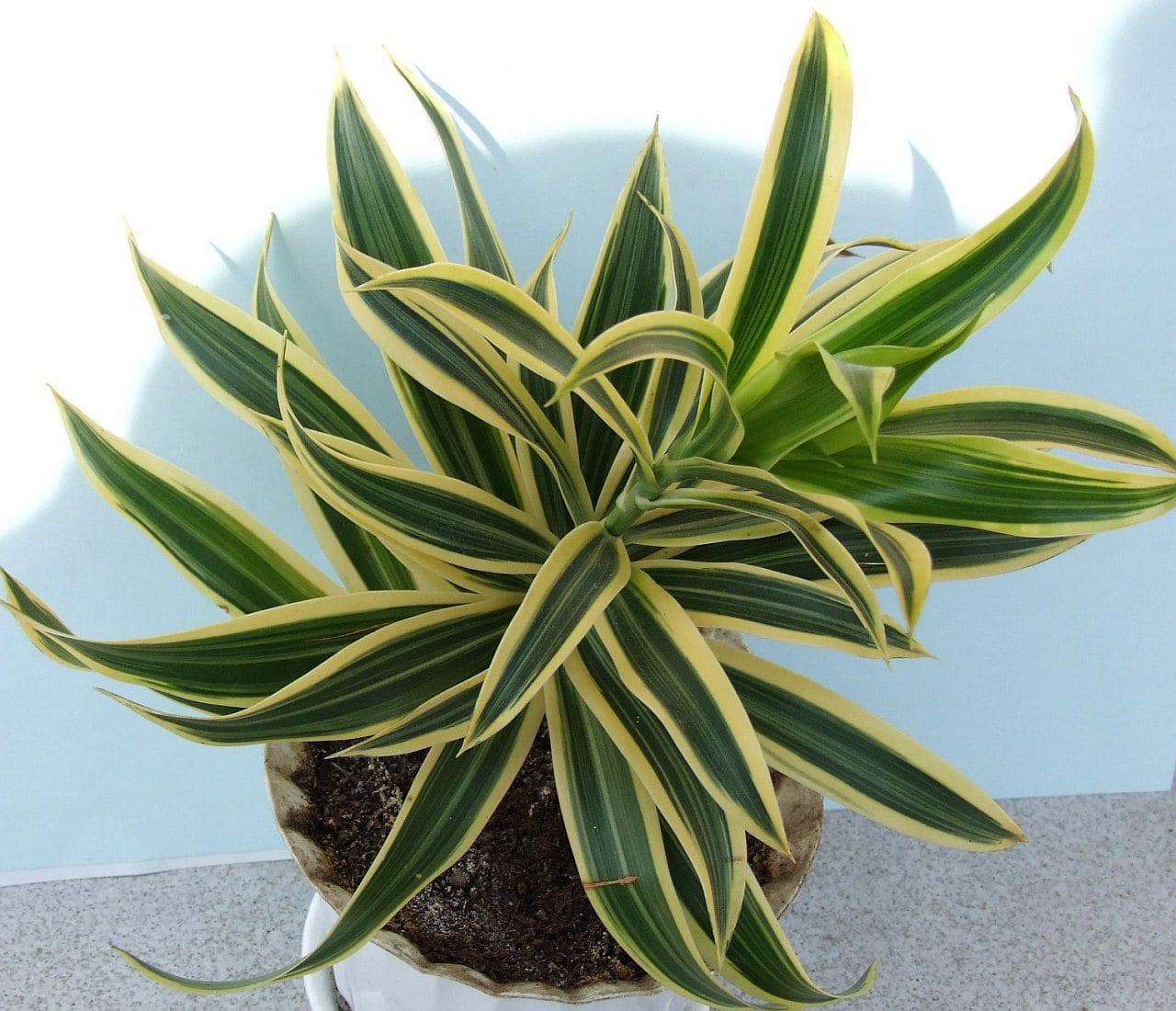
Dracaena Reflexa (Song of India / Song of Jamaica)
Scientific name: Dracaena reflexa
Distinguished by unique leaves that curve downward. "Song of India" features bright yellow variegated edges, while "Song of Jamaica" has white variegation.
- Size: 30 cm to 2 m
- Light preference: Prefers bright locations. Variegation becomes unclear in dim light
- Cold tolerance: Maintain minimum of 10°C or above (somewhat sensitive to cold)
- Characteristics: Branches readily, naturally developing a full, voluminous form
Dracaena Sanderiana (Lucky Bamboo / Lucky Bamboo)
Scientific name: Dracaena sanderiana
Known as "lucky bamboo," "thousand-year bamboo," and "fortune bamboo" due to its bamboo-like appearance. It can be sustained for extended periods in water alone, making it common in gift shops and florists.
- Size: 15 cm to 1 m
- Light preference: Bright indirect light. Stems yellow in overly dim conditions
- Cold tolerance: Maintain minimum of 10°C or above
- Characteristics: Suitable for hydroponic cultivation. The "lucky spiral" style, trained in spiral form, is also popular
Basic Care
Placement and Lighting
Dracaena generally prefers "bright indirect light." Light filtered through sheer curtains is ideal, while direct sunlight causes leaf scorch.
Seasonal considerations:
- Spring to autumn: Best placed near east- to south-facing windows with sheer curtain filtering
- Summer: Avoid intense west-facing sun; use shade cloth or move away from the window
- Winter: With shorter daylight hours, relocate to the brightest available location
While shade-tolerant enough to survive under fluorescent or LED indoor lighting alone, legginess and leaf color changes become more likely. For long-term low-light placement, consider supplemental LED grow lights.
Watering
The basic rule for Dracaena watering is "water thoroughly once the soil is dry." For general foliage plant watering guidelines, see Foliage Plant Watering Guide.
- Spring to autumn (growing season): Water thoroughly once the soil surface is dry, until water drains from the pot bottom
- Winter (dormancy): Water 2–3 days after soil is completely dry. Keep winter watering minimal
- Standing water: Always empty the saucer. Root rot's primary cause
- Leaf misting: Effective year-round. Especially useful for winter dryness prevention and controlling spider mites and scale insects
Temperature Management
Given tropical origins, cold tolerance varies by variety, but these guidelines generally apply:
| Condition | Temperature |
|---|---|
| Optimal growing temperature | 20–30°C |
| Minimum survival temperature | 5–10°C (variety-dependent) |
| Safe minimum for winter | 13°C or above |
Winter windowsills experience steep nighttime temperature drops. Position pots at least 30 cm from windows or place insulation (foam board) under pots for added security.
Soil
Use well-draining soil. Commercial "foliage plant potting mix" works fine, or prepare your own using these ratios:
- Basic mix: Small-grain akadama soil 6 : leaf mold 3 : perlite 1
- Enhanced drainage: Akadama soil 5 : pumice 2 : perlite 2 : leaf mold 1
- Large pots (8+ inches): Prioritize drainage using medium-grain akadama mixed in
Fertilizer
- Timing: During growing season (April–October), apply slow-release fertilizer monthly or liquid fertilizer every two weeks
- Winter: Not needed. Fertilizing during dormancy risks root damage
- Caution: Some varieties (like Compacta) are sensitive to fertilizer burn; start at half the recommended strength
Pruning and Reshaping
Timing Pruning
- Period: Best during the vigorous growth phase from May to July
- Purpose: Cut back leggy stems, promote branching to increase branch number, reset overall form
Cutting Back Stems
Dracaena remarkably produce new shoots below cut points even after severe pruning.
- Cut horizontally with sterilized pruners or a saw at your desired height
- Apply wound sealant (such as Topsin M paste) to the cut
- Continue regular care, avoiding water on the cut surface
- New shoots emerge around the cut site within 2–4 weeks
The upper portion of the cut stem, with a few leaves remaining, can be propagated as a new plant.
Creating Curved Stems
Thin stems of varieties like Marginata can develop natural curves using directional light.
- Place the pot against a wall with light from the opposite direction, causing the stem to lean
- Rotate the pot 90 degrees every 2–3 weeks
- Repetition creates gradual S-curve formation
For sharp curves, guide young flexible stems with wire or stakes, but handle carefully to avoid breaking.
Common Problems and Solutions
Leaf Tip Browning
The most frequent Dracaena complaint is "leaf tip browning." Causes are often multiple, but primary factors include:
| Cause | Solution |
|---|---|
| Air dryness | Mist leaves daily. Use a humidifier alongside |
| Underwatering | Monitor soil moisture carefully. Especially important in summer |
| Tap water fluorine/chlorine | Use room-temperature water that's been left to stand or filtered water |
| Overfertilizing | Reduce fertilizer amounts. Flush soil with water to remove excess salts |
| Root-bound conditions | Repot, tidy the roots, and use fresh soil |
Leaf tip browning cannot be reversed once it occurs. If appearance is a concern, trim the brown portions with scissors following the leaf's natural shape for a neat appearance.
Yellowing Leaves
- Lower leaves yellowing progressively: Natural senescence. The plant sheds old leaves to concentrate nutrients on new growth
- Overall yellowing: Possible root rot, extreme dehydration, or insufficient light
- Variegated varieties losing variegation: Insufficient light. Move to a brighter location
Soft, Mushy Stems
Soft, compressible stems indicate advancing root rot.
- Immediately remove the pot and inspect roots
- Remove blackened roots with sterilized scissors
- Check the stem for healthy tissue—soft sections are rotted
- Retain only healthy portions; cut away affected areas and allow to dry before repotting in fresh soil
- Water sparingly until new roots develop
For detailed root rot assessment and recovery, consult Foliage Plant Root Rot Recovery Guide.
Scale Insect Infestation
Dracaena are prone to scale insects. Inspect for small white to brown clusters on leaf undersides and stems.
- Early intervention: Remove manually with a toothbrush or tweezers
- Widespread infestation: Apply insecticide spray (such as Benica X Fine Spray)
- Prevention: Maintain good air circulation. Regular misting on leaf surfaces prevents infestations
For a comprehensive pest identification and treatment guide, see Foliage Plant Pest Control Guide.
Propagation Methods
Stem Cuttings
The simplest propagation method.
- Cut healthy stems into 10–15 cm sections
- Remove lower leaves
- Allow the cut surface to air-dry for half a day
- Insert into clean akadama soil or water
- Place in bright shade; roots develop in 2–4 weeks
Log Propagation (Stem Layering)
Propagate leafless stem sections—useful for updating wood-log style plants or repurposing pruned material.
- Cut stems into 5–10 cm pieces (mark the top and bottom to avoid confusion)
- Place horizontally, half-buried, on moist sphagnum moss or vermiculite
- Cover with plastic wrap or a bag to maintain high humidity
- New shoots and roots emerge from nodes in 2–6 weeks
Water Propagation
Sanderiana (Lucky Bamboo) can be maintained long-term in water. Other varieties benefit from water propagation for rooting promotion before transferring to soil—a low-failure method for beginners.
Dracaena as Interior Decor
Pot Selection Tips
Simple pots complement Dracaena's linear stem structure.
- Modern interiors: Matte white or gray cement pots
- Natural style: Terracotta or woven rattan baskets
- Modern Japanese: Black or navy ceramic pots. Striking with curved Marginata
- Minimalist: Unified white fiberstone pots
Recommended Placement Locations
- Living room corner: A single large Massangeana or Marginata defines the space
- Entryway: Shade-tolerant Compacta is suitable. Guests will appreciate the "lucky tree" connection
- Study or office: Warneckii's white variegation soothes eyes around monitors
- Bedroom: Leverage air-purifying effects with Compacta or Massangeana
Conclusion
Dracaena offers diverse varieties, appealing to growers of all skill levels. By following basic care—bright indirect light, thorough watering once soil is dry, and winter warmth—they remain beautiful for years.
Dracaena-specific leaf tip browning can be significantly reduced through humidity management and attention to water quality. Pruning allows resetting the form, so boldly cut back overgrown plants and enjoy the renewed shape.
Consider welcoming Dracaena into your home—as a defining symbol tree in your living space or as a thoughtful gift.